
Last updated September 23, 2026
Free visual inspection and a written scope of work before any mitigation begins - photos, moisture readings, and drying logs go in your claim file
The scope we write is the scope we bill. Anything new gets shown to you, in writing, before we touch it.
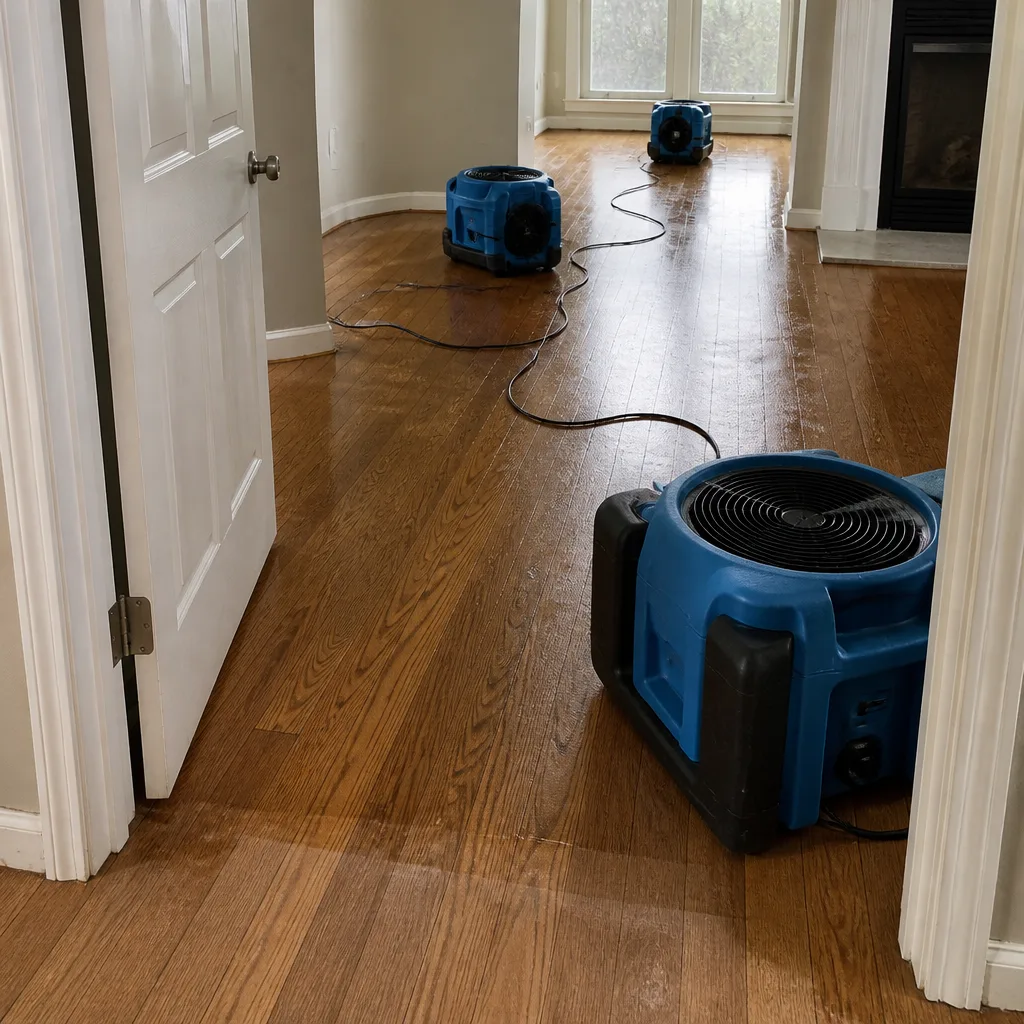
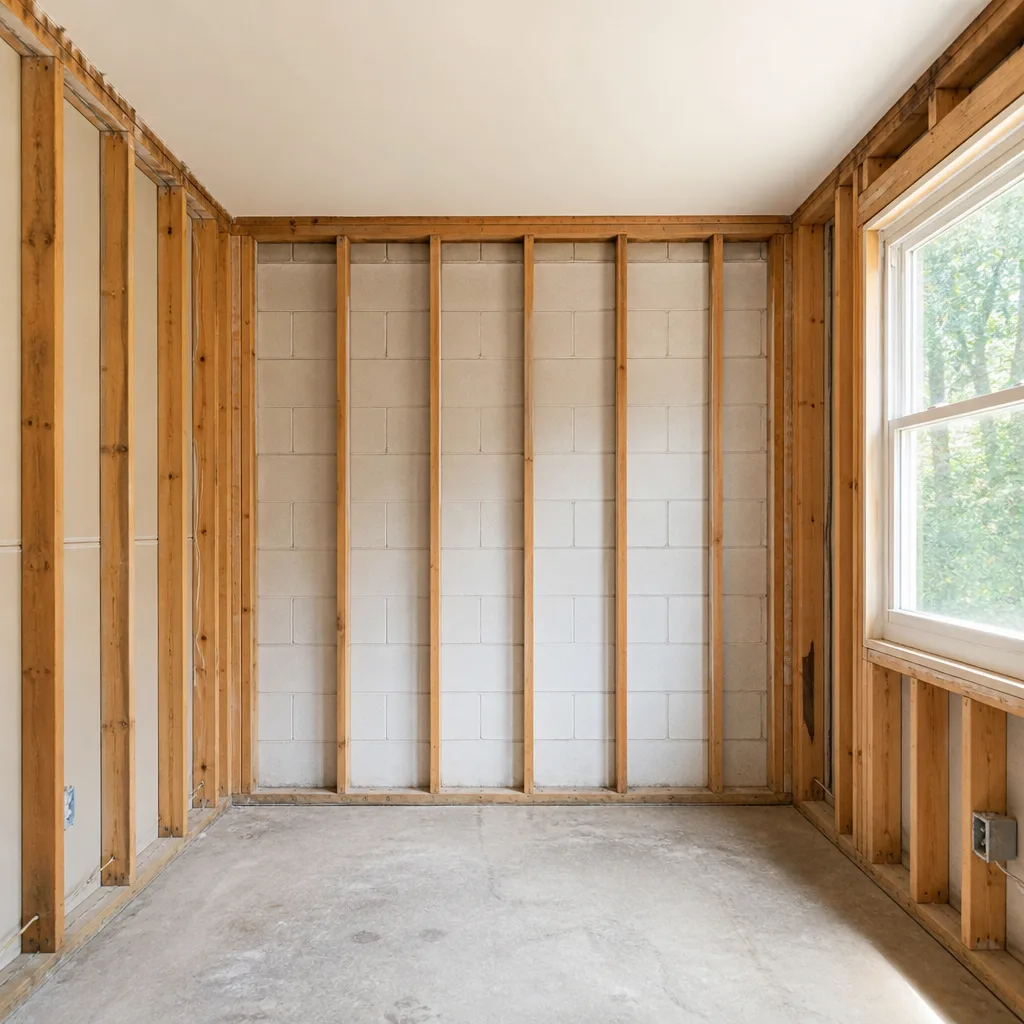

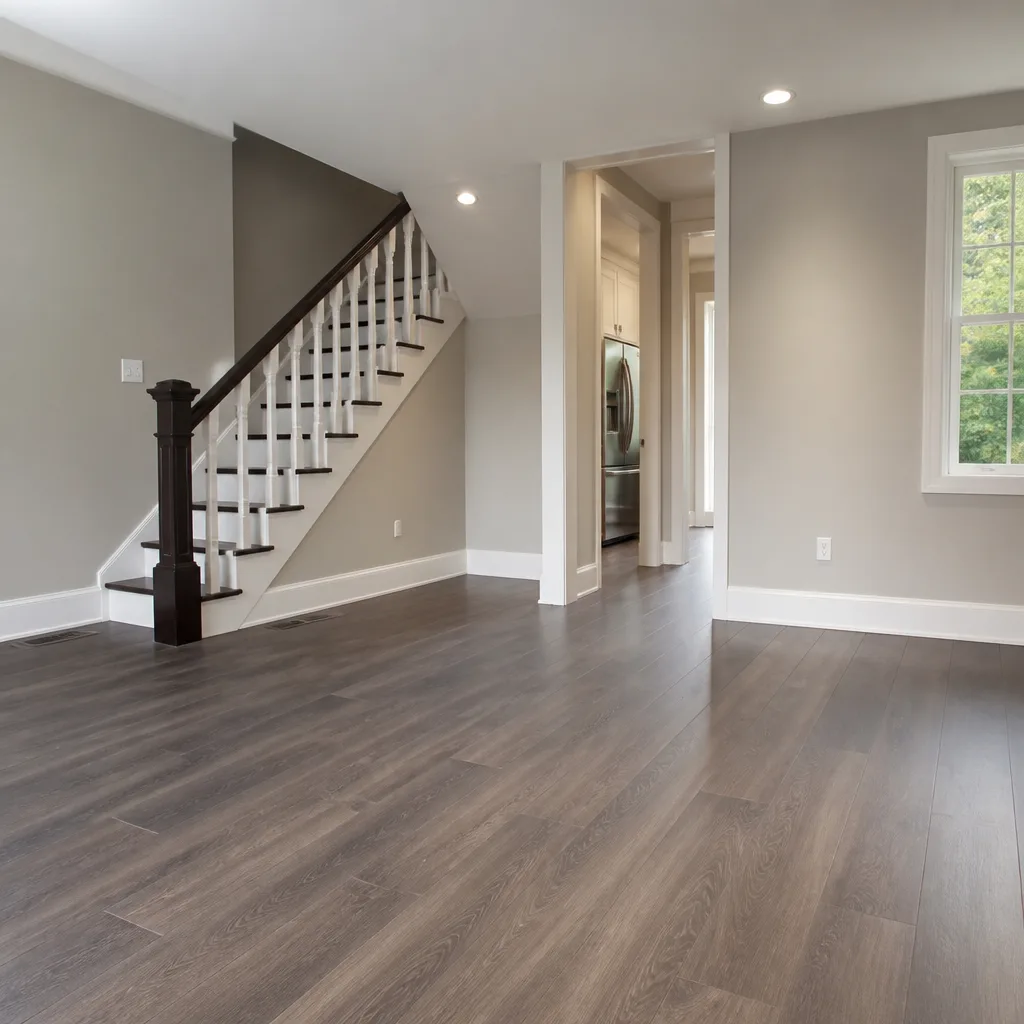

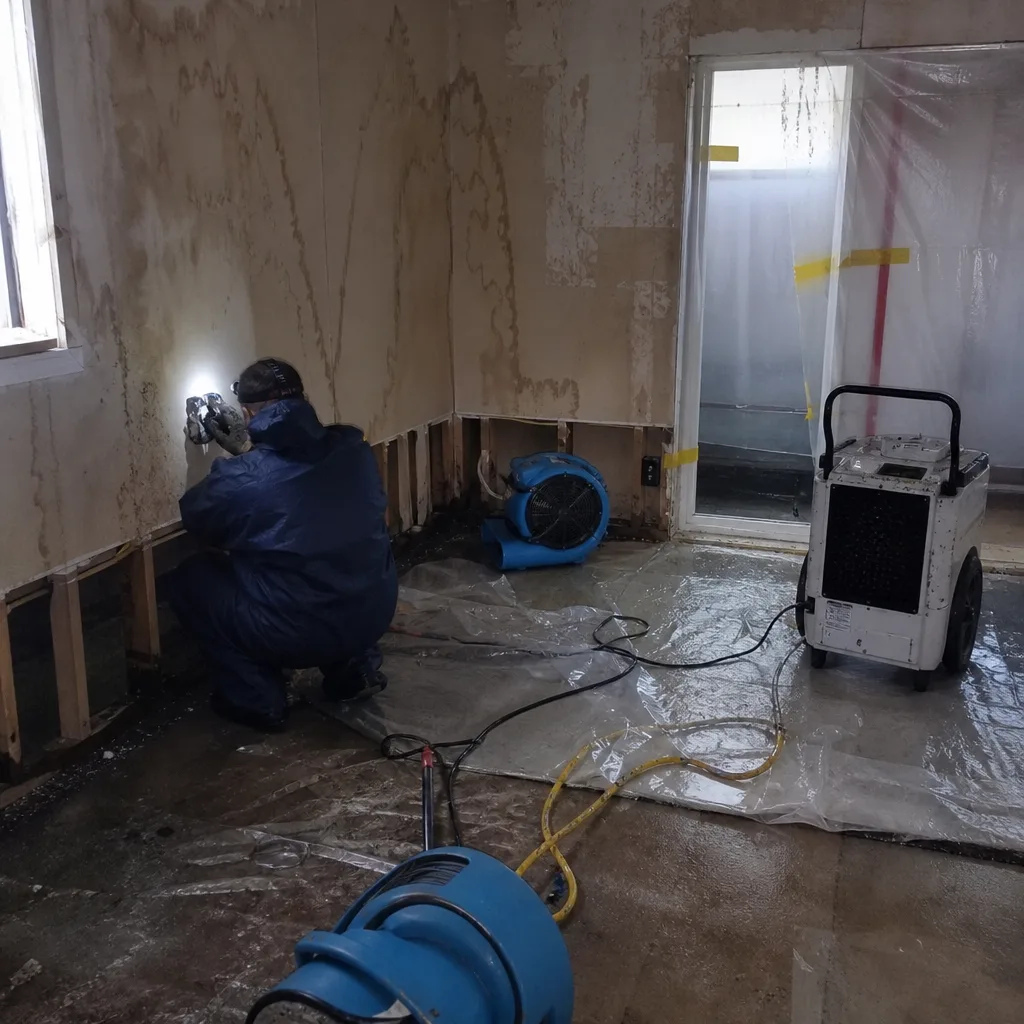 Before
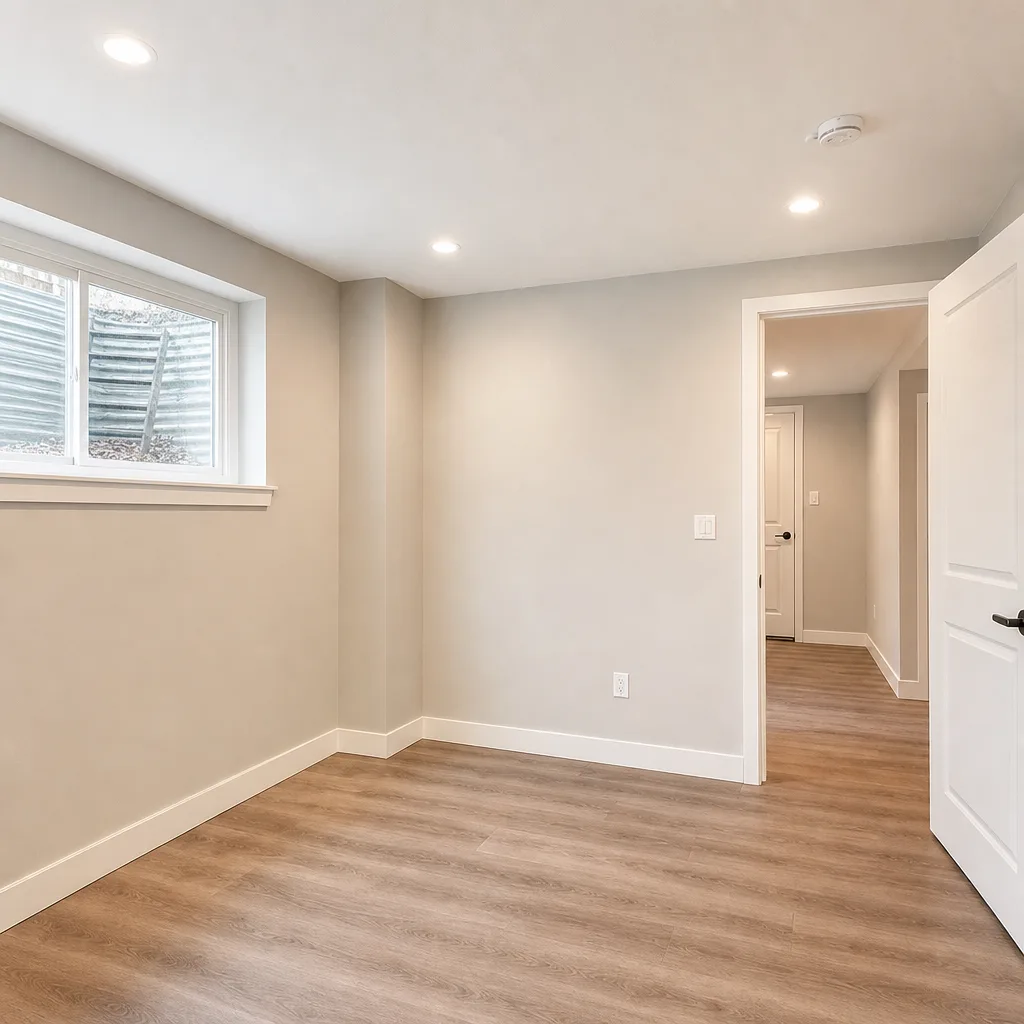 After
After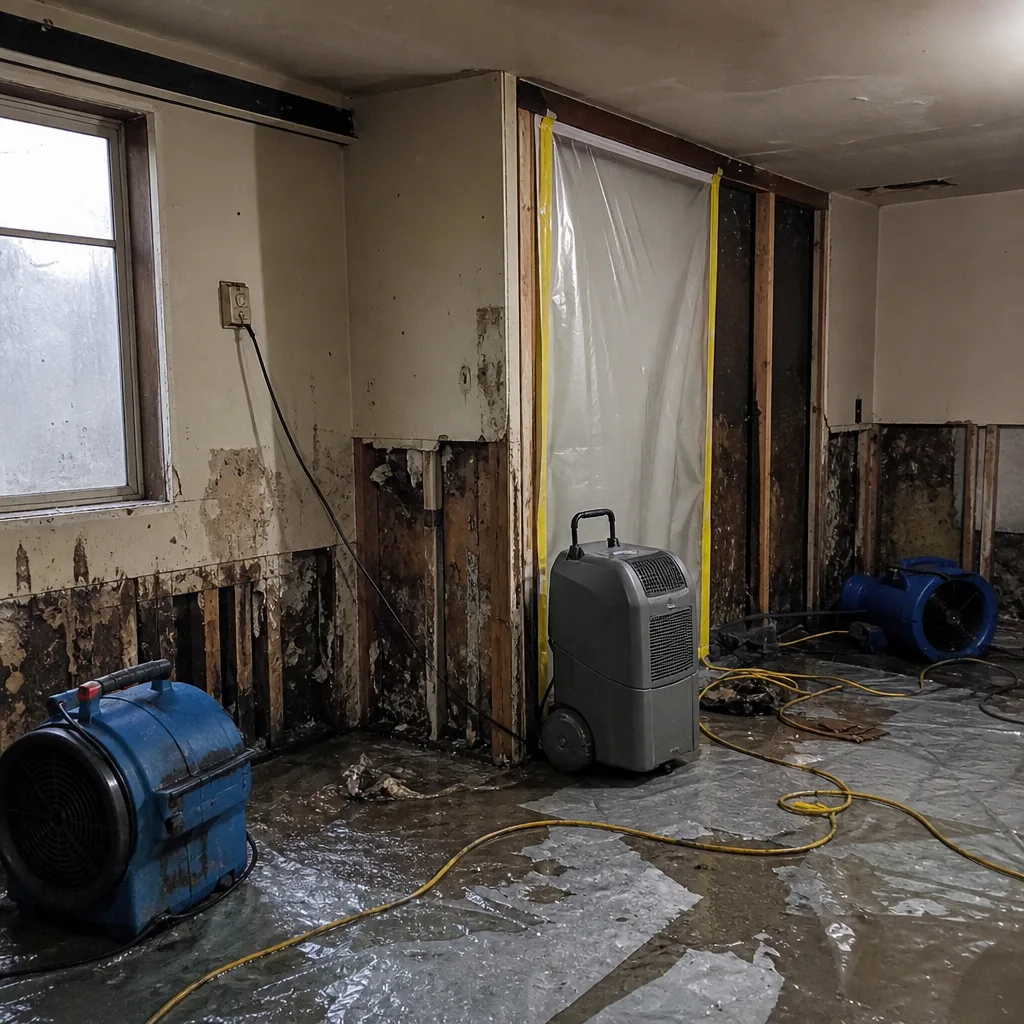 Before
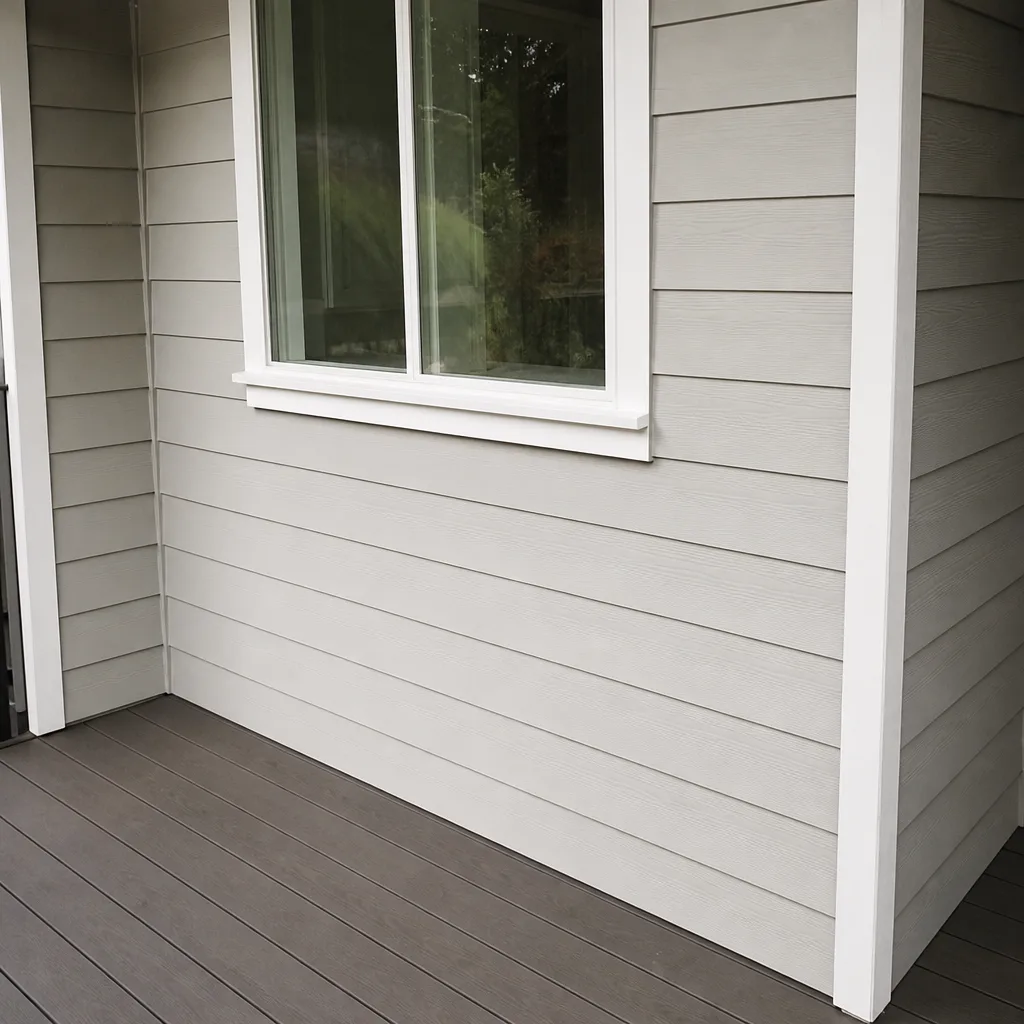 After
After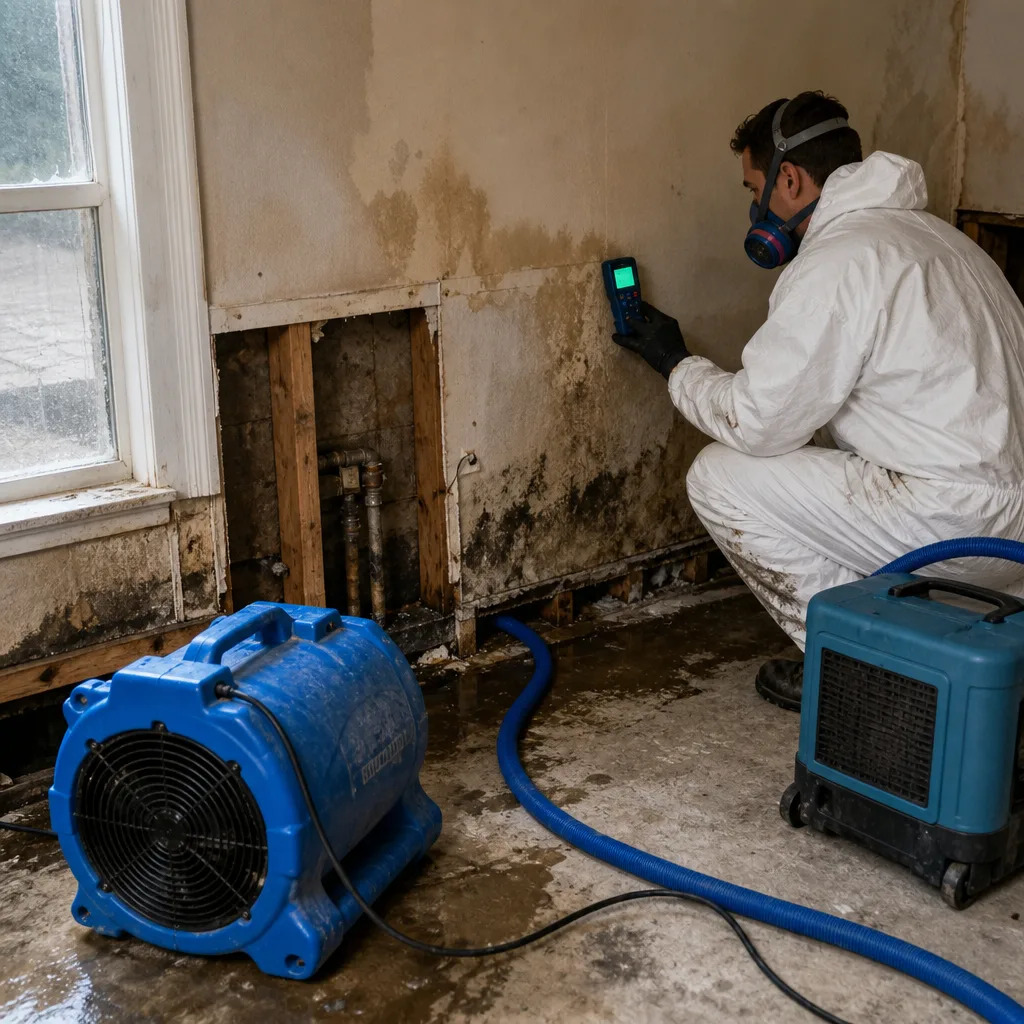 Before
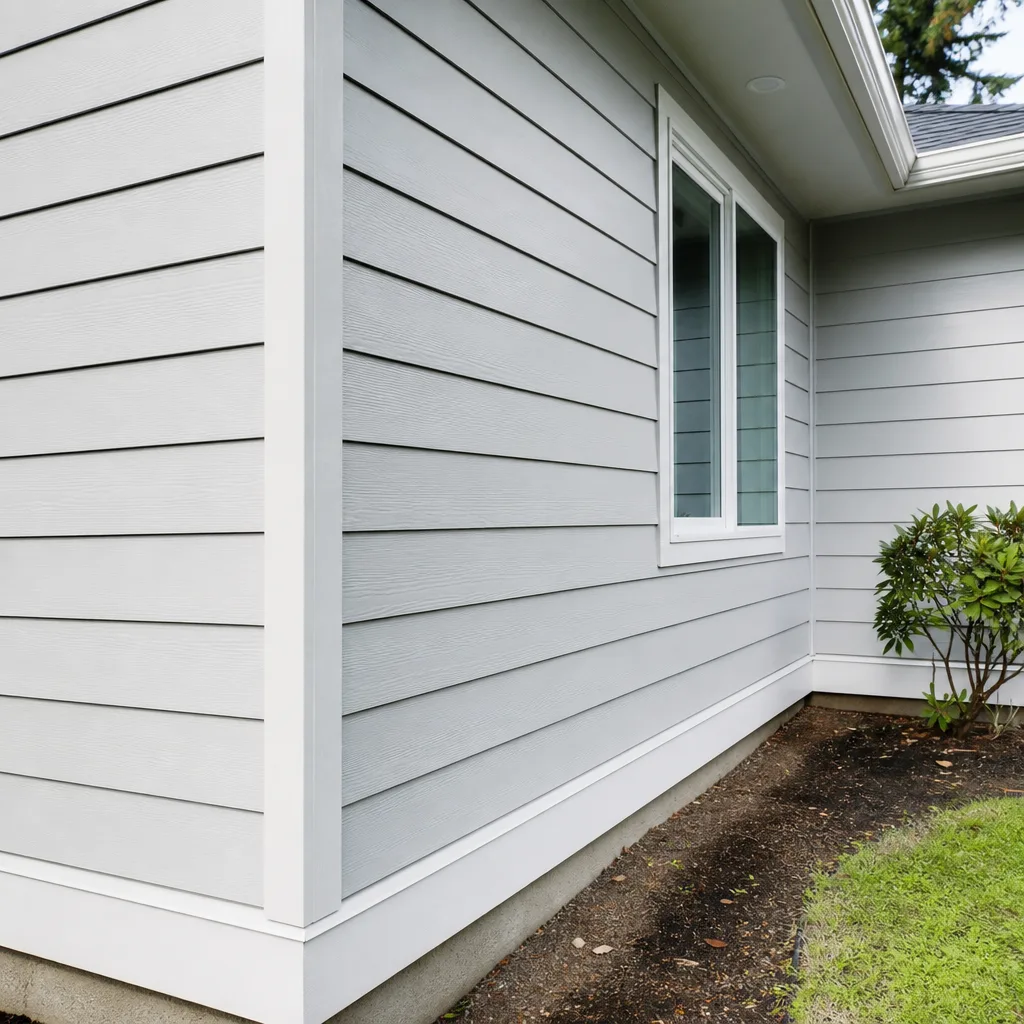 After
AfterDamage Restoration Warning Signs: A Kent Homeowner’s Reference Guide
By the time a Kent homeowner sees a watermark on drywall, the wood stud behind it has likely been above 19% moisture content for long enough to meet the conditions for mold colonization. The visible sign is not the beginning of the problem. It is the end of a hidden process that started days or weeks earlier, often in a crawl space or behind a vapor barrier where no one looks. In this guide, we will show you what to measure, where to look, and how to document what you find - so you can act before the damage outpaces your insurance coverage. For more guides & resources, see our blog.
Quick Answer
Water damage warning signs in Kent homes fall into three measurable categories: moisture content above 16% in wood framing (mold risk begins at 19%), vapor pressure differentials that force moisture through slab and foundation walls, and documented odor thresholds that insurers use to classify claims as “sudden and accidental” versus “long-term.” A $35 pin-type moisture meter from a hardware store will reveal problems that visual inspection misses by weeks.
Table of Contents
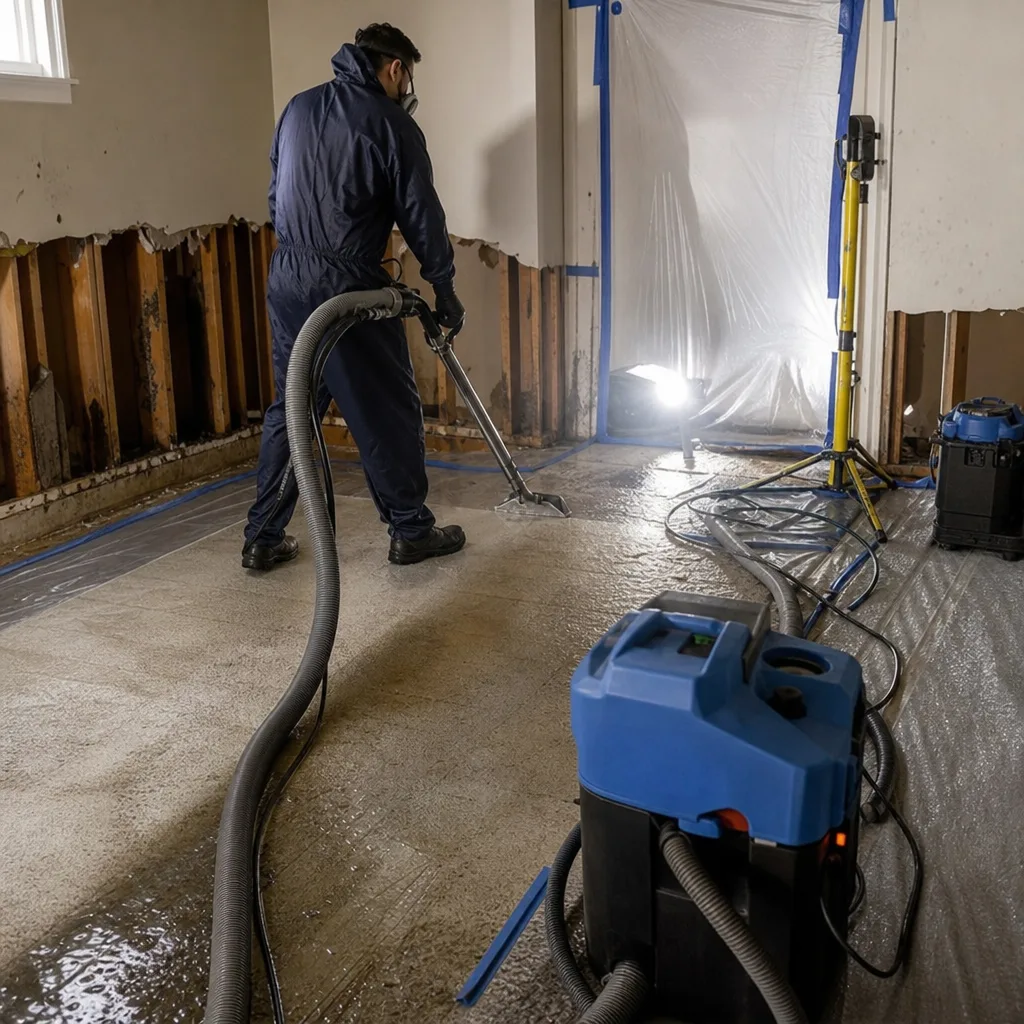
- The Moisture Thresholds That Matter: When Materials Become a Mold Risk
- Where Kent Homes Hide Water: Structural Patterns We See Repeatedly
- Three Types of Intrusion, Three Different Costs
- Odor and Visual Indicators That Affect Insurance Classification
- A Photo-and-Measurement Protocol for Documenting Warning Signs Yourself
- Mold-Specific Warning Signs Beyond the Obvious
- Fire and Smoke Damage Warning Signs Often Overlooked
- Common Mistakes to Avoid
- When to Call a Professional
- Frequently Asked Questions
BeforeAfterThe Moisture Thresholds That Matter: When Materials Become a Mold Risk
Mold does not grow on dry surfaces. It grows when spores land on materials that hold enough moisture to support germination and colonization. The thresholds are specific, and they vary by material. Knowing them changes everything about how you inspect your home.
Drywall and gypsum board: Paper-faced drywall becomes a mold substrate at approximately 1% moisture content by weight above its normal equilibrium. In Kent’s marine west-coast climate, normal equilibrium for interior drywall typically runs 8-12% depending on season and HVAC use. A reading above 13% warrants investigation; above 16%, mold colonization is likely underway if spores are present.
OSB and plywood sheathing: Oriented strand board, common in Kent’s 1960s-1990s ranch and split-level construction, is more vulnerable than dimensional lumber. OSB begins supporting mold growth at roughly 18% moisture content. At 20%, structural swelling begins - the “flaking” or “delaminating” that homeowners sometimes mistake for age-related wear.
Dimensional lumber (2×4, 2×6 framing): The critical threshold is 19-20% moisture content. Below this, even with spore presence, colonization generally does not establish. At 20-28%, mold growth accelerates. Above 28%, wood-decay fungi become active, threatening structural integrity over months rather than years.
Concrete and masonry: Concrete does not “get moldy” in the same sense, but it wicks moisture through capillary action. A concrete slab or foundation wall with surface moisture readings above 4% (measured with a calcium chloride test or in-situ relative humidity probe) will support mold growth on any organic material in contact with it: baseplate lumber, tack strips, cardboard boxes, even dust accumulation.
| Material | Normal Range | Investigate Above | Active Mold Risk |
|---|---|---|---|
| Drywall (paper-faced) | 8-12% | 13% | 16% |
| OSB sheathing | 10-14% | 16% | 18-20% |
| Dimensional lumber | 10-15% | 17% | 19-20% |
| Concrete (surface RH) | 70-75% RH | 80% RH | 85%+ RH |
A consumer-grade pin-type moisture meter, available for $30-50 at hardware stores in Kent, uses two metal probes to measure electrical resistance through the material. For drywall, insert the pins at a 45-degree angle into an inconspicuous area. For wood, press the pins with the grain. Take three readings per area and average them. Document each reading with a photo showing the meter display and the location - this timestamped record becomes evidence if your insurer disputes the timeline of damage.
We have documented thousands of water damage restoration in Kent jobs where the homeowner’s own moisture log, started with a $35 meter, established that damage began after a specific storm date - the difference between a covered claim and a denied one.
Where Kent Homes Hide Water: Structural Patterns We See Repeatedly
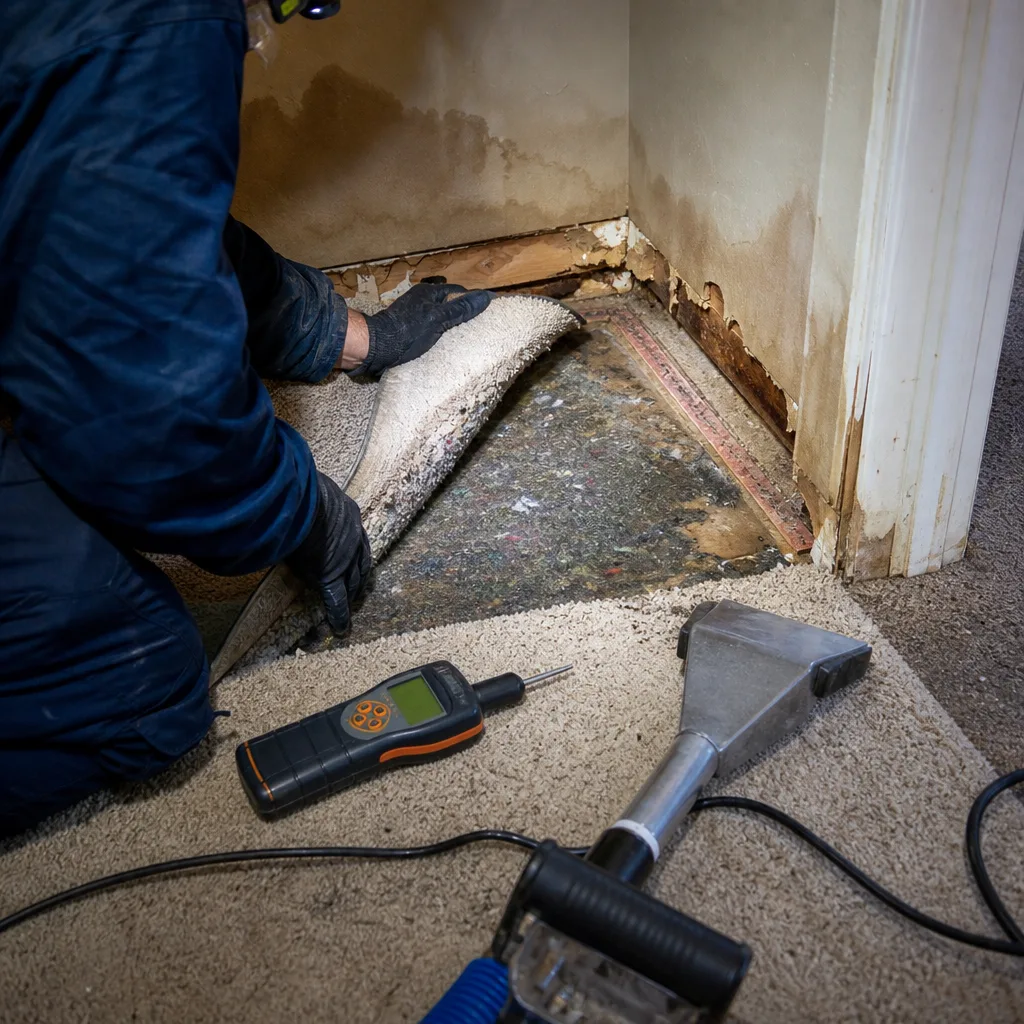
Kent’s housing stock has distinct eras, and each era has distinct failure patterns. Understanding your home’s construction vintage tells you where to look first. For a complete maintenance calendar, see our Seasonal Damage Restoration Care for Kent: Year-Round Homeowner’s Guide.
Pre-1970s ranch and mid-century homes: These homes often have unconditioned crawl spaces with dirt floors and minimal vapor barriers. In Kent’s wet winters, groundwater rises through the soil and evaporates into the crawl space. Without adequate cross-ventilation or a sealed, conditioned crawl space, this moisture migrates upward through the subfloor. We regularly find OSB subflooring in the 22-26% range in these homes, with mold established on the underside of the subfloor and the top of floor joists - invisible from above until the flooring above begins to cup or the homeowner notices a “musty” smell concentrated in closets and perimeter rooms.
The crawl-space-to-subfloor pathway is the most common hidden damage vector we encounter in Kent. A homeowner checks the living space, finds normal humidity, and assumes all is well. Meanwhile, the crawl space air, saturated with moisture from soil evaporation, is in direct contact with the coldest surface in the building assembly: the subfloor, cooled by the conditioned space above. Condensation forms. The process repeats daily through winter.
1970s-1990s split-level and tri-level homes: These often have daylight basements with walk-out doors on the rear. The foundation wall transitions from below-grade to above-grade, creating a thermal bridge and a common point of seepage. In Kent’s clay-heavy soils, hydrostatic pressure builds against these walls during sustained rains. Water enters through hairline cracks in the foundation or the joint between wall and slab. Because the basement is “daylight,” homeowners assume it is dry. They finish the walls with drywall directly against concrete, creating a perfect mold habitat when moisture wicks through.
1990s-2010s homes with stucco or EIFS exteriors: Improper flashing at windows, doors, and deck ledger boards is endemic in this era nationwide, and Kent is no exception. Water enters the wall cavity, runs down the weather-resistant barrier, and pools at the base plate. We have opened walls in Kent’s East Hill and Meridian Valley neighborhoods where the bottom 24 inches of framing were black with mold - while the exterior showed no visible defect and the interior paint was unblemished. The first sign was often a homeowner noticing baseboards that “didn’t sit right” or slight bubbling at wall-to-floor joints.
Post-2010 construction: Tighter envelopes and energy code requirements reduce drying potential. When water enters - usually through roof penetrations, window leaks, or plumbing failures - it stays longer. We see more extensive mold in newer Kent homes not because they leak more, but because they dry more slowly once they do leak.
Three Types of Intrusion, Three Different Costs
Not all water damage is the same. The warning signs look similar. The remediation costs differ by factors of three or five. Understanding which type you have - before calling any contractor - protects you from scope inflation and helps you communicate accurately with your insurer. If you’re unsure whether to handle it yourself, read our DIY vs Professional Damage Restoration: The Kent Homeowner’s Decision Guide.
Type 1: Active intrusion. Water is currently entering the structure. The source is identifiable and ongoing: a leaking supply line, failed flashing, groundwater seepage during rain. Warning signs include moisture readings that increase over 24-48 hours, visible water or dampness that returns after wiping, and musty odor that intensifies during or after precipitation. The correct response is source control first, then drying and repair. Cost is typically lowest per square foot because the damage is limited to what has occurred so far, and structural drying prevents secondary damage.
Type 2: Historic intrusion that self-dried. Water entered in the past, but conditions changed and the material dried below mold-supporting thresholds. Warning signs include water stains that are dry to touch, moisture readings at or below normal equilibrium, and no musty odor. The damage is cosmetic: stained drywall, warped trim, possibly some surface mold that died when conditions dried. Remediation involves repair and refinishing, not full-scale mold remediation. Cost is lowest of the three types. Many homeowners over-remediate these situations after receiving alarming assessments from contractors who do not distinguish dry historic damage from active conditions. Our How to Hire a Damage Restoration Contractor in Kent: A Step-by-Step Guide can help you evaluate who to trust.
Type 3: Historic intrusion with ongoing biological activity. Water entered in the past, conditions remained favorable, and mold or decay fungi established and continue to grow even if the original source is no longer active. This is the most expensive scenario and the one most commonly misdiagnosed. Warning signs include moisture readings above threshold in the absence of an obvious current source, musty odor that persists regardless of weather, and visible mold that recurs after cleaning. The biological activity itself produces moisture through metabolic processes, creating a self-sustaining cycle. Remediation requires not just drying but removal of affected materials, HEPA containment, and often air filtration. Costs run highest, and insurance coverage is most contested.
We offer a DryMark Restoration Kent home assessment that specifically distinguishes these three types using moisture mapping, thermal imaging, and air sampling where indicated. The written scope you receive states which type we found, with the measurements that support that conclusion. Haven Standard, Clause 1: written price before work begins.
Odor and Visual Indicators That Affect Insurance Classification
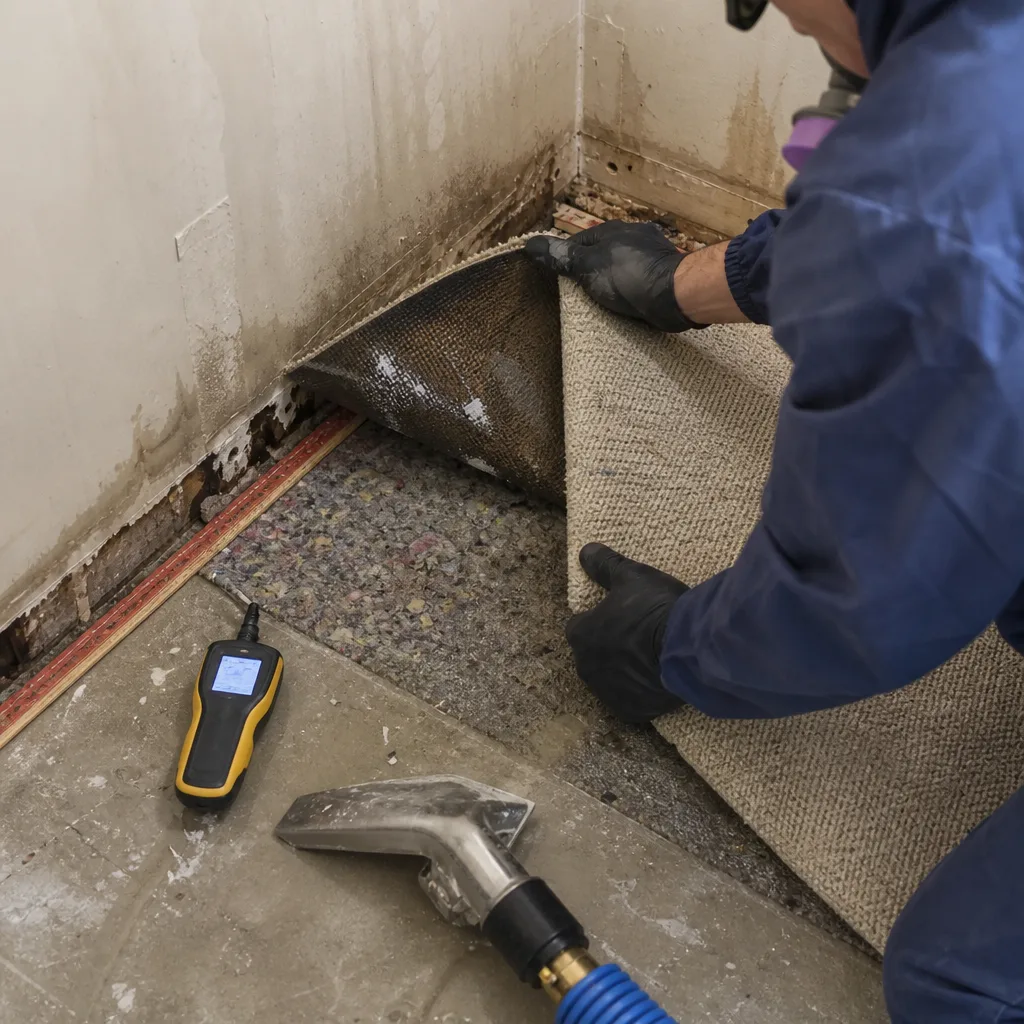
Insurance adjusters are trained to classify water damage as either “sudden and accidental” (generally covered under standard homeowners policies) or “long-term” or “gradual” (often excluded). The classification is not arbitrary. It is based on observable indicators that you can learn to recognize.
Indicators of sudden and accidental damage:
- Water staining with sharp, defined edges rather than diffuse, feathered margins
- Uniform moisture distribution suggesting a single event rather than progressive accumulation
- Absence of mold growth beyond 48-72 hours of estimated exposure time
- Materials that are wet but not yet discolored by oxidation or microbial staining
- Odor characterized as “wet” or “earthy” rather than “musty” or “fermented”
- Documentation of a specific event: storm date, plumbing failure time, appliance malfunction
Indicators of long-term damage:
- Multiple generations of water staining, with newer stains overlapping older ones
- Diffused, irregular moisture patterns suggesting repeated or chronic exposure
- Established mold growth with visible sporulation (fuzzy or powdery surface)
- Wood darkening from oxidation, not just wetness
- Odor described as “musty,” “stale,” or “fermented” - the volatile organic compounds produced by established microbial colonies
- Calcium deposits or efflorescence on concrete or masonry, indicating repeated wet-dry cycles
The odor threshold is particularly important. A “wet” smell indicates recent water with limited microbial activity. A “musty” smell indicates microbial volatile organic compounds (MVOCs) produced by active or recently active mold colonies. Adjusters document this distinction in their files. Your own documentation should too.
When we document a mold remediation in Kent, our photo record includes close-ups of staining patterns, moisture meter readings with location markers, and odor characterization notes. This package, delivered to your adjuster, reduces claim disputes because it speaks the same language the adjuster uses to classify coverage.
A Photo-and-Measurement Protocol for Documenting Warning Signs Yourself
Before you call any contractor, including us, create a timestamped baseline. This protects you regardless of what any subsequent report says. The process takes 30 minutes and requires only a smartphone and a pin-type moisture meter.
- Photograph the area in context. Take a wide shot showing the room, the affected wall or floor section, and a recognizable reference point (window, door frame, light switch). This establishes location unambiguously.
- Photograph the specific sign. Take close-ups of stains, discoloration, warping, or visible mold. Include a ruler or coin for scale. Enable timestamp on your camera or screenshot the photo details showing date and time.
- Take moisture readings at three points. For a wall stain, measure at the center of the stain, 6 inches above, and 6 inches below. For a floor, measure at the center and two points radiating outward. Record each reading on paper or in your phone’s notes app.
- Photograph the meter at each reading. Show the display clearly and the probe position relative to the material. This creates an auditable record.
- Note environmental conditions. Record outdoor temperature and recent weather, indoor temperature and relative humidity if you have a hygrometer, and whether HVAC was running.
- Describe odor in specific terms. Avoid “smells bad.” Use: wet/earthy, musty/stale, fermented/sour, chemical, or no odor. Note whether odor intensifies near the affected area or is generalized.
- Email the package to yourself. This creates a timestamped record stored independently of your phone. Include all photos, readings, and notes in a single email with a clear subject line: “Home inspection [date] - [room/area].”
This documentation serves multiple purposes. It establishes a timeline if your insurer questions when damage began. It provides a baseline to compare against any contractor’s moisture readings - a significant discrepancy is a red flag. And it gives you the information to ask specific questions: “Your meter showed 24% in the subfloor; my reading three days ago was 18%. What changed, and can you show me where?”
We have seen homeowners in Kent use self-documentation to identify contractor overreach - a scope proposing full wall removal when moisture readings showed Type 2 historic damage that had self-dried - and to support legitimate claims when adjusters initially classified damage as long-term based on visual inspection alone.
Mold-Specific Warning Signs Beyond the Obvious
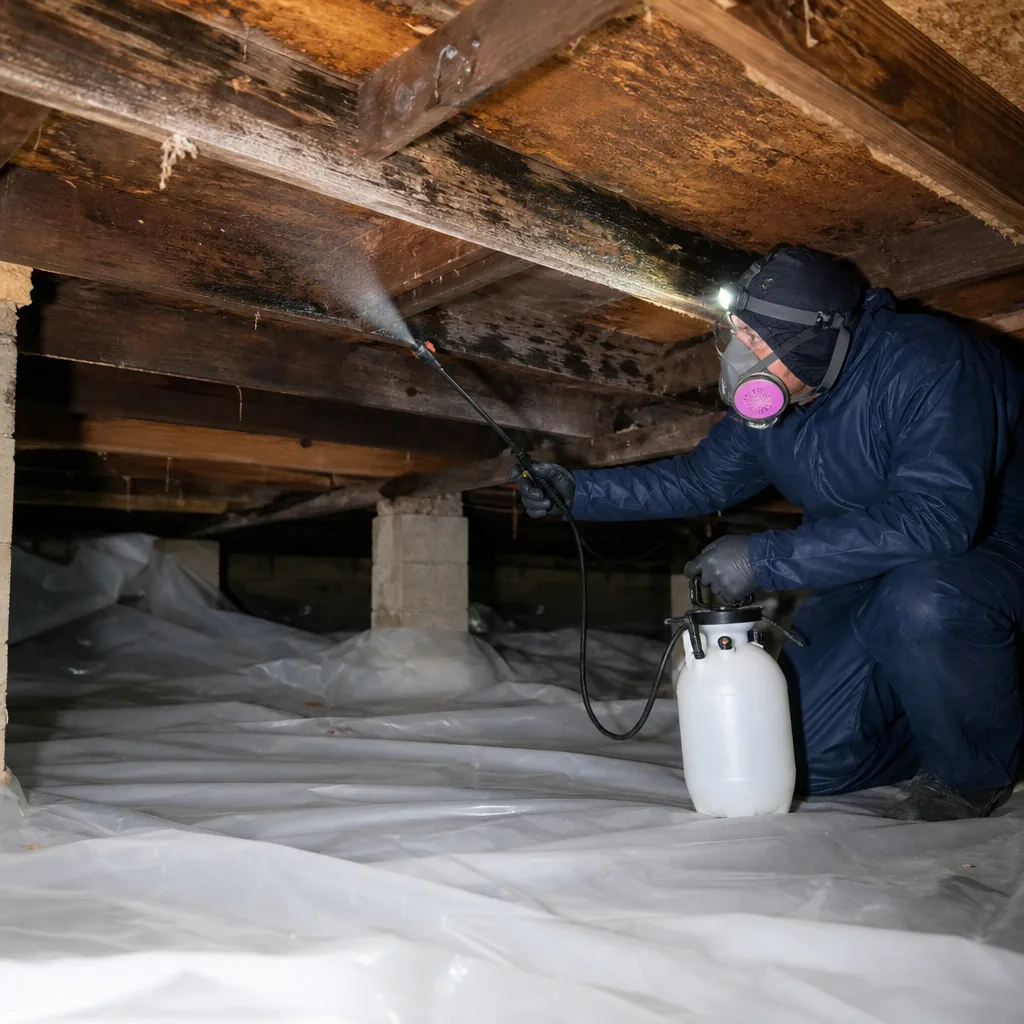
Visible mold growth is the last warning sign, not the first. Preceding indicators are subtler and more informative.
Allergic symptoms that correlate with location, not season. If respiratory irritation, watery eyes, or headaches occur primarily when you are in a specific room or floor of your Kent home - and diminish when you leave that space for several hours - mold is a likely cause. Seasonal allergies correlate with outdoor pollen counts and affect you everywhere. Mold-related symptoms correlate with microenvironments.
Surface changes that precede visible growth. Wallpaper that loosens at seams, paint that develops a faint “chalking” or powdery surface, and baseboards that separate slightly from walls can all indicate moisture accumulation behind the surface. These changes occur because moisture alters adhesion and dimensional stability before mold becomes visible.
HVAC anomalies. Mold in ductwork or air handlers produces a characteristic pattern: odor noticeable when the system first cycles on, then diminishing as operation continues. This occurs because the initial air movement disturbs settled spores and MVOCs. If you notice this pattern, inspect the return air pathway and filter housing first - these are common collection points in Kent’s older homes with ductwork in unconditioned crawl spaces.
Pet behavior changes. Animals often detect mold before humans. Dogs or cats that suddenly avoid a previously favored room, or that develop respiratory symptoms without other explanation, warrant environmental investigation.
Professional mold assessment involves air sampling, surface sampling, and moisture mapping to IICRC S520 standards. Our mold remediation in Kent includes pre-remediation sampling, containment with negative air pressure using HEPA filtration, and post-remediation verification sampling to confirm clearance. The photo record on every visit documents each phase.
Fire and Smoke Damage Warning Signs Often Overlooked
Fire damage is not always dramatic. Slow, smoldering fires - in walls from electrical faults, in attics from recessed lighting, in crawl spaces from heating equipment - produce smoke and heat damage that homeowners miss until structural failure or persistent odor forces attention.
Electrical fire precursors: Discoloration around outlets or switches, particularly a faint brown or amber staining on the cover plate or surrounding wall, indicates heat damage to wiring. A buzzing sound, warm cover plates, or intermittent circuit breaker trips are active warnings. These require immediate electrician evaluation before any restoration work begins.
Attic and concealed space fires: Recessed can lights in contact with insulation are a known ignition source. Warning signs include a persistent “hot” smell in upper floor rooms, discolored or sagging insulation visible at attic access points, and nail pops or tape failure on ceiling drywall caused by thermal cycling. In Kent’s older homes with original 1960s-1970s wiring, aluminum branch circuits add resistance-heating risk at connections.
Smoke damage without visible fire: Protein fires from cooking produce nearly invisible residue that penetrates surfaces and continues to off-gas. Warning signs include a persistent “burnt” or “acrid” odor that cleaning does not remove, and surfaces that feel slightly greasy or tacky. Standard cleaning products do not remove protein smoke; alkaline cleaners and thermal fogging are required.
HVAC contamination: Smoke and soot particles are typically 0.1-4 microns and penetrate HVAC systems rapidly. Warning signs include odor recurrence when the system cycles, filter discoloration outside normal dust loading, and soot accumulation at supply registers. Without duct cleaning and coil decontamination, smoke damage continues to redistribute.
Our fire and smoke damage restoration in Kent includes thermal imaging to identify hidden fire damage in wall and ceiling cavities, particulate testing to document smoke penetration depth, and written scope development before any demolition or cleaning begins. The 365-Day Done Right Promise covers all fire restoration work under The Haven Standard.
Common Mistakes to Avoid
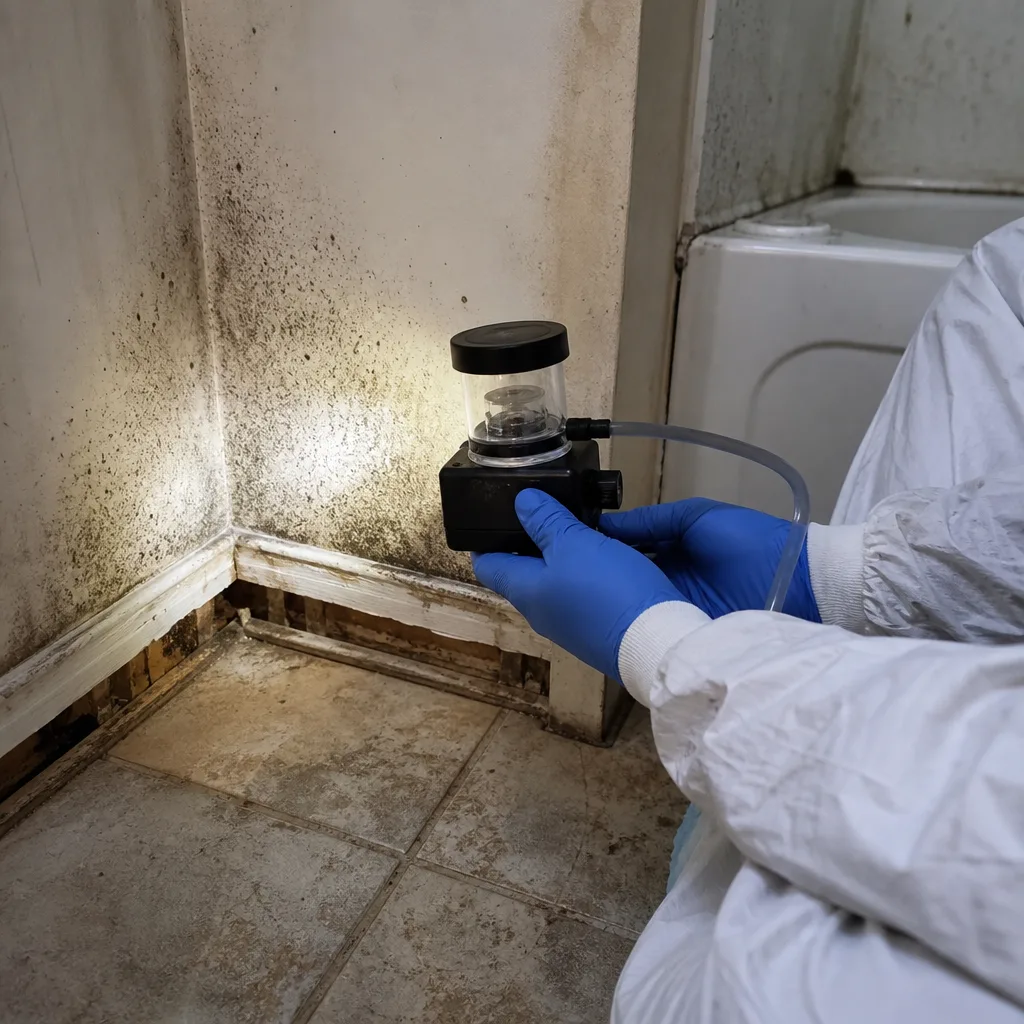
- Waiting for visible mold before acting. Mold colonization begins at 19% wood moisture content, typically 10-14 days after wetting. By the time growth is visible, removal of affected materials is usually required rather than surface cleaning alone. Measure first, look second.
- Assuming a dry surface means dry assembly. Drywall can read normal at the surface while the cavity behind it remains saturated. Always measure at multiple depths and locations, including the back side of removed material samples.
- Using bleach on mold. Bleach does not penetrate porous materials and can add moisture that worsens the problem. It also produces false confidence - the color change is cosmetic, not remedial. Proper remediation requires source removal and controlled drying, not chemical surface treatment.
- Ignoring Kent’s specific soil and drainage conditions. The clay soils in many Kent neighborhoods drain poorly and create sustained hydrostatic pressure against foundations. A sump pump or perimeter drain system that would be optional in sandy-soil regions is often essential here. Grading that appears adequate by general standards may be insufficient for local soil conditions.
- Accepting verbal scope descriptions. Every restoration scope should be written, with line-item pricing, before work begins. Haven Standard, Clause 1 exists because we have seen too many Kent homeowners receive invoices 40% above the “estimate” given at the door. A written price protects both parties.
- Failing to document the pre-loss condition. Before any contractor begins work, photograph undamaged areas, personal property, and structural conditions. This baseline protects against damage claims and supports personal property inventory if contents are affected.
- Not reviewing your insurance policy’s water damage exclusions before calling a contractor. Understanding your coverage - sudden versus gradual, mold limits, sump pump backup riders - lets you ask better questions and avoid surprises. We provide free second opinions on any competitor’s written estimate, including assessment of how their scope aligns with typical policy language.
When to Call a Professional
Call for professional assessment when moisture readings exceed material thresholds, when odor persists despite your best efforts to identify and address source, when you suspect Type 3 historic intrusion with ongoing biological activity, or when any electrical, gas, or structural safety concern is present. Do not attempt to evaluate or repair damage involving energized electrical systems, gas appliances, or compromised structural elements yourself.
DryMark Restoration Kent offers free estimates in Kent. A trained technician will arrive with moisture meters, thermal imaging, and the documentation tools to produce a written scope with line-item pricing before any work begins. Call (360) 997-2427. Live person answers every call, 24 hours a day, 7 days a week - no voicemail trees, no next-business-day callbacks while water is still moving.
Frequently Asked Questions
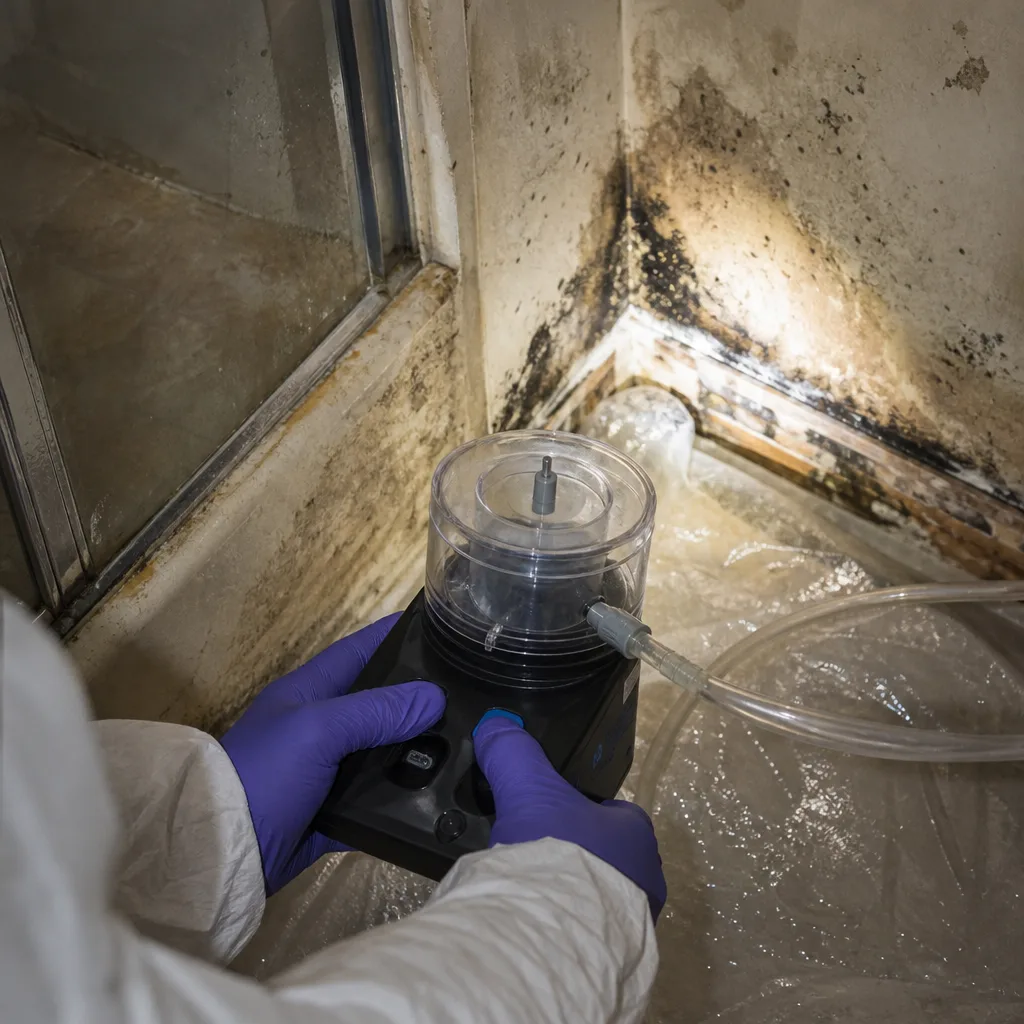
Initial assessment and written estimate from DryMark Restoration Kent is provided at no charge. The assessment includes moisture mapping of affected areas, thermal imaging to identify hidden moisture, and a written scope with line-item pricing before any work begins. Call (360) 997-2427 to schedule.
Coverage depends on whether the underlying moisture source was sudden and accidental versus gradual. Most policies exclude long-term mold damage but cover mold that results from a covered water loss, provided mitigation begins promptly once discovered. Your documentation of when you noticed signs and what you did matters. Photo records with timestamps strengthen your position if the timeline is disputed.
A consumer pin-type meter costing $30-50 is adequate for initial screening and ongoing monitoring. Professional restoration companies use more sophisticated meters with species correction settings, non-invasive scanning capability, and thermo-hygrometers to calculate vapor pressure differentials. The consumer meter tells you whether to investigate further; professional equipment tells us exactly what drying protocol to deploy.
Live person answers every call, 24 hours a day, 7 days a week. Emergency dispatch for active water intrusion is immediate; our technician arrives with moisture meters, extraction equipment, and the documentation tools to begin moisture mapping and photo record creation on the first visit. Reconstruction and non-emergency work is scheduled after written scope and pricing approval.
Our estimate includes moisture readings, thermal imaging, and a written scope with line-item pricing you can compare to any other quote. We also offer a free second opinion on any competitor’s written estimate - bring their scope and we will review it at no charge. Haven Standard, Clause 1: written price before work begins, every time, with no exceptions.
Ask to see the meter display yourself, with the probe in the material. Compare to your own documented readings if you have them. Ask what meter model is being used and whether species correction is applied for the material being tested. A qualified technician will explain each reading and its implication without hesitation. Opaque or rushed measurements are a red flag.
The Bottom Line
Water damage warning signs in Kent homes are measurable before they are visible. A $35 moisture meter and 30 minutes of systematic documentation puts you ahead of the damage timeline and protects your position with insurers and contractors alike. The critical thresholds are 19% for dimensional lumber, 18% for OSB, and 16% for drywall - exceed these, and mold colonization is likely already underway. Know your home’s construction era and its typical failure patterns. Distinguish active intrusion from historic damage before calling for quotes. And insist on written scope and pricing before any work begins, every time, with no exceptions. Haven Standard, Clause 1.
Written by Alicia Brennan, Owner at DryMark Restoration Kent, serving Kent since 2011.