
Free visual inspection and a written scope of work before any mitigation begins - photos, moisture readings, and drying logs go in your claim file
The scope we write is the scope we bill. Anything new gets shown to you, in writing, before we touch it.
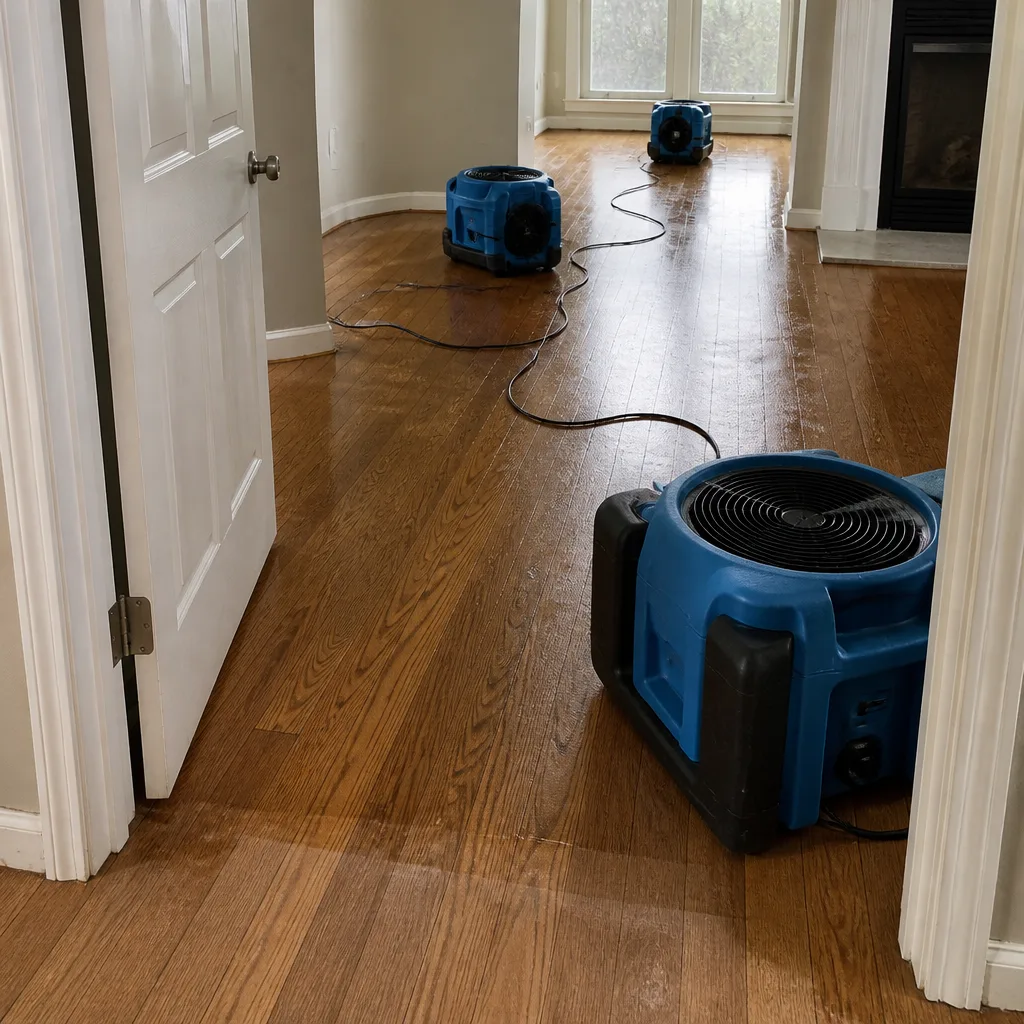
 Before
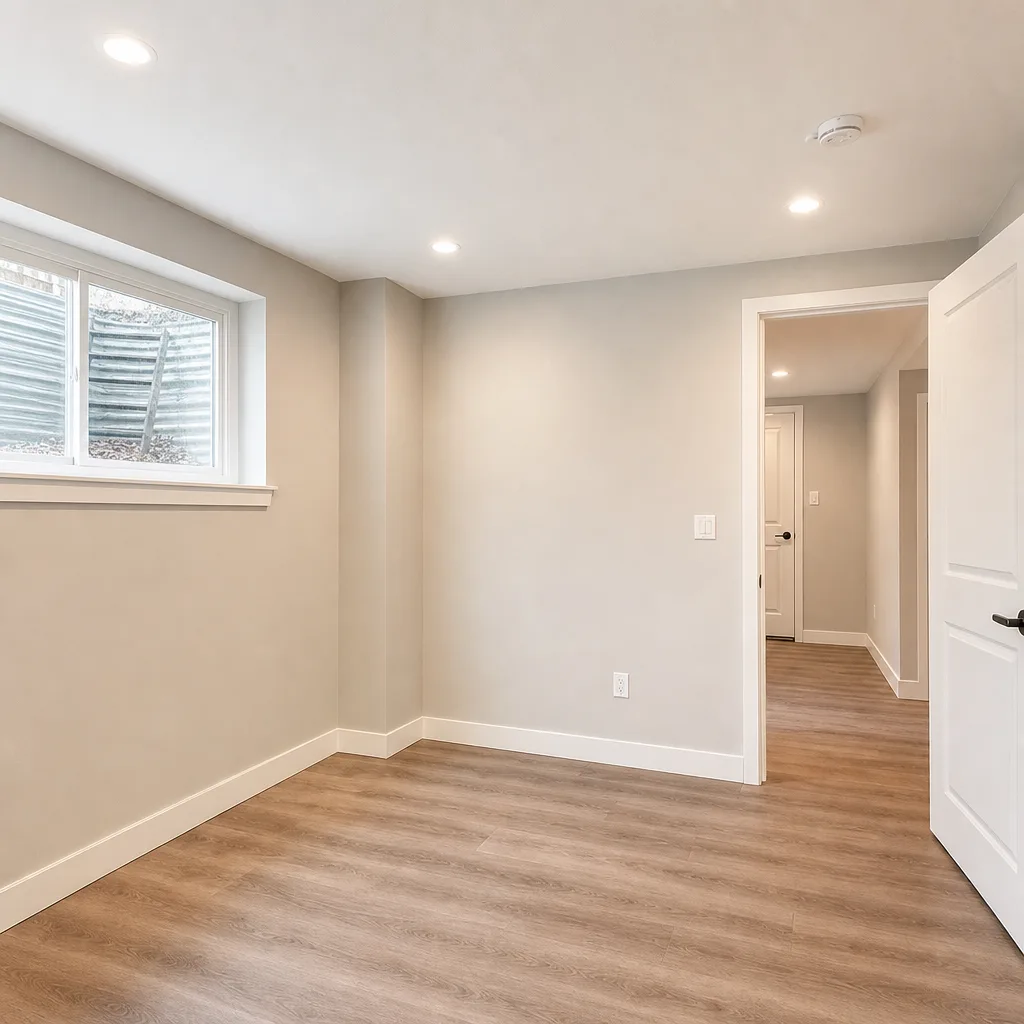 After
After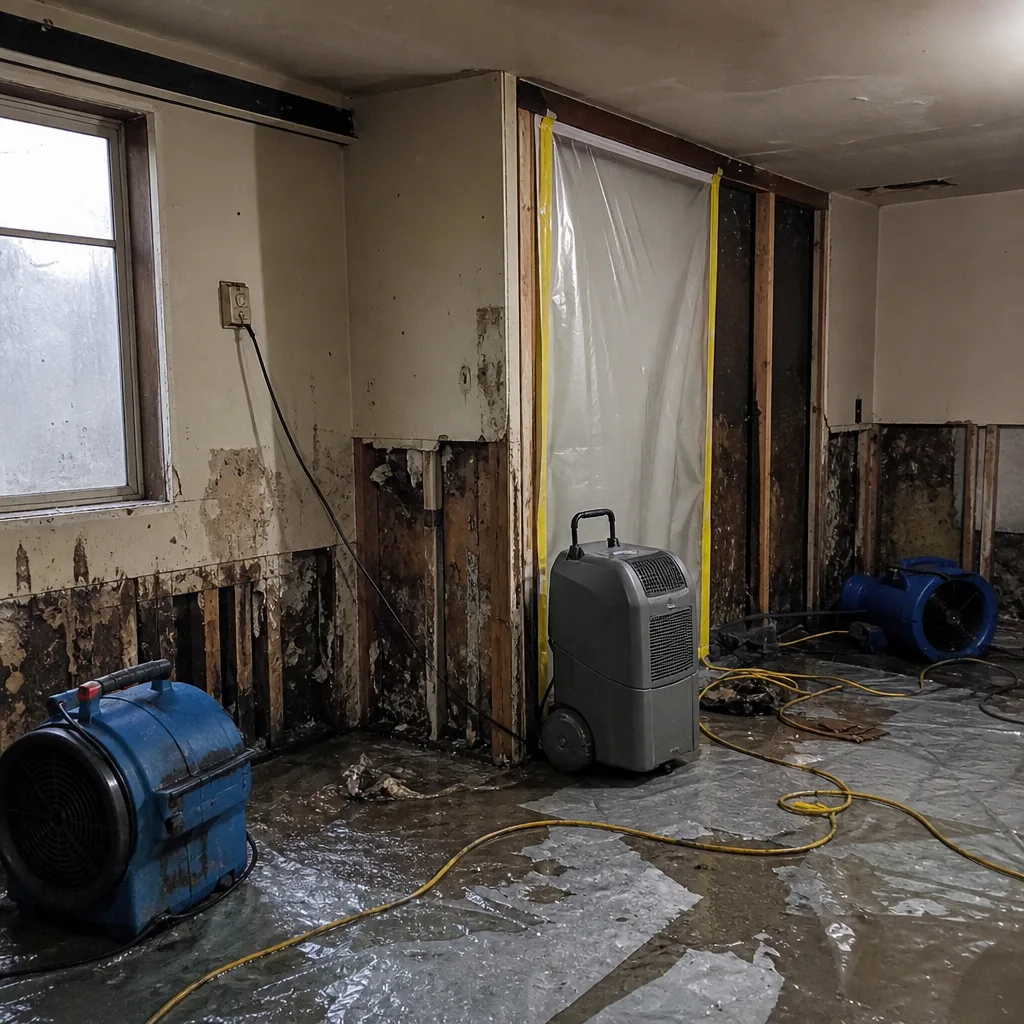 Before
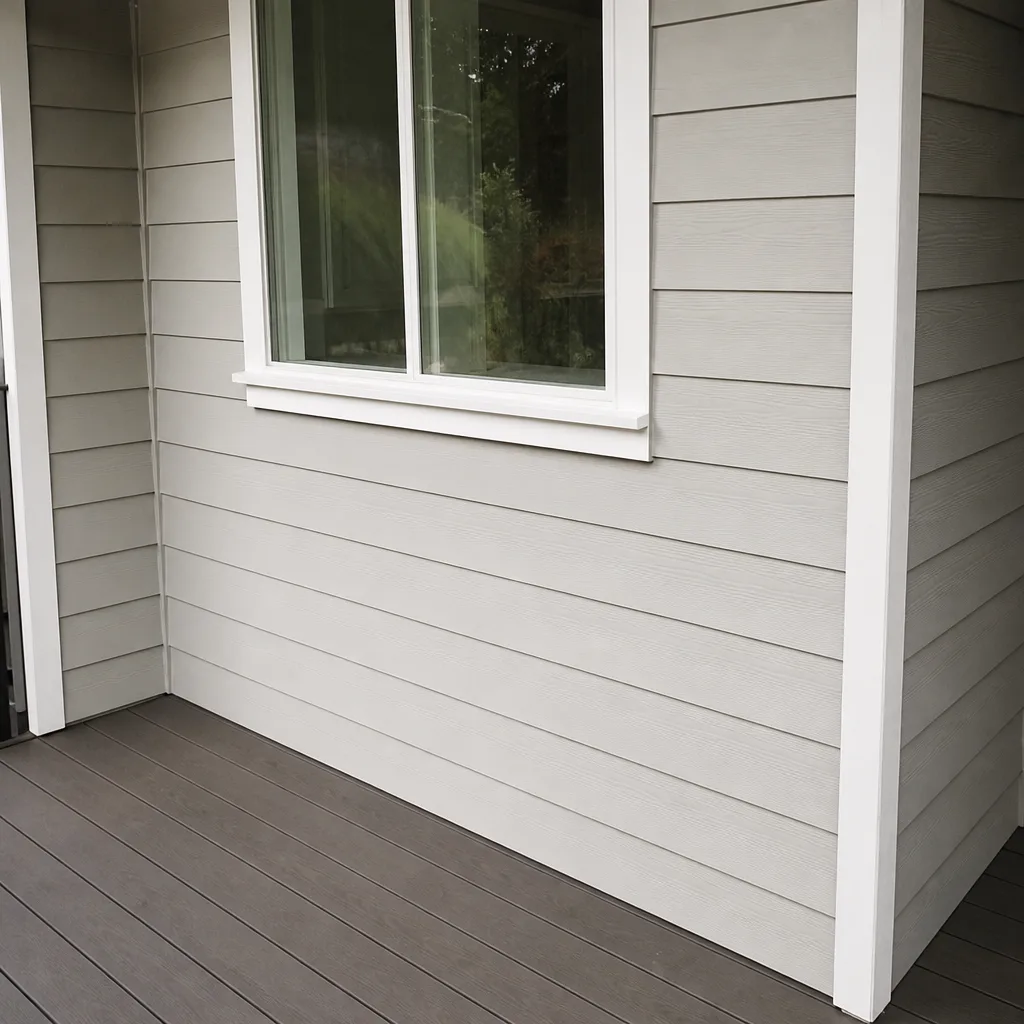 After
After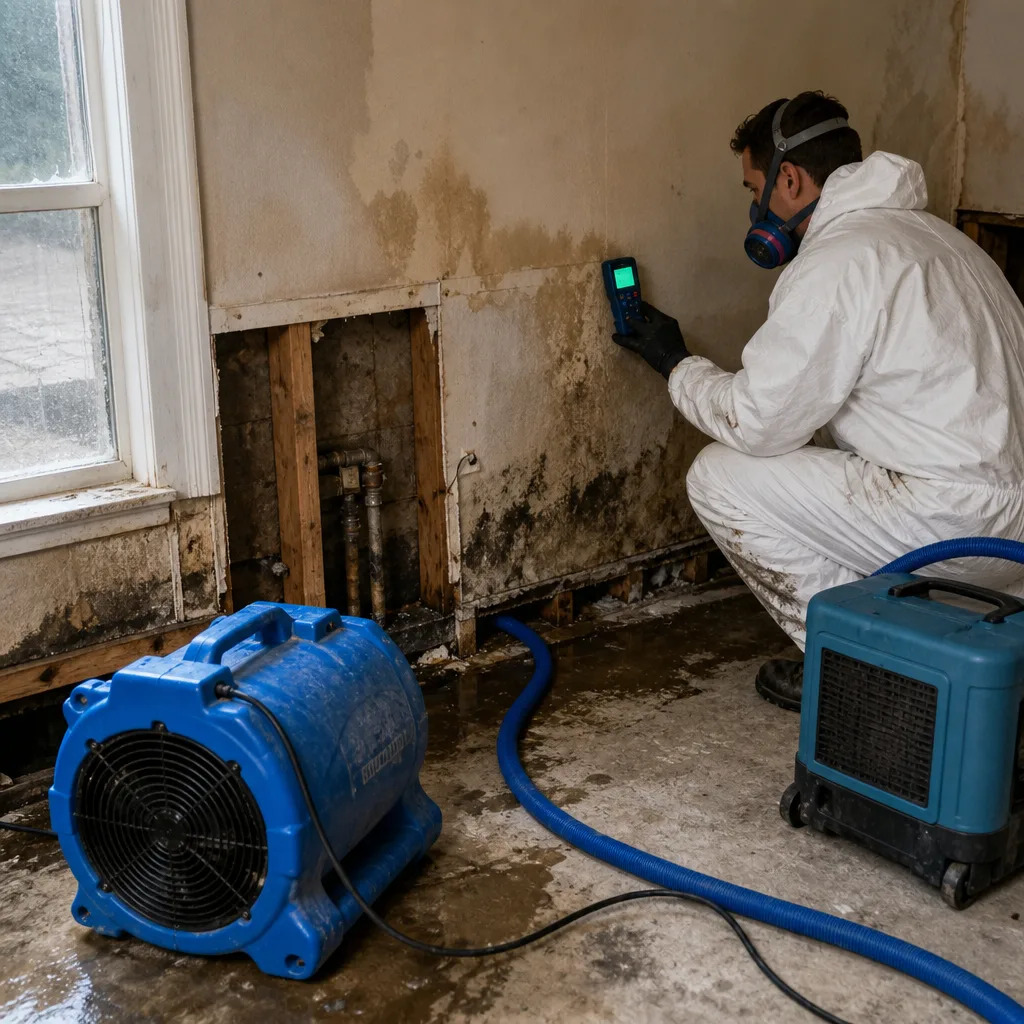 Before
 After
After24/7 Emergency Mold Remediation in Federal Way
Mold remediation in Federal Way typically costs $1,800-$6,500 depending on affected square footage and whether the source is contained to a crawl space or has reached wall cavities and HVAC systems. Most jobs require 3-7 days of active remediation, with same-day containment and air-scrubber deployment available when you call (360) 997-2427. Our dispatch center in Seattle coordinates crews throughout the Federal Way area, and a live person answers every call - no voicemail, no callback queues while moisture keeps moving.
The first hour matters because mold releases spores within 24-48 hours of moisture activation, and once spores colonize porous materials like drywall or insulation, removal replaces cleaning. We offer a free visual inspection to Federal Way properties, document moisture readings with thermal imaging, and deliver a written scope and price before any containment goes up. Crews carry HEPA air scrubbers, negative-air machines, and moisture meters on every truck.
Understanding Mold Remediation Severity in Federal Way Properties
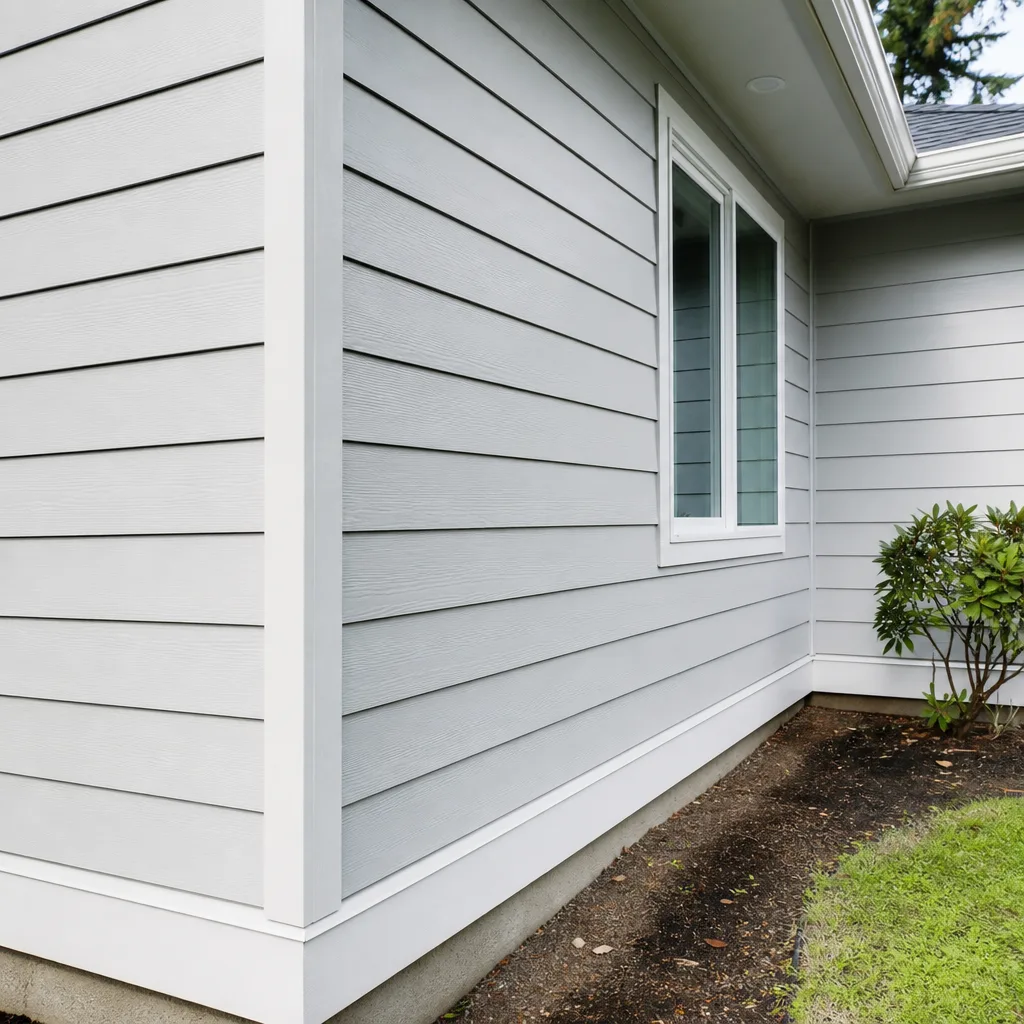
Mold severity in Federal Way follows a pattern distinct from neighboring cities. The dominant housing stock - 1980s-1990s wood-framed tract homes built before the city’s 1990 incorporation - combines LP Inner-Seal hardboard siding, minimal house-wrap, and vented crawl spaces with degraded poly vapor barriers. This assembly creates what restoration professionals call slow-burn envelope failure: months of low-level moisture intrusion rather than a single acute event.
We classify Federal Way mold jobs by contamination extent and material porosity. Category 1 surface growth on non-porous materials like tile or sealed concrete requires HEPA vacuuming and antimicrobial wipe-down. Category 2 penetration into semi-porous materials - the oriented strand board subfloors common in this era’s construction, or drywall behind LP siding - demands controlled demolition with containment and air scrubbing at negative pressure. Category 3 hidden colonization in wall cavities, rim joists, or HVAC ducting, often traced to hardboard-siding moisture wicking, requires full containment, tertiary drying with documented psychrometric data (temperature, relative humidity, and vapor pressure differential readings), and post-remediation clearance testing to IICRC S520 standards.
The critical distinction in Federal Way is source versus symptom. A musty smell treated with dehumidification alone will return until the torn vapor barrier, failed siding, or groundwater seepage is addressed. Our Mold Remediation teams moisture-map every job to find the assembly failure, not just the visible mold.
Why Federal Way Property Owners Choose DryMark Restoration Kent
- 45-minute response commitment to Federal Way addresses - containment and air scrubbers deploy fast because mold spreads on air currents once disturbed.
- 24/7 live answer by a real person, never an automated system or voicemail tree; emergency lines ring through to our Seattle dispatch center around the clock.
- IICRC-certified crews holding WRT (Water Damage Restoration Technician), AMRT (Applied Microbial Remediation Technician), and FSRT (Fire & Smoke Restoration Technician) credentials where cross-contamination applies.
- Free visual inspection with thermal imaging and moisture-meter readings - no charge to document what you’re dealing with.
- Direct insurance billing with photo-documented scopes written to Xactimate standards, plus direct adjuster coordination so your claim moves without dispute.
- One team from mold containment through reconstruction - no handoffs between remediation and rebuild contractors that delay re-occupancy.
BeforeAfterOur Mold Remediation Process
1. Inspection & Assessment
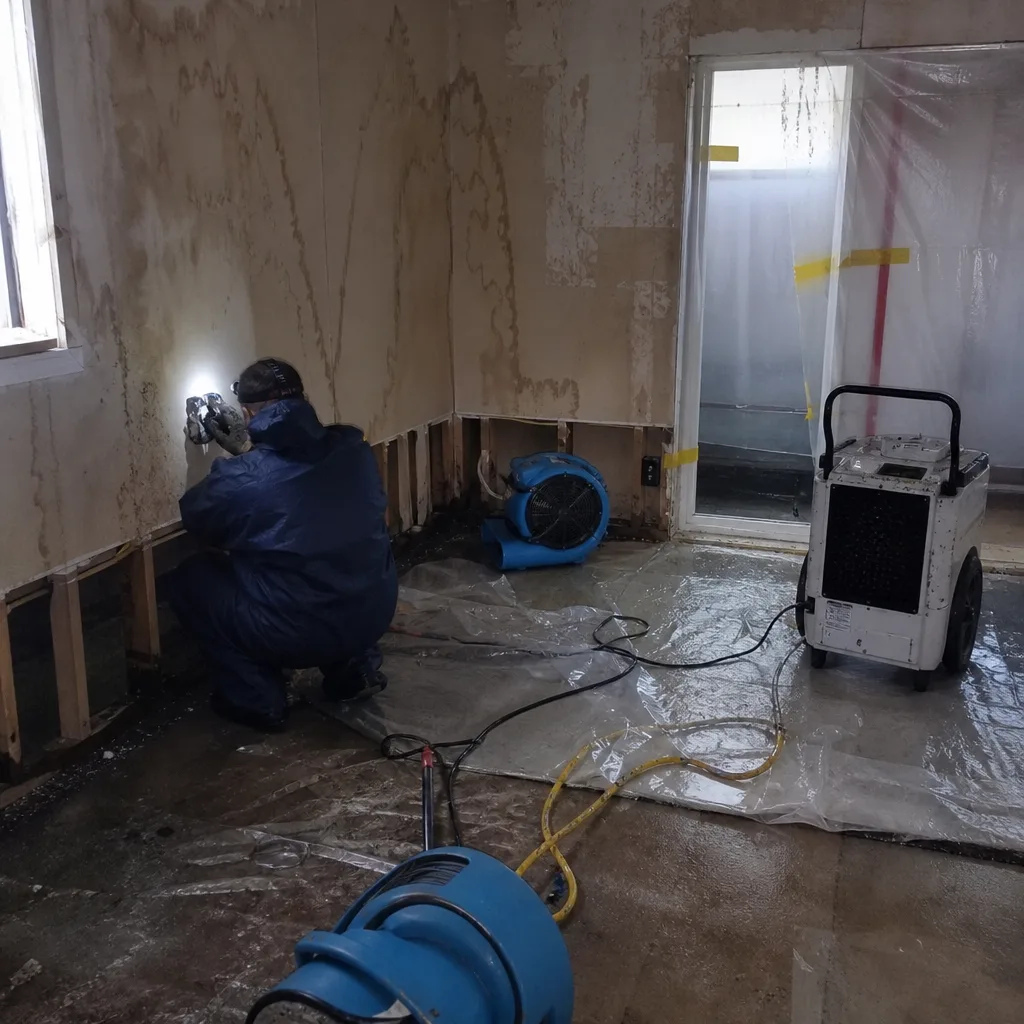
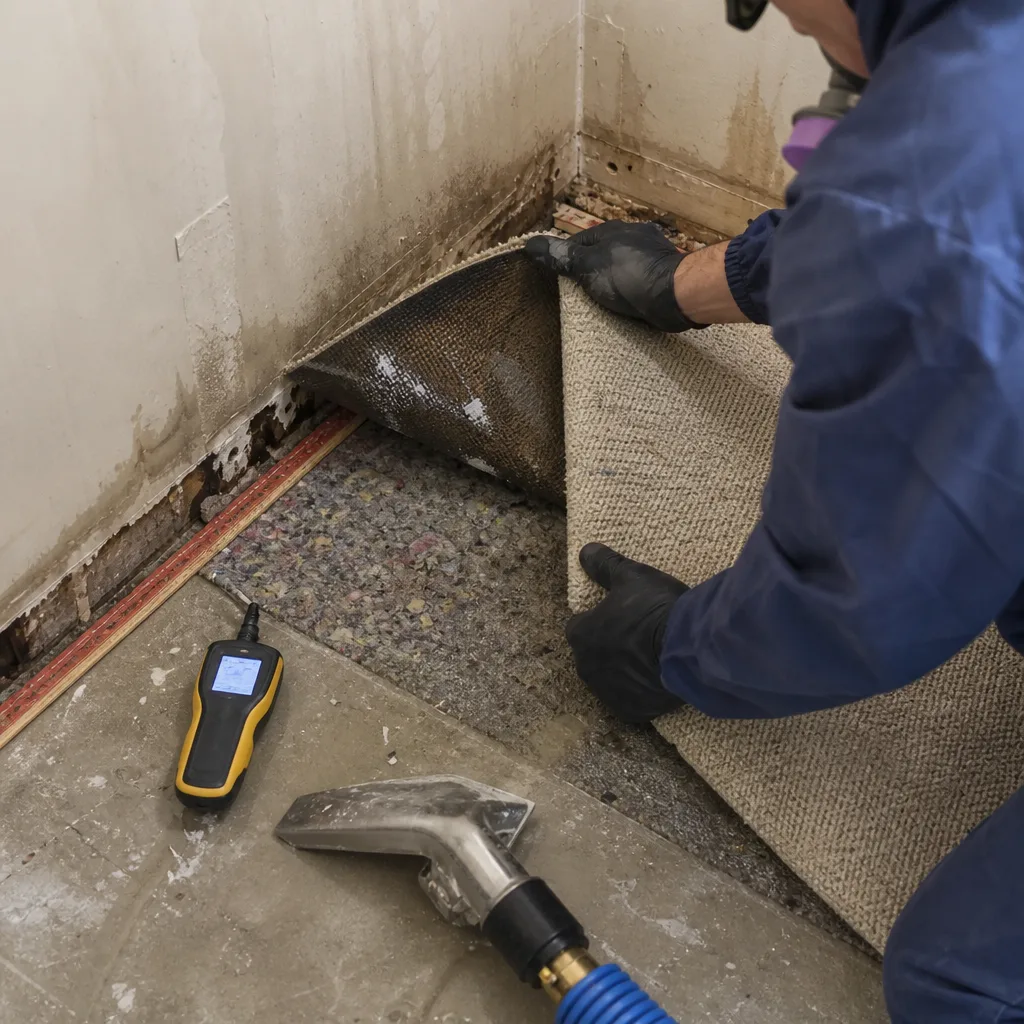
We arrive with thermal imaging cameras, penetrating and non-penetrating moisture meters, and hygrometers to map the full extent of moisture intrusion. In Federal Way’s 1980s-1990s homes, we pay particular attention to rim joists behind LP siding and crawl-space conditions near Steel Lake and North Lake where the water table runs high. Every reading is logged.
2. Containment & Air Filtration
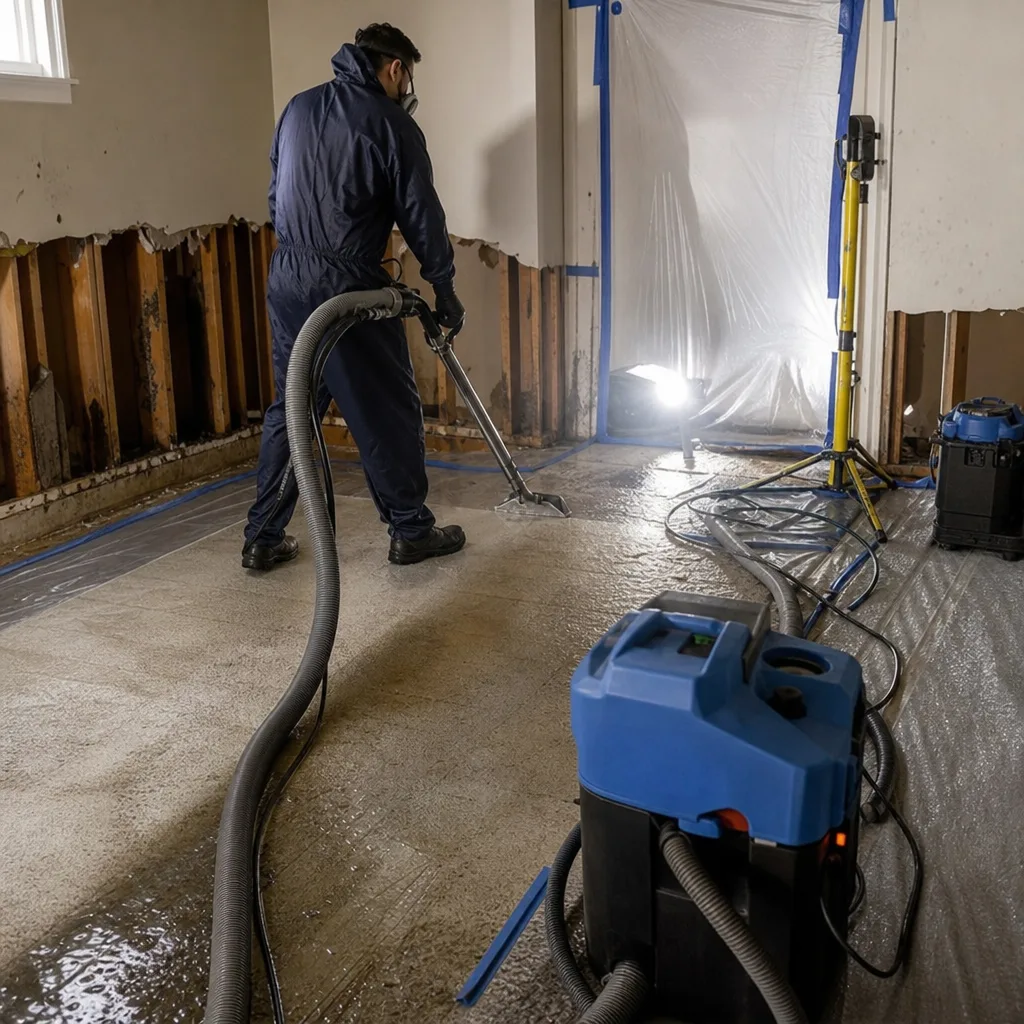
Polyethylene containment barriers seal the work zone under negative air pressure, with HEPA air scrubbers running continuously to capture airborne spores. We calculate air changes per hour based on containment volume and deploy additional scrubbers for Category 3 hidden colonization.
3. Source Removal & Demolition
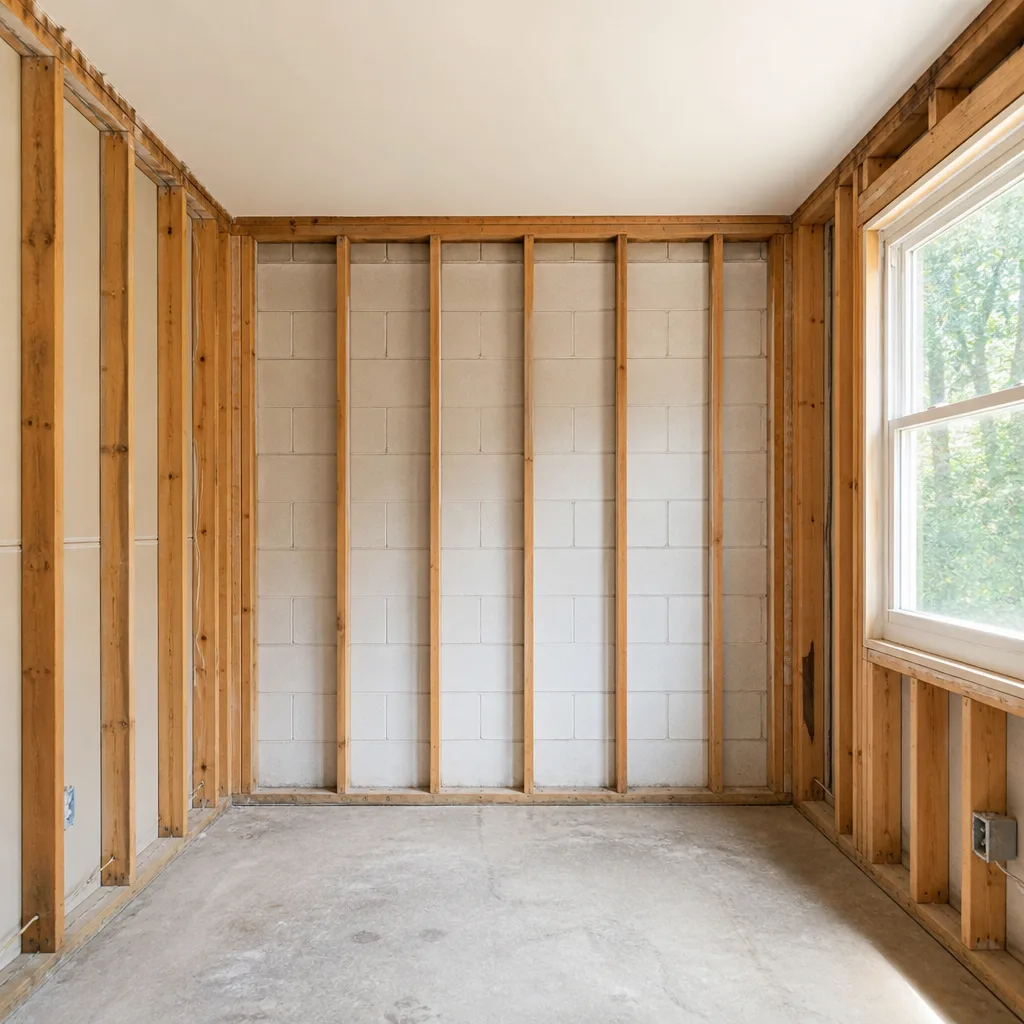
Non-salvageable materials - moldy drywall, degraded insulation, failed vapor barriers, rotted OSB subfloor - are removed bagged and sealed. We document each square foot of removal with photos for your insurer and our drying log.
4. Drying & Dehumidification
Professional-grade Dri-Eaz and Phoenix dehumidifiers, plus Injectidry mat systems for rim-joist cavities, reduce moisture content to below 16% wood-moisture equivalent. Daily psychrometric readings track progress; the drying log becomes part of your claim documentation.
5. Antimicrobial Treatment & HEPA Cleaning
All surfaces within containment receive antimicrobial application to EPA-registered standards, followed by HEPA vacuuming and wet cleaning. We treat not just visible areas but the full contained zone, including structural framing and mechanical penetrations.
6. Clearance Testing & Restoration
Third-party or in-house air and surface sampling confirms spore counts at or below outdoor baseline levels before containment comes down. Reconstruction - new drywall, insulation, vapor-barrier replacement, or full crawl-space encapsulation - follows under our 365-Day Done Right Promise.
Need Emergency Mold Remediation in Federal Way Now?
Crews minutes away, answering live 24 hours a day. The sooner we start, the less it costs.
Working With Your Insurance Company
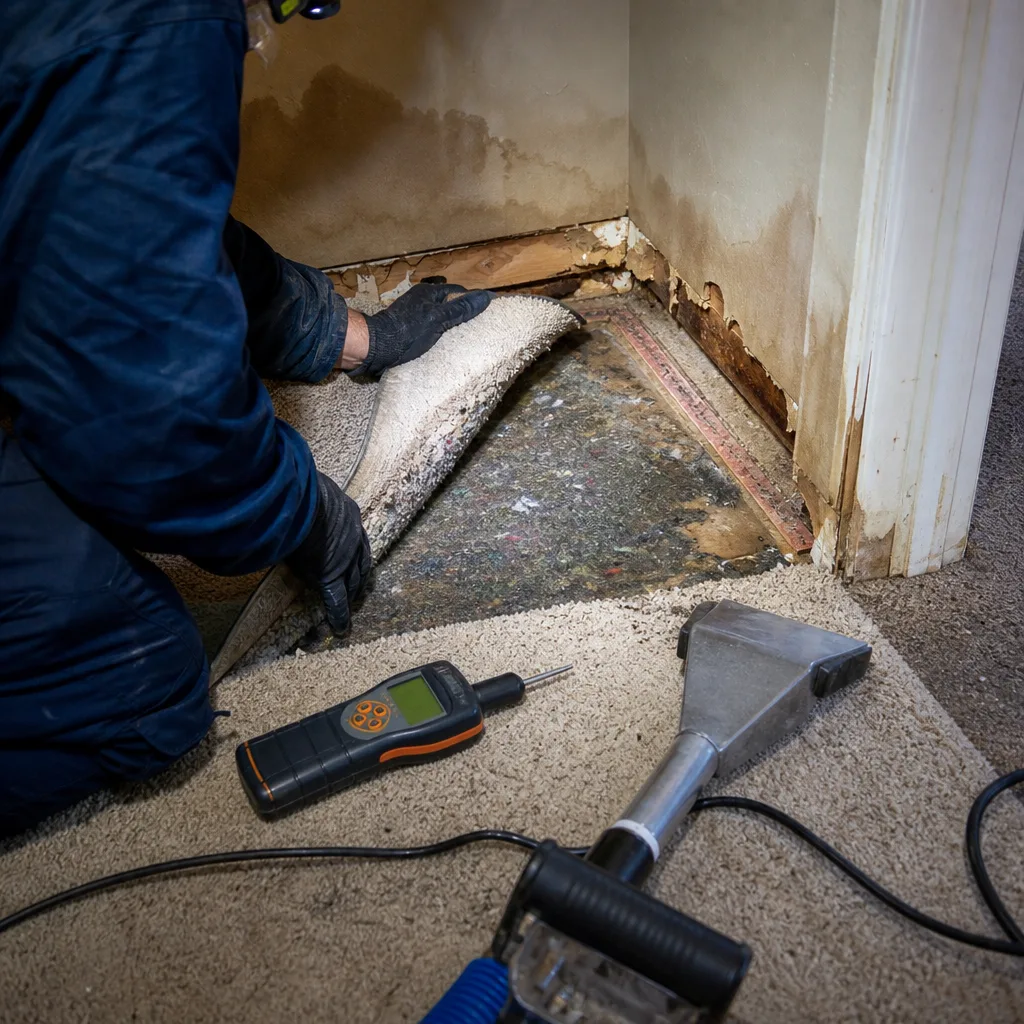
Mold claims fail when documentation gaps let adjusters dispute the scope. We close those gaps from hour one. Our technician photographs every affected surface, records moisture readings room by room, and builds a line-item scope in Xactimate format that matches what carriers expect. Direct adjuster communication means questions get answered with data, not delay.
Haven Standard, Clause 1: your written price before work begins. No exceptions. The scope you sign is the scope we execute. If additional contamination is found during demolition, we document it, photograph it, and submit a supplemental scope for approval before proceeding - never a surprise invoice after the crew leaves.
What We Provide Your Insurer
- Thorough documentation of the loss
- Photos of all damage, room by room
- Moisture readings and drying logs
- A detailed, line-item scope of work
- Direct coordination with your carrier
Built for Federal Way’s Loss Calendar
Federal Way’s mold season doesn’t follow a storm calendar. October through May brings persistent Puget Sound drizzle and relative humidity above 80%, slowly defeating older building envelopes. The real surge hits late February through April, when clay-heavy glacial till soils around Steel Lake and North Lake have absorbed months of moisture and crawl-space humidity readings spike above 85%. By March, we see a predictable wave of calls from homeowners who noticed a musty smell in January, ran a portable dehumidifier for a few weeks, and now face visible mold on rim joists.
Summer brings a secondary pattern: homeowners open crawl-space vents in June, find mold they didn’t see in winter, and call after the inspection for a home sale or refinance. The West Hylebos Wetlands and lake systems keep groundwater high year-round, so basement seepage and crawl-space condensation never fully stop. Even dry summers don’t drop humidity below mold-activation thresholds in unconditioned spaces. This is why Mold Remediation in Federal Way so often escalates from spot treatment to full encapsulation - the source is environmental pressure on a building assembly that was marginal when installed.
Mold Remediation Across Federal Way’s Neighborhoods
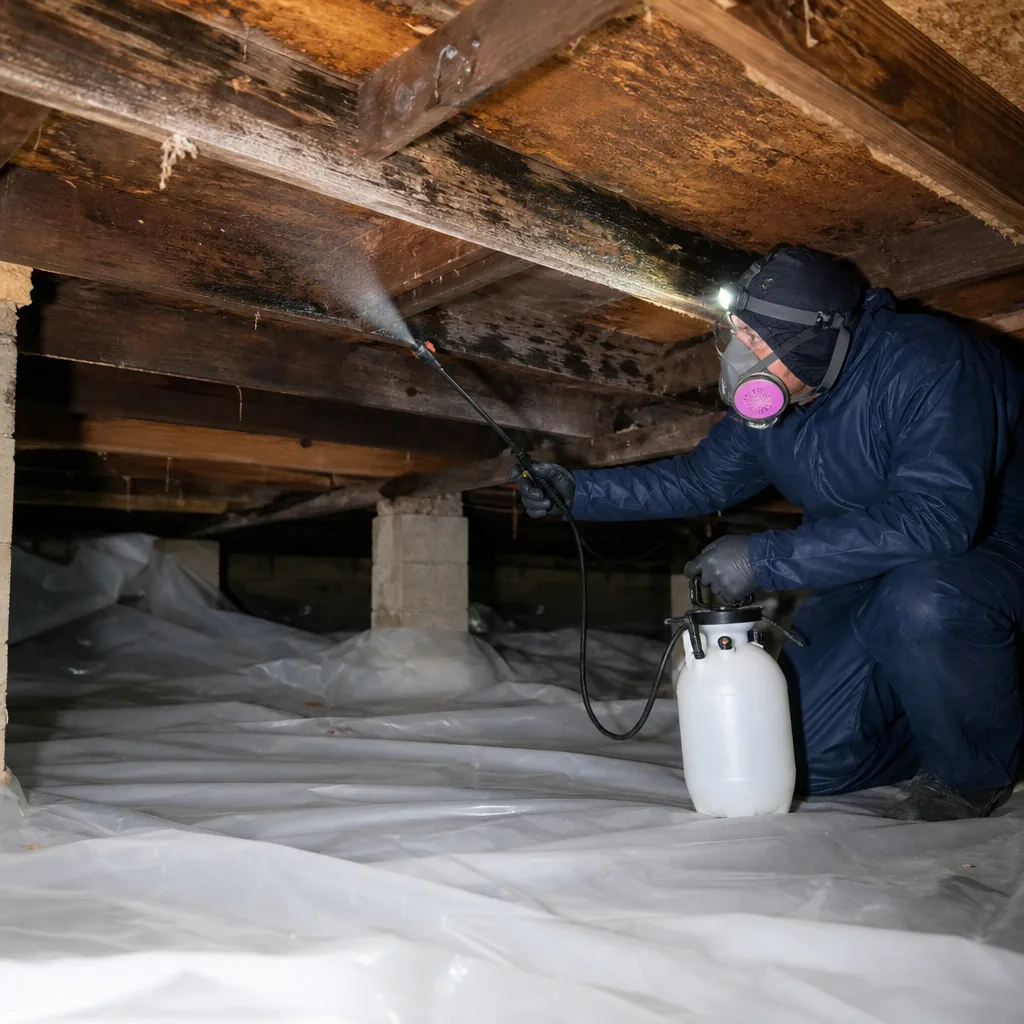
Steel Lake and North Lake neighborhoods see the highest concentration of crawl-space mold calls. The 1980s-1990s homes here sit on clay-heavy soils with original poly vapor barriers that have torn, shifted, or pooled condensation over thirty-plus years. We routinely find relative humidity at 87-91% in these crawl spaces by late March, with mold colonization on rim joists and subfloor OSB that started as a faint musty smell six months prior.
The Pacific Highway S / SR-99 corridor adds commercial strip buildings from the same era, many with flat roofs and EIFS cladding that trap moisture at wall transitions. Apartment complexes between 320th and 348th - built during Federal Way’s pre-incorporation growth surge - share the same hardboard-siding and vented-crawl-space vulnerabilities as single-family tracts, but with multiplied units and shared HVAC systems that complicate containment and air-scrubber logistics.
West Federal Way toward the Hylebos corridor sits lower in elevation, closer to wetlands and lake drainage. Basements here seep year-round, and crawl spaces flood during heavy rain events that wouldn’t affect higher ground. We deploy sump pumps and sub-slab depressurization as part of remediation, not afterthoughts. The 1990s subdivisions near Celebration Park were built slightly later with better house-wrap, but many still have the original vented-crawl-space design and are now hitting the age where vapor barriers degrade.
Specialized Mold Remediation Services We Offer in Federal Way
Mold Inspection & Testing
Our inspections start with thermal imaging and moisture mapping, not guesswork. In Federal Way’s LP-sided homes, we inspect behind siding where hardboard wicking meets rim joists. Air and surface sampling goes to independent labs when clearance documentation is required for real estate transactions or health-provider referrals.
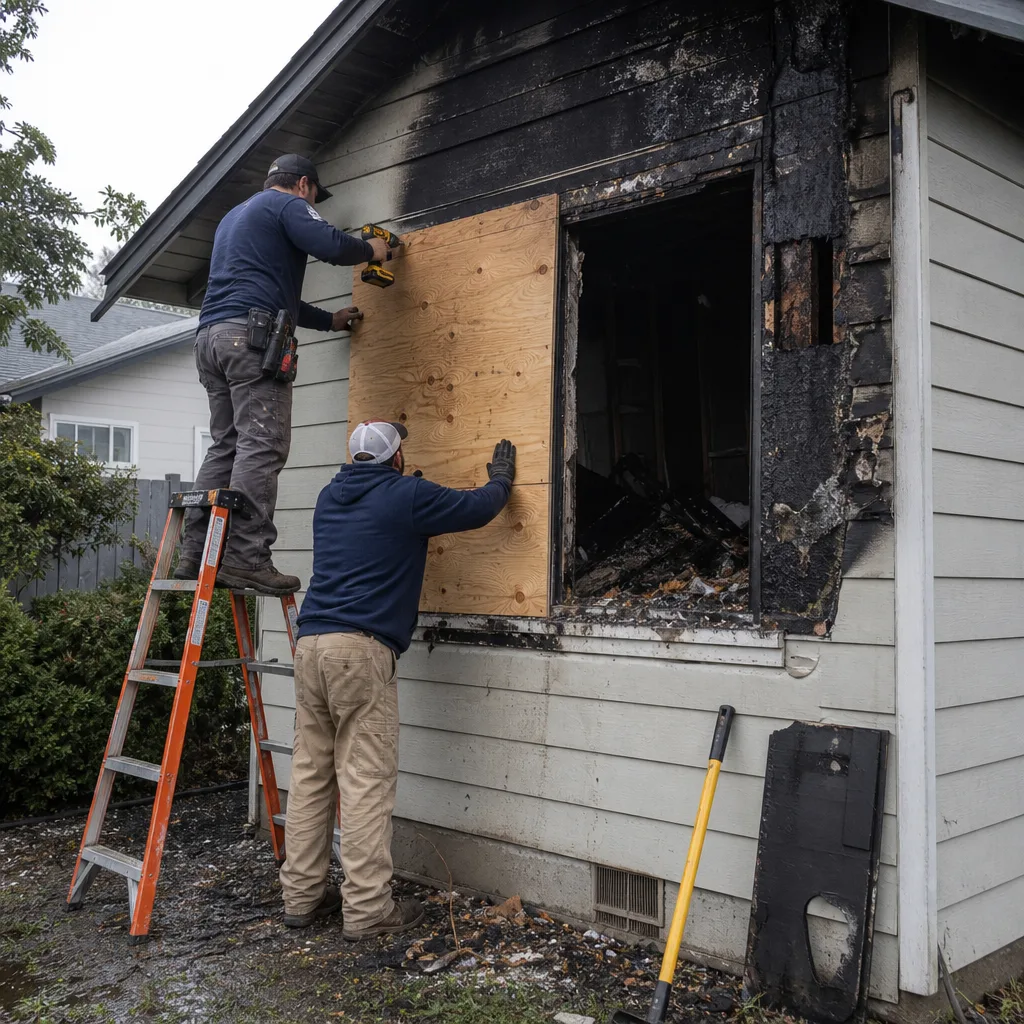
Mold Removal
Removal means controlled demolition of non-salvageable materials under containment, not surface spraying. Federal Way’s 1980s-1990s construction used OSB and paper-faced drywall that mold colonizes deeply; we remove rather than attempt to salvage these assemblies.
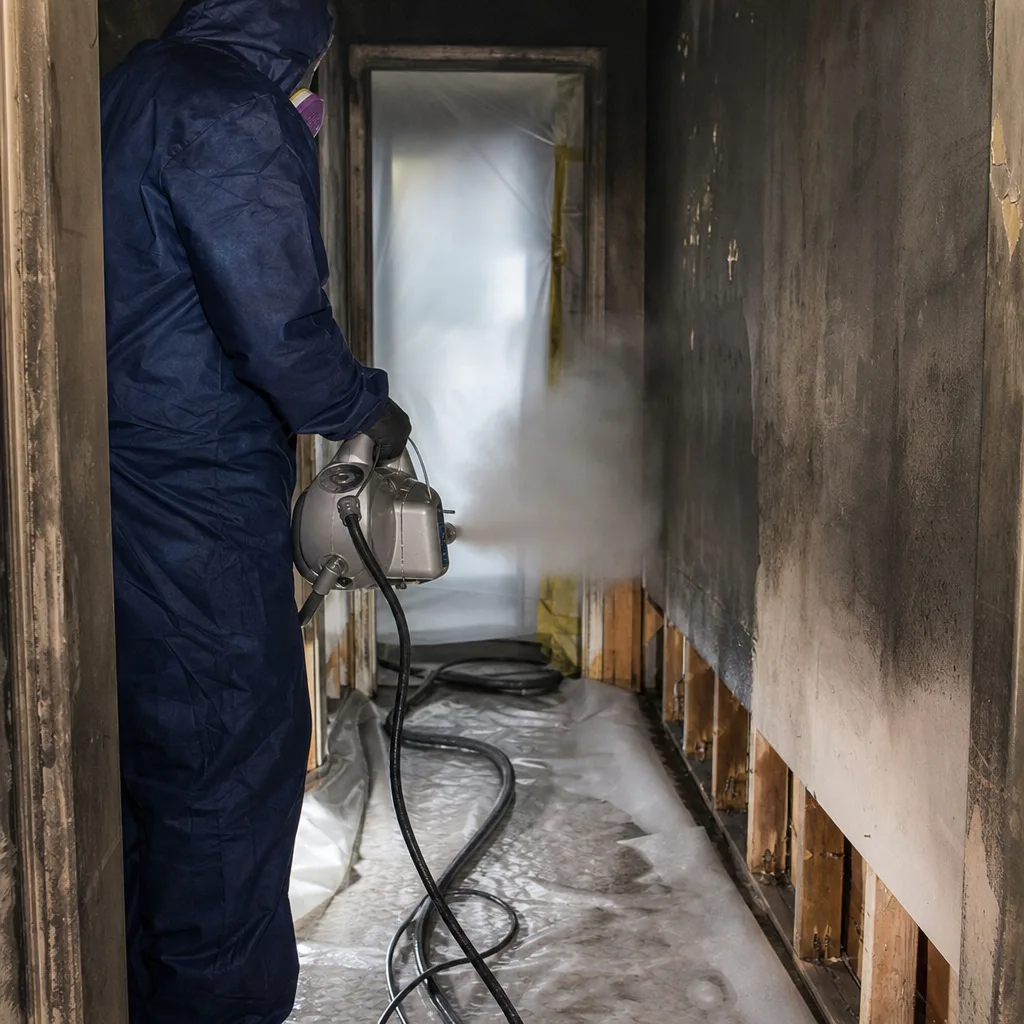
Black Mold Remediation
Stachybotrys and other toxigenic species require full containment, negative air pressure, and technician PPE beyond standard remediation. We follow IICRC S520 and RIA protocols for health-protective removal, with post-remediation verification testing.
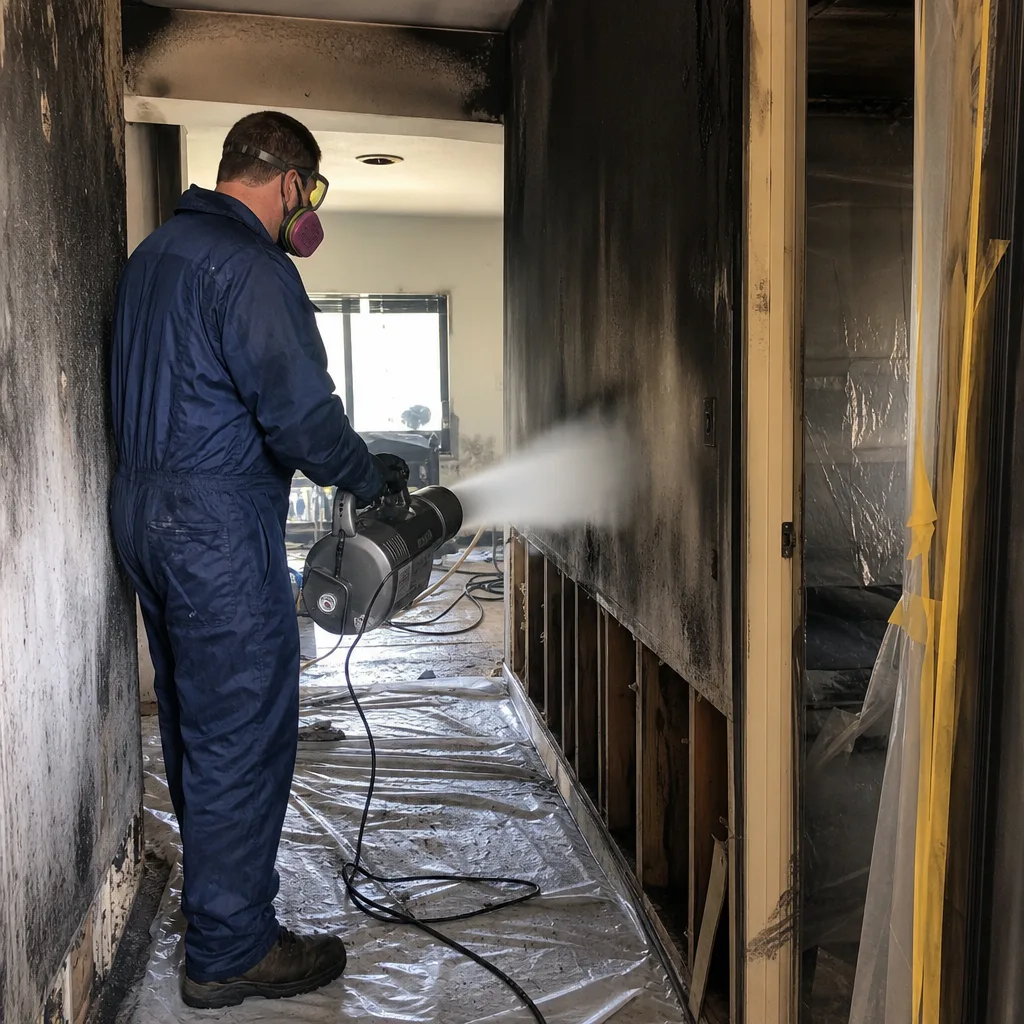
Air Quality Restoration
After mold removal, HEPA air scrubbers run through a calculated purge period to reduce airborne spores below outdoor baseline. We test before and after with particle counters, documenting the improvement for your records and your insurer.
Crawl Space Treatment
This is where Federal Way’s mold story lives. We remove degraded vapor barriers, treat framing with antimicrobial application, dry to below 16% wood moisture, and install new encapsulation systems where the original assembly has failed. Without this step, musty smells return within one season.
What happens when you call
- 1
A real person answersNo phone trees - you reach a local pro.
- 2
You get an upfront price rangeHonest numbers before anyone is dispatched.
- 3
A background-checked tech heads outLicensed & insured, dispatched right away.
- 4
You approve before work beginsNothing starts until you say go.
Mold Remediation Costs in Federal Way, WA
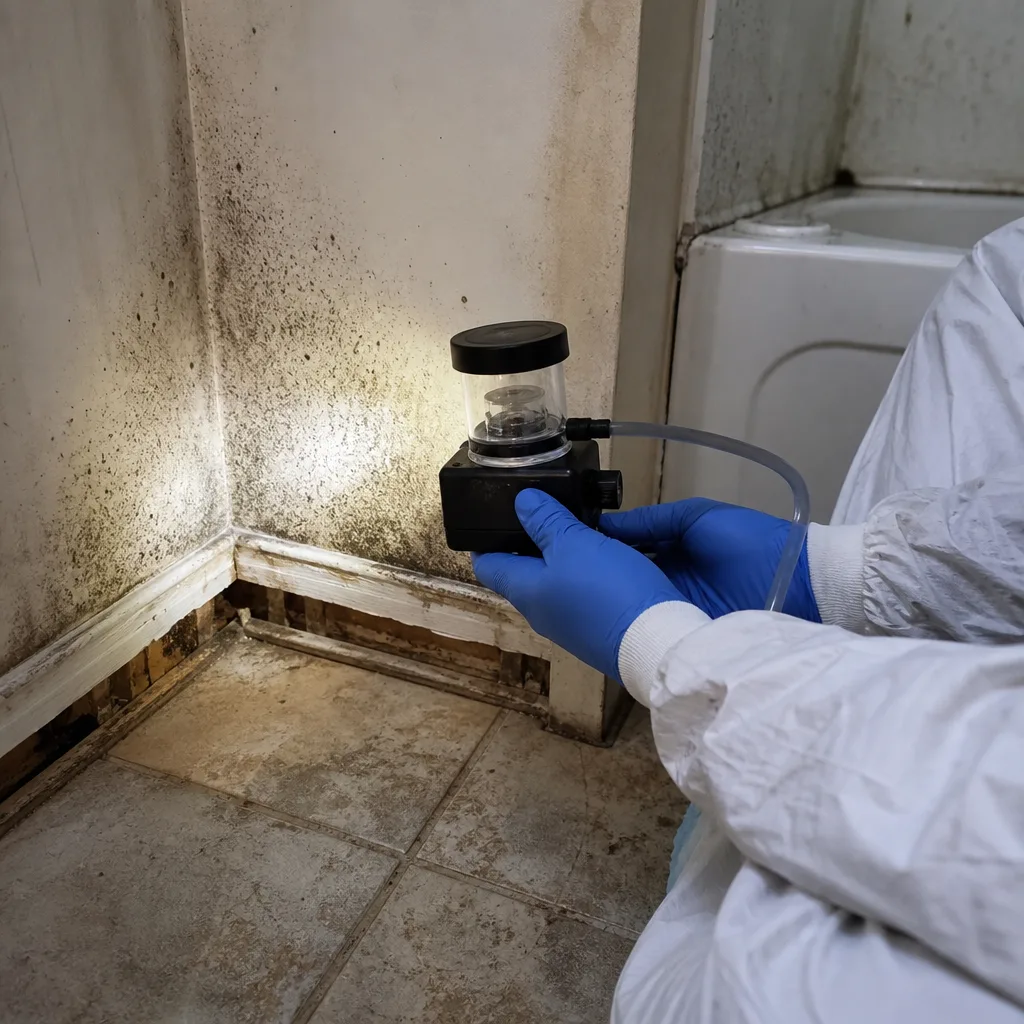
A typical crawl-space mold remediation in Federal Way runs $1,800-$3,500 for contained growth under 100 square feet with intact structural members. Jobs extending to rim-joist colonization, subfloor replacement, or full encapsulation after vapor-barrier failure range $4,200-$6,500. Category 3 hidden colonization in wall cavities with HVAC contamination can exceed $8,000, though these are less common without prior untreated water damage.
What moves the price: square footage of affected area, material type (OSB costs more to replace than solid lumber), accessibility (crawl spaces under 18 inches add labor), and whether encapsulation or vapor-barrier replacement is required. Insurance typically covers mold resulting from a covered water loss - burst pipe, appliance failure, storm intrusion - but may exclude long-term maintenance-related mold unless tied to a documented sudden event. We provide the documentation that makes the distinction clear.
Haven Standard, Clause 1 applies: your written price before work starts, every time. Call (360) 997-2427 for a free inspection and firm scope.
We Also Serve Cities Near Federal Way
Our crews respond throughout the south King County and north Pierce County corridor, including Auburn, Milton, Kent, and Tacoma. Each city’s housing stock and moisture patterns differ - Auburn’s Green River valley flooding, Tacoma’s older masonry construction, Kent’s 2000s-era growth - and our scopes reflect those differences rather than applying a uniform template.
Serving Federal Way, WA - Our Local Coverage Area
We’re based in the Federal Way area and know this community well. Use the map below to see our service coverage - if you’re nearby, we can almost certainly help.
Federal Way Mold Remediation Questions, Answered
Why does my Federal Way crawl space stay moldy even after the rain stops?
The clay-heavy glacial till soils around Steel Lake and North Lake hold moisture for weeks after rain ends, and original 1980s poly vapor barriers have typically torn or pooled condensation by now. Without removing the failed barrier and drying the assembly to documented moisture levels, surface cleaning or portable dehumidification just cycles humidity without solving the source. Call (360) 997-2427 for moisture mapping that finds the actual failure point.
My Federal Way home has LP Inner-Seal siding - does that automatically mean I have mold inside?
Not automatically, but LP siding’s moisture-wicking failure mode means interior wall cavities are at elevated risk once exterior paint blisters or soft spots appear. By the time you see interior signs, Category 3 water has often reached the rim joist. We recommend thermal imaging inspection if your siding shows any deterioration, especially on north and west exposures that stay wet longest in Federal Way’s drizzle season.
Can you dry out a Category 2 crawl-space flood in Federal Way without removing the insulation and vapor barrier?
No - not if you want it to pass re-inspection. Wet insulation loses R-value and traps moisture against framing; degraded vapor barriers prevent proper airflow for drying. Our process removes both, dries the assembly with Injectidry and dehumidification to documented levels, then replaces with new materials. Attempting in-place drying in Federal Way’s high-humidity crawl spaces almost always fails clearance testing.
How fast does mold start after a pipe leak in an older Federal Way home?
Mold activates within 24-48 hours of moisture contact on organic materials. In Federal Way’s 1980s-1990s homes with OSB subfloors and paper-faced drywall, colonization can be visible within 72 hours and structurally significant within two weeks. Fast water extraction and structural drying within the first 48 hours prevents mold; after that, remediation replaces prevention. Call (360) 997-2427 for immediate dispatch.
What does mold remediation look like in a Federal Way apartment complex from the 1980s or 1990s?
Multi-unit containment is more complex: shared HVAC requires building-wide air-handler management, and unit-to-unit firewalls complicate negative-air setup. We coordinate with property management for phased access, document each unit separately for insurance, and often find that LP-siding failure or roof leaks have affected multiple units from a common source. The scope scales with building engineering review.
Will my insurance cover mold remediation in Federal Way?
Insurance covers mold resulting from a sudden, covered water loss - burst pipe, appliance failure, storm damage - when documented promptly. Long-term maintenance-related mold from failed siding or degraded vapor barriers is typically excluded unless tied to a documented sudden event. We provide the moisture-mapping documentation, drying logs, and line-item scope that help your adjuster distinguish covered from excluded causes. Call (360) 997-2427 for a free inspection and insurance review.
How long does mold remediation take in Federal Way?
Most crawl-space jobs require 3-5 days of active remediation plus 2-3 days of drying and clearance testing before reconstruction begins. Wall-cavity or HVAC-contamination jobs extend to 7-10 days. Federal Way’s persistent humidity means we don’t rush drying; daily moisture logs must show trending improvement before we move to the next phase. Reconstruction adds time based on material availability and scope.
Can my family stay in the home during mold remediation?
For contained crawl-space or basement work with proper negative-air isolation, often yes. For Category 3 hidden colonization, toxigenic species, or HVAC contamination, we recommend temporary relocation until clearance testing confirms safe re-occupancy. We discuss this during the initial inspection and include any relocation considerations in your written scope.
We got a musty-smell call from a homeowner near Steel Lake whose 1987 build still had original LP Inner-Seal siding. During moisture mapping, our tech found the 1980s poly vapor barrier had torn and pooled condensation, pushing crawl-space relative humidity to 88% by late March. We set containment, ran Dri-Eaz dehumidification and Injectidry mat drying on the rim joist, then applied antimicrobial treatment before the customer would pass re-inspection and schedule encapsulation.
Written by Alicia Brennan, Owner at Back to Dry Restoration, serving Federal Way since 2011 under The Haven Standard.