
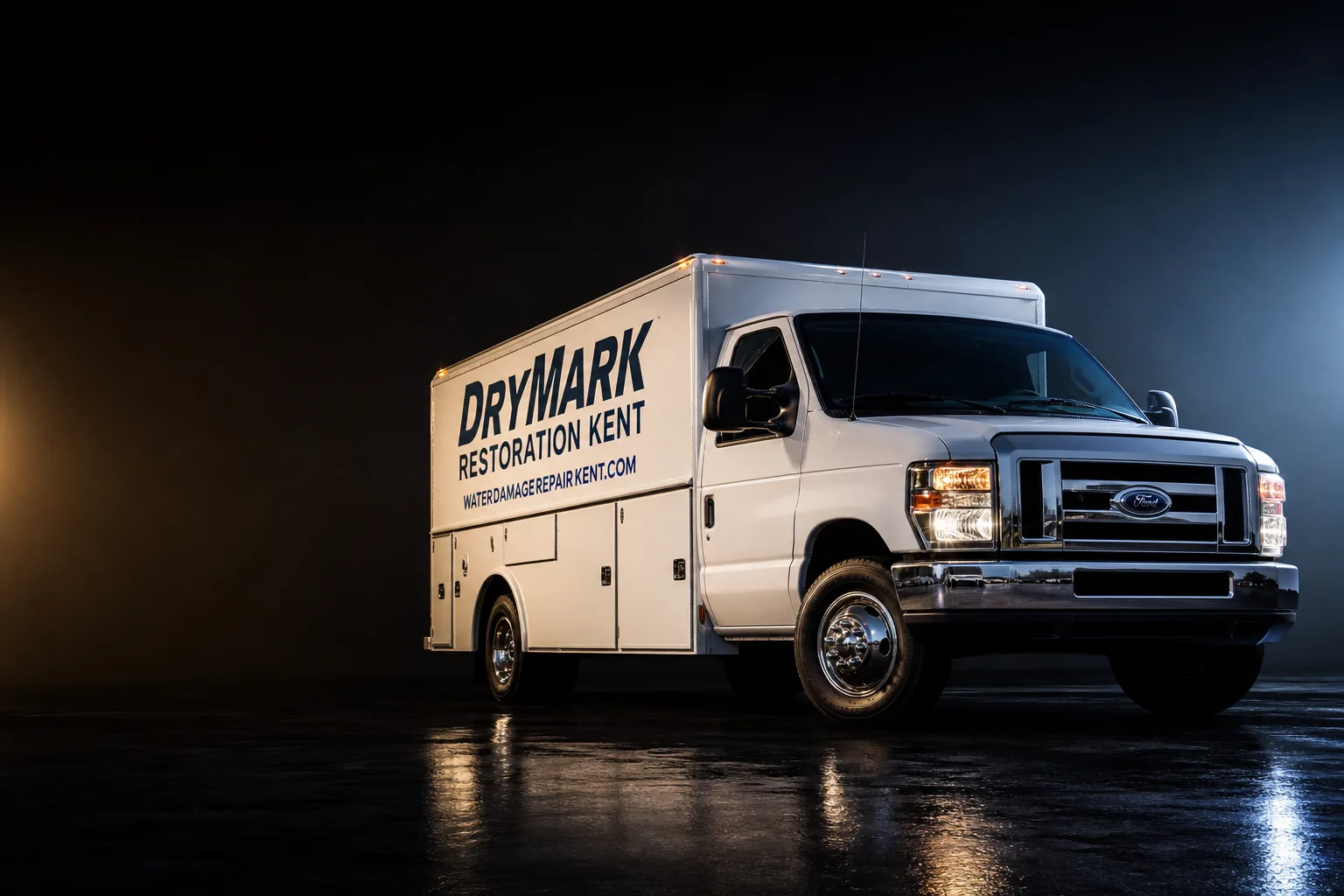
Free visual inspection and a written scope of work before any mitigation begins - photos, moisture readings, and drying logs go in your claim file
The scope we write is the scope we bill. Anything new gets shown to you, in writing, before we touch it.
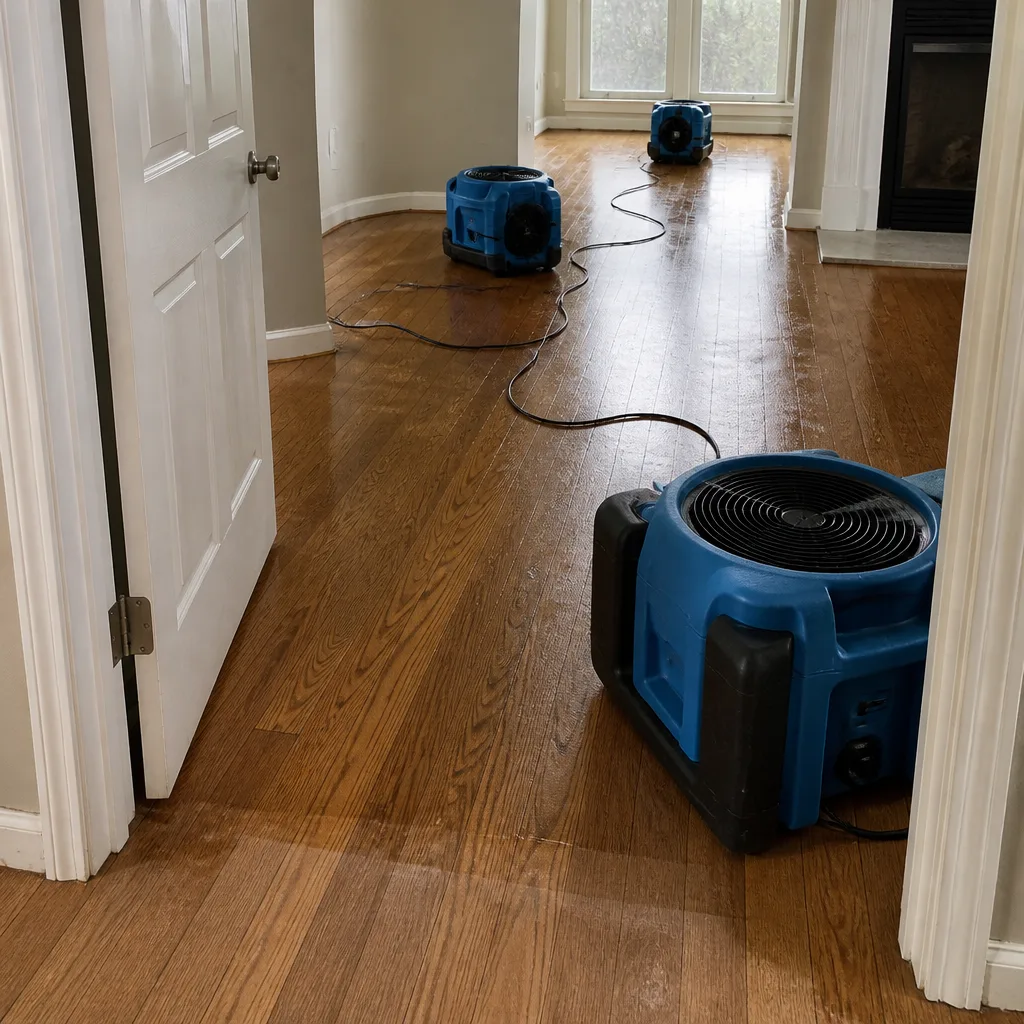
 Before
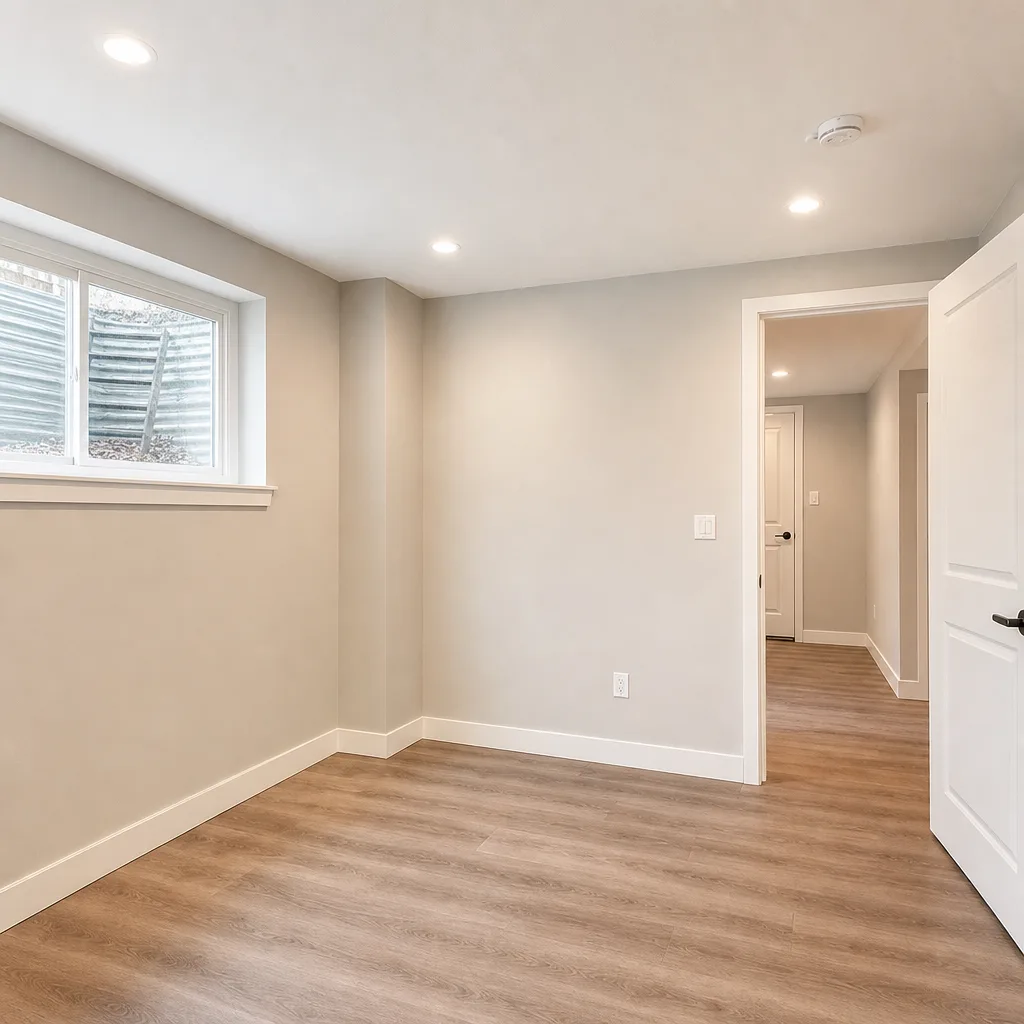 After
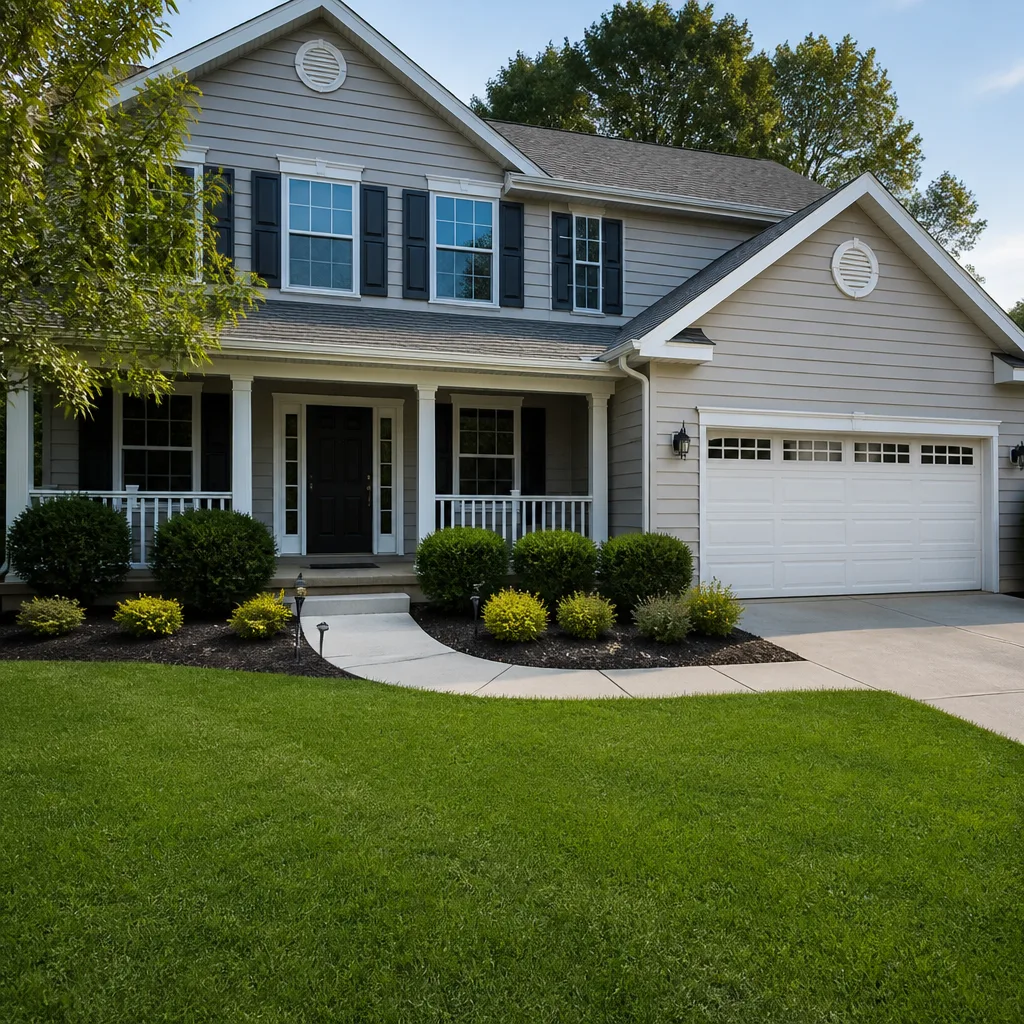
After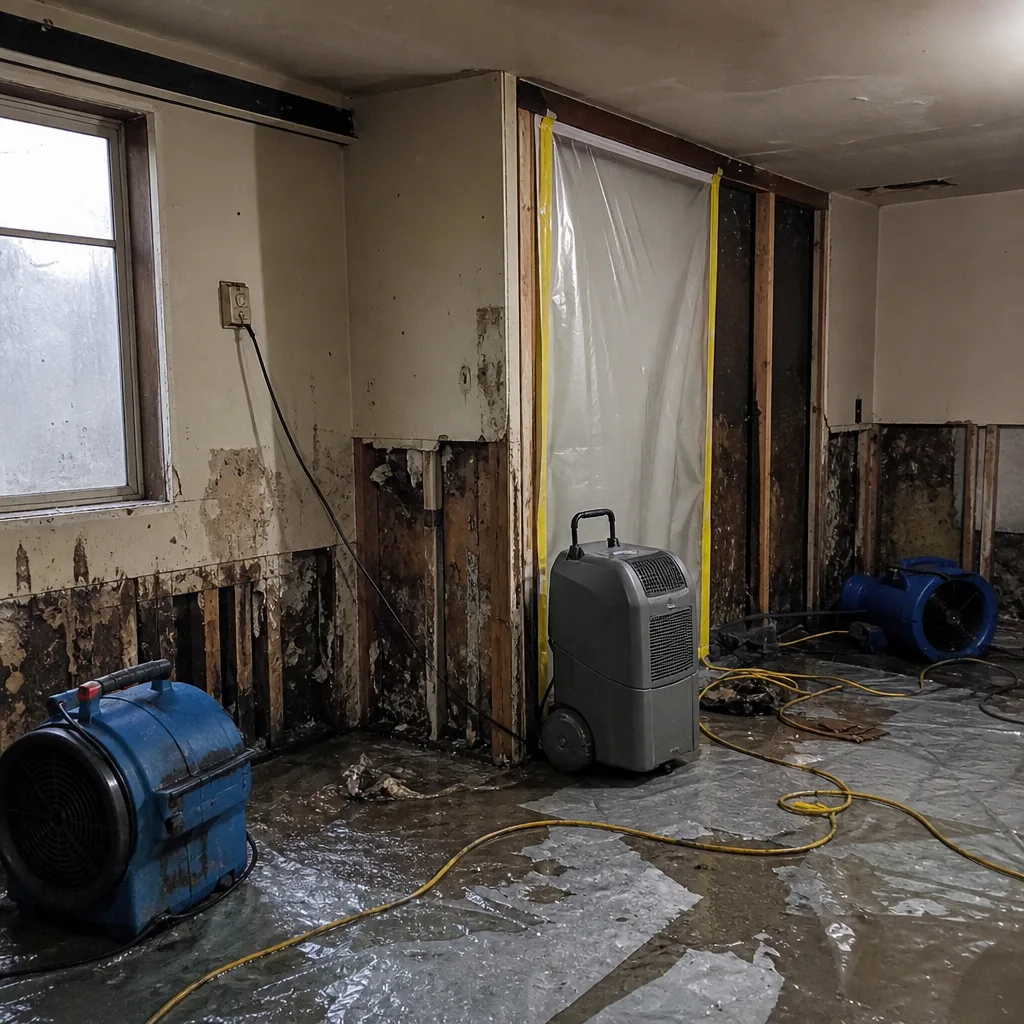 Before
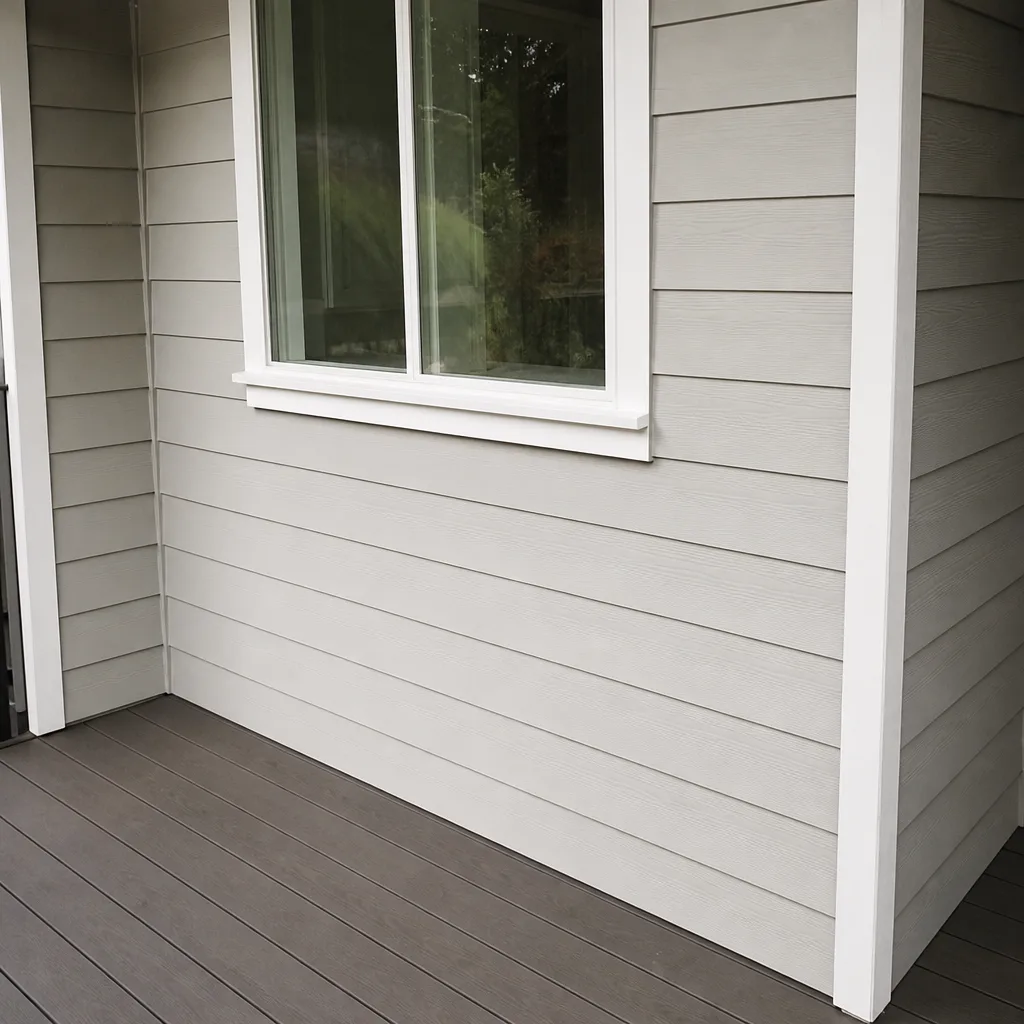 After
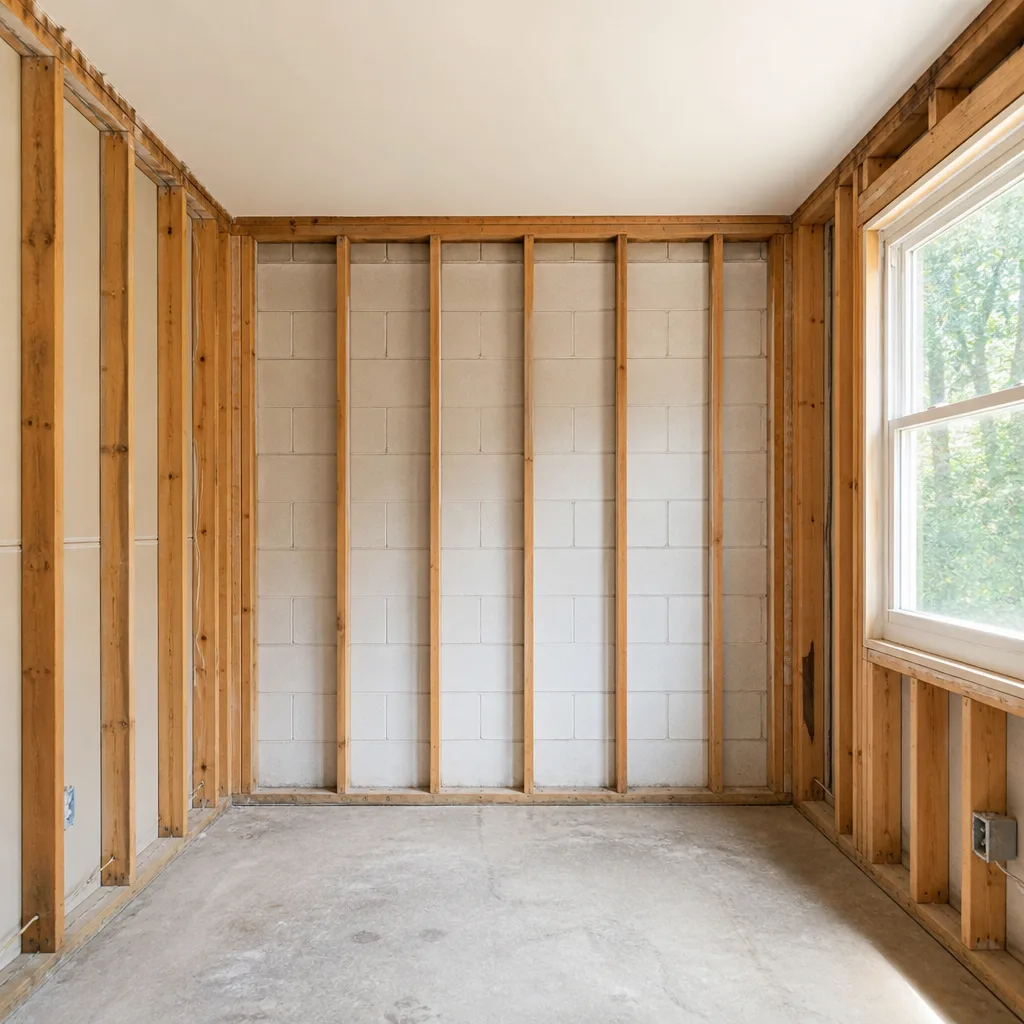
After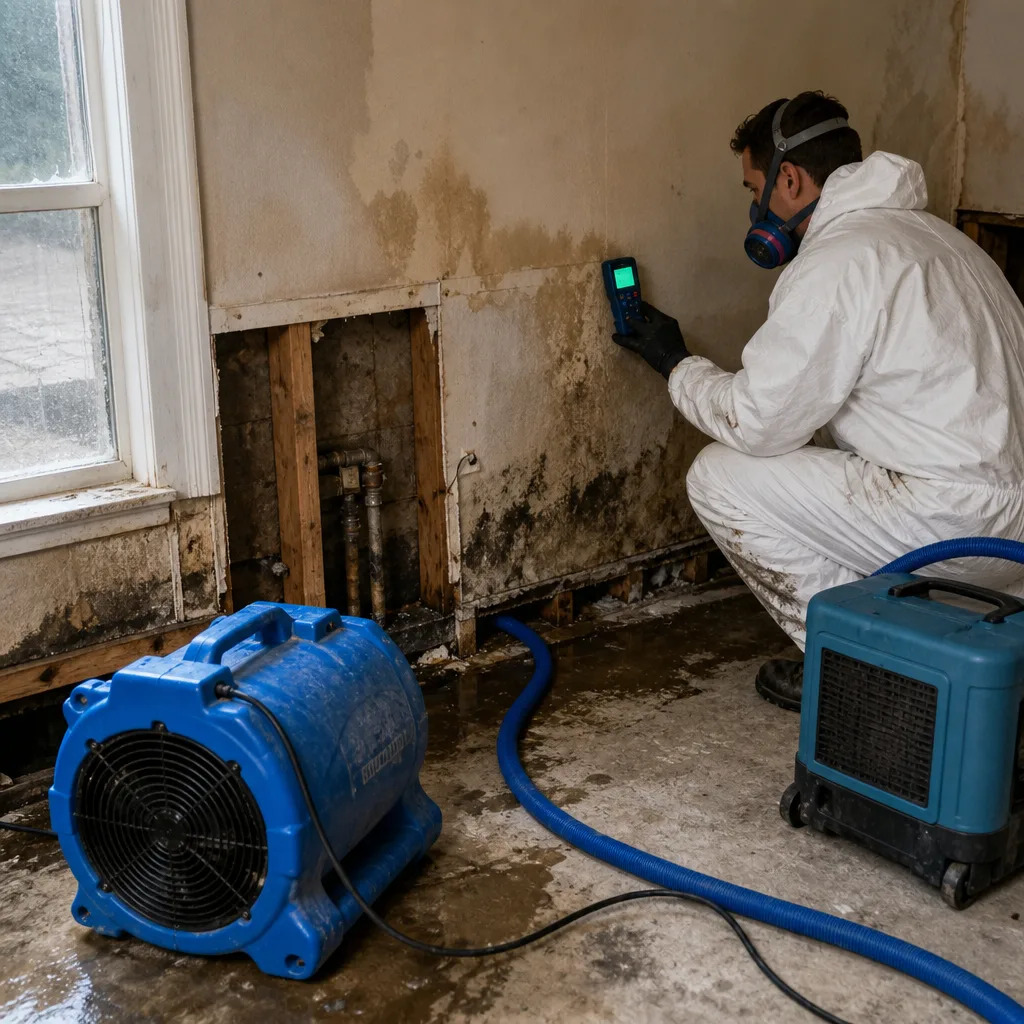 Before
 After
After24/7 Emergency Water Damage Restoration in Sammamish
Water damage in Sammamish spreads fast through engineered framing and OSB sheathing. Call (360) 997-2427 now - we answer live, 24 hours a day, with no voicemail trees or next-day callbacks while water is still moving. Our crews dispatch from our Seattle office and are typically on Sammamish Plateau properties within 45 minutes of your call.
The first hour determines whether you’re looking at contained extraction or full structural drying with material replacement. OSB sheathing, the standard in Sammamish’s 1990s-2000s housing stock, begins swelling and delaminating within minutes of sustained wetting. By the time you see a stain on the ceiling, moisture has often traveled through engineered I-joists and LVL beams that don’t dry the way old-growth Douglas fir does. We provide a free visual inspection on arrival, document everything with photos, and deliver a written price before any work begins - Haven Standard, Clause 1.
Understanding Water Damage Restoration Severity in Sammamish Properties
Water damage falls into three categories under IICRC standards, and Sammamish’s building stock makes the distinction especially consequential here. Category 1 water - clean supply-line breaks - degrades to Category 2 within 24-48 hours once it contacts the glues and resins in OSB and engineered lumber. Category 2, or gray water, carries enough contaminant load to require controlled demolition of affected materials. Category 3, black water from sewage or ground flooding, demands full gutting of porous assemblies.
Moisture mapping with thermal imaging and pinless moisture meters lets us trace the true boundary of the damage, not just the visible stain. In Sammamish homes, we routinely find moisture migration extending 8-12 feet beyond apparent damage through wall cavities filled with fiberglass batt insulation that wicks water horizontally. Psychrometric data - temperature, relative humidity, and vapor pressure differential - drives our drying strategy rather than guesswork. Tertiary drying, the final phase where we lower specific humidity to prevent secondary damage, often takes longer in Plateau homes because clay soils continue feeding moisture into crawl spaces and slab edges for weeks after the initial event.
Why Sammamish Property Owners Choose DryMark Restoration Kent
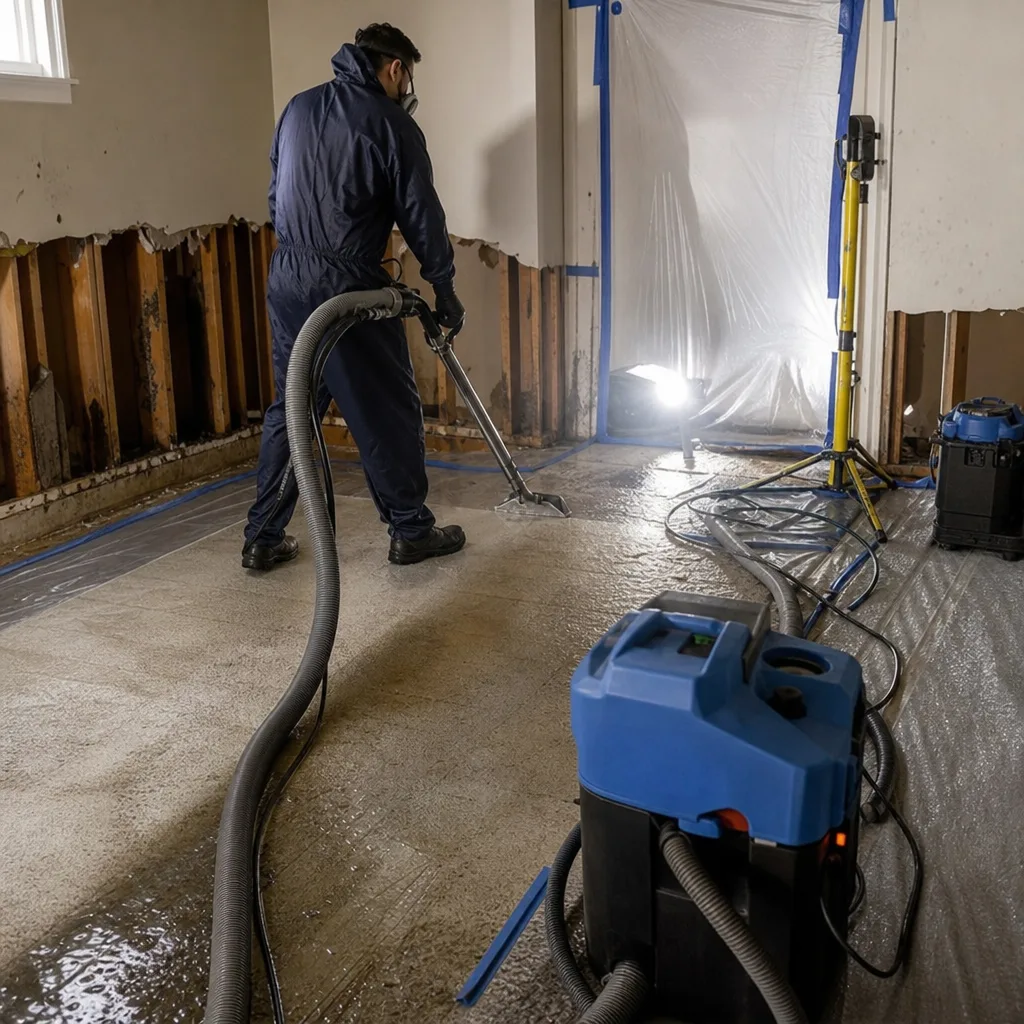
- 45-minute response commitment to Sammamish addresses - our Seattle office dispatches crews who know the Plateau’s road network and subdivision layouts.
- 24/7 live answer by a real person, never an automated system - emergency lines ring to our dispatch center, not a voicemail tree.
- IICRC-certified crews holding WRT (Water Damage Restoration Technician) and ASD (Applied Structural Drying) certifications, with AMRT (Applied Microbial Remediation Technician) on staff for Category 2 and 3 losses.
- Free visual inspection and moisture assessment on every call - no charge to determine scope, even if you decline service.
- Direct insurance billing and adjuster coordination - we produce the documentation that turns restoration invoices into payable claims.
- One team from extraction through reconstruction - no handoffs between subcontractors, no gaps in your documentation trail.
BeforeAfterOur Water Damage Restoration Process
1. Inspection & Assessment
We arrive with thermal imaging cameras, pin and pinless moisture meters, and hygrometers to map the full extent of water migration. In Sammamish’s engineered-framing homes, we pay particular attention to LVL rim joists and I-joist chords, where moisture hides in the web holes and accelerates delamination before showing surface signs.
2. Extraction & Stabilization
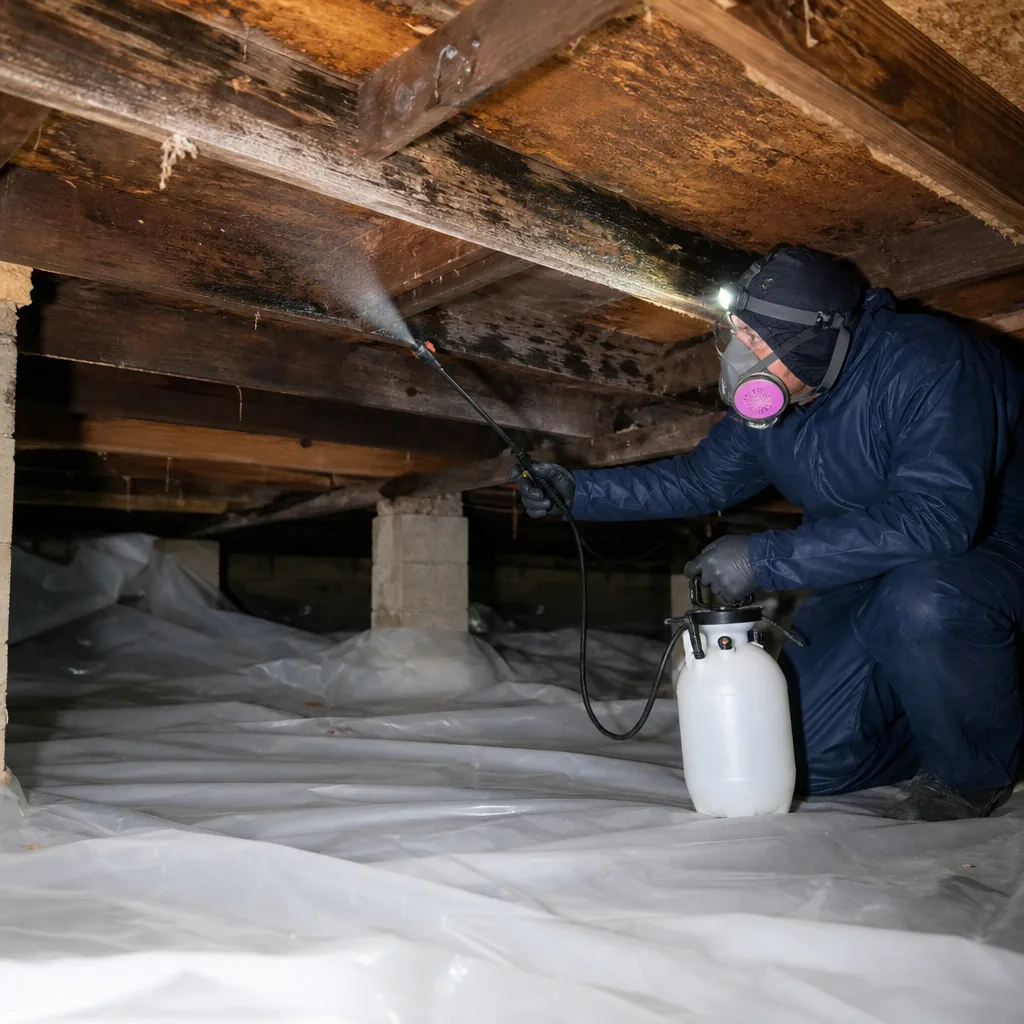
Truck-mounted extraction units remove standing water from floors, carpets, and pad. For crawl space intrusions - common in Sammamish’s clay-soil conditions - we deploy submersible pumps and portable extraction units to reach areas beneath the main floor. Containment barriers go up immediately to prevent cross-contamination.
3. Drying & Dehumidification
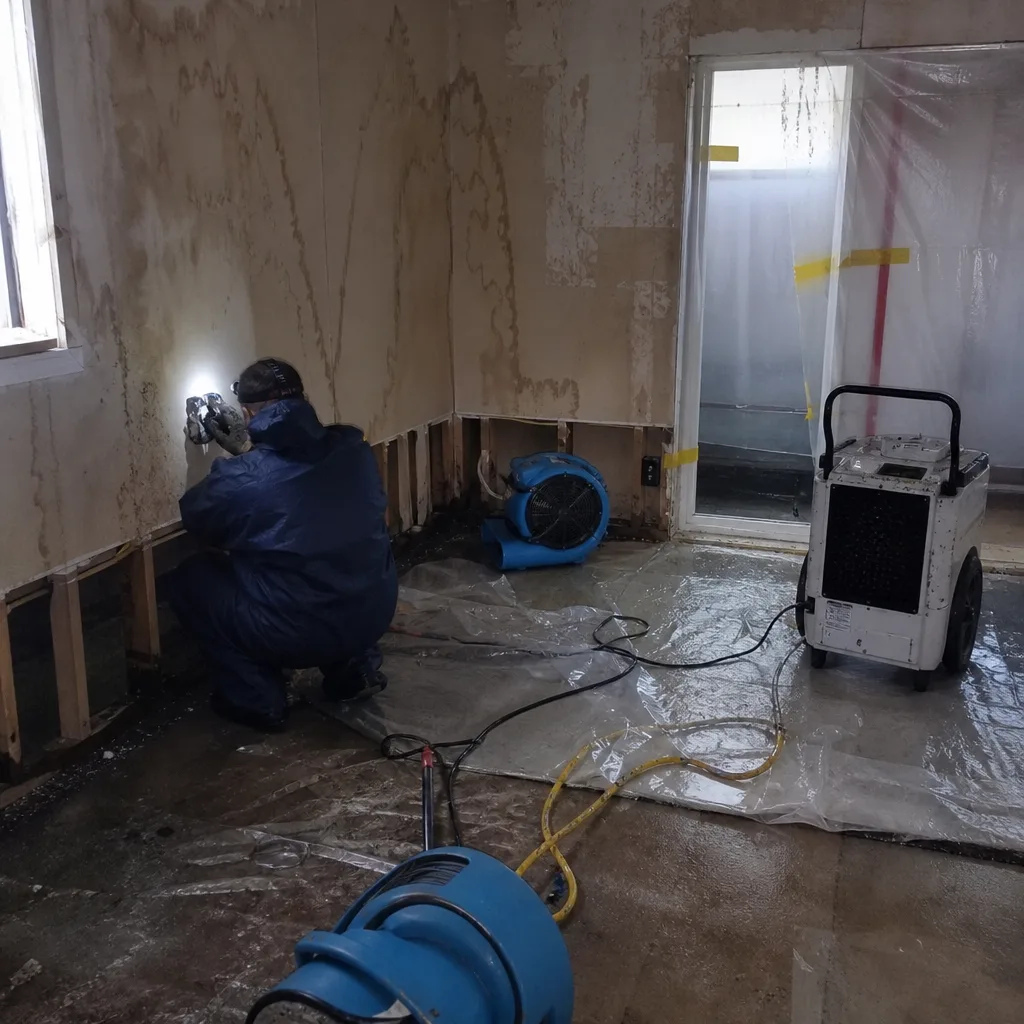
We calculate the precise air-mover and dehumidifier load using psychrometric formulas, not rules of thumb. A typical Sammamish job runs 1-2 Dri-Eaz or Phoenix LGR dehumidifiers per 1,000 square feet, plus axial and centrifugal air movers positioned to create laminar airflow across wet surfaces. Daily moisture logs track progress to IICRC drying standards.
4. Cleaning & Sanitization
Category 2 and 3 losses receive antimicrobial treatment of affected surfaces, followed by HEPA air scrubbing to capture airborne particulates. We document product application by trade name, concentration, and dwell time for your insurance file.
5. Structural Integrity Assessment
Once moisture readings stabilize, we inspect OSB sheathing, engineered I-joists, and LVL beams for delamination, swelling beyond manufacturer spec, or fungal growth. This step is non-negotiable in Sammamish’s housing stock - we have replaced structural members that appeared sound but had lost 40% of their design strength to moisture degradation.
6. Repairs & Restoration
Our reconstruction team matches original materials and finishes, from engineered lumber repairs to drywall texture matching. Every repair is photographed, logged, and covered by our 365-Day Done Right Promise under The Haven Standard.
Need Emergency Water Damage Restoration in Sammamish Now?
Crews minutes away, answering live 24 hours a day. The sooner we start, the less it costs.
Working With Your Insurance Company
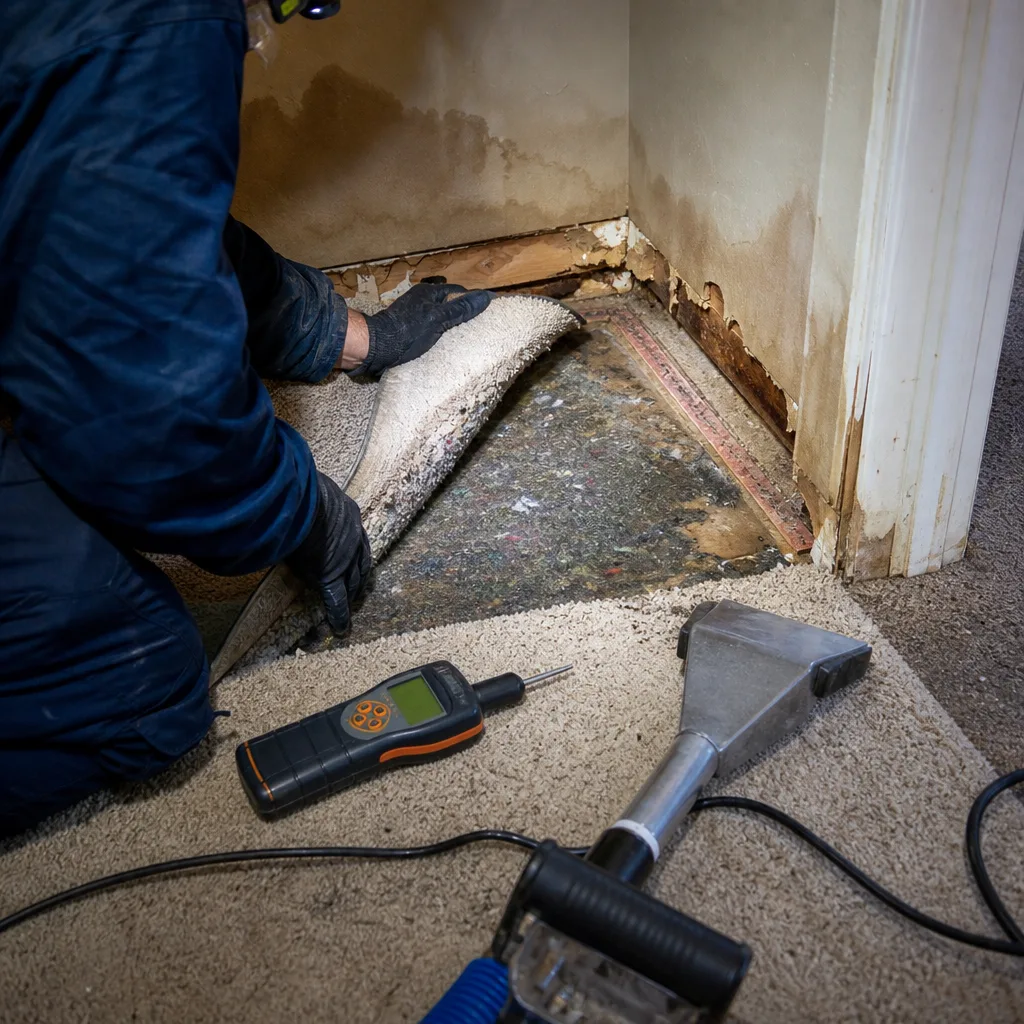
Documentation from the first hour determines whether your claim pays without dispute. We photograph every room before touching anything, record moisture readings on a grid pattern, and maintain daily drying logs that show psychrometric conditions trending toward the dry standard. Our estimates follow industry-standard Xactimate pricing, and we communicate directly with your adjuster rather than handing you a bill to negotiate alone.
Alicia Brennan built this company in 2011 after seeing how many homeowners lost legitimate claims to sloppy documentation. That origin shapes every job we run in Sammamish.
What We Provide Your Insurer
- Thorough documentation of the loss
- Photos of all damage, room by room
- Moisture readings and drying logs
- A detailed, line-item scope of work
- Direct coordination with your carrier
Built for Sammamish’s Loss Calendar
January through March bring freeze-thaw cycles that crack roof flashings and split hose bibs on Sammamish Plateau homes sitting 400-500 feet above Lake Washington. The temperature differential between exposed ridges and protected valleys creates ice dam conditions on complex rooflines that were fashionable in 1990s-2000s construction. April and May deliver sustained rainfall on saturated clay soils, pushing groundwater through foundation cracks and crawl space vents. June’s occasional heat spikes drive homeowners to run aging HVAC condensate lines that clog and overflow.
October through December is our busiest season. Storm systems stall against the Cascades and dump 4-6 inches in 48 hours on the Plateau while Redmond and Bellevue below get half that. Gutters overflow, window wells flood, and the same builder-installed window-flashing details fail house after house in subdivisions like Trossachs. We have responded to three homes on the same Sammamish street within a single week, each showing identical intrusion patterns from identical construction-era details.
Water Damage Restoration Across Sammamish’s Neighborhoods
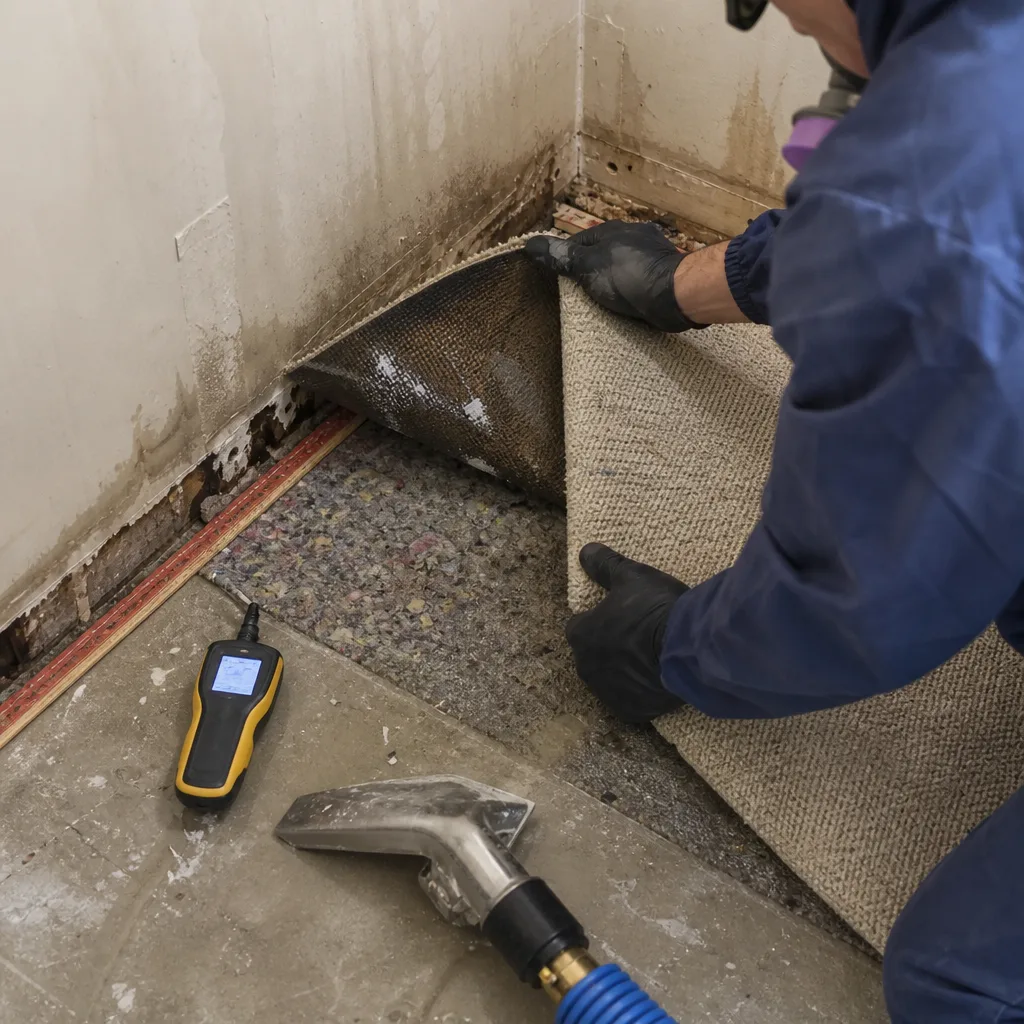
In Trossachs, the large-lot homes built by a single regional developer share rooflines with multiple valleys and dormers that concentrate runoff at flashing joints. We have traced recurring ceiling stains in four homes on the same cul-de-sac to a single valley detail that was never properly sealed at original construction. Our Water Damage Restoration team now carries the repair specification for that detail on every Trossachs call.
The Inglewood Hill corridor sits on some of the Plateau’s heaviest clay, with homes built into slopes that direct surface water against foundation walls. Crawl space encapsulation and sump pump installation follow extraction on most jobs here. When a homeowner on Inglewood Hill called about a stain spreading across a second-floor ceiling, our tech traced it to failed valley flashing on the complex roofline and found saturated OSB sheathing melting away behind it. We set up containment, ran moisture mapping across adjacent rooms, then deployed air movers and a Dri-Eaz dehumidifier to bring the assembly back to pre-loss condition. Once readings and drying logs stabilized, we matched the builder’s original engineered I-joist and LVL repair details rather than substituting stock lumber.
Pine Lake and the Beaver Lake areas feature homes closer to the water table, where seasonal lake level changes press moisture through slab edges and into finished basements. These jobs often require extended tertiary drying with supplemental heat to overcome the constant soil moisture load.
Downtown-adjacent neighborhoods near East Lake Sammamish Parkway include some of the city’s older 1980s builds mixed with newer infill, creating a wider range of construction types and failure modes. We adjust our moisture mapping protocols accordingly - older homes with solid-sawn lumber dry differently than the engineered framing that dominates elsewhere in the city.
Specialized Water Damage Restoration Services We Offer in Sammamish
Emergency Water Extraction
Standing water in a Sammamish home with OSB subfloors has perhaps 6-12 hours before irreversible swelling begins. Our truck-mounted extraction systems remove water from carpet, pad, and hard surfaces in a single pass, with portable units for crawl spaces and tight mechanical rooms where the Plateau’s clay soils have already saturated the ground layer.
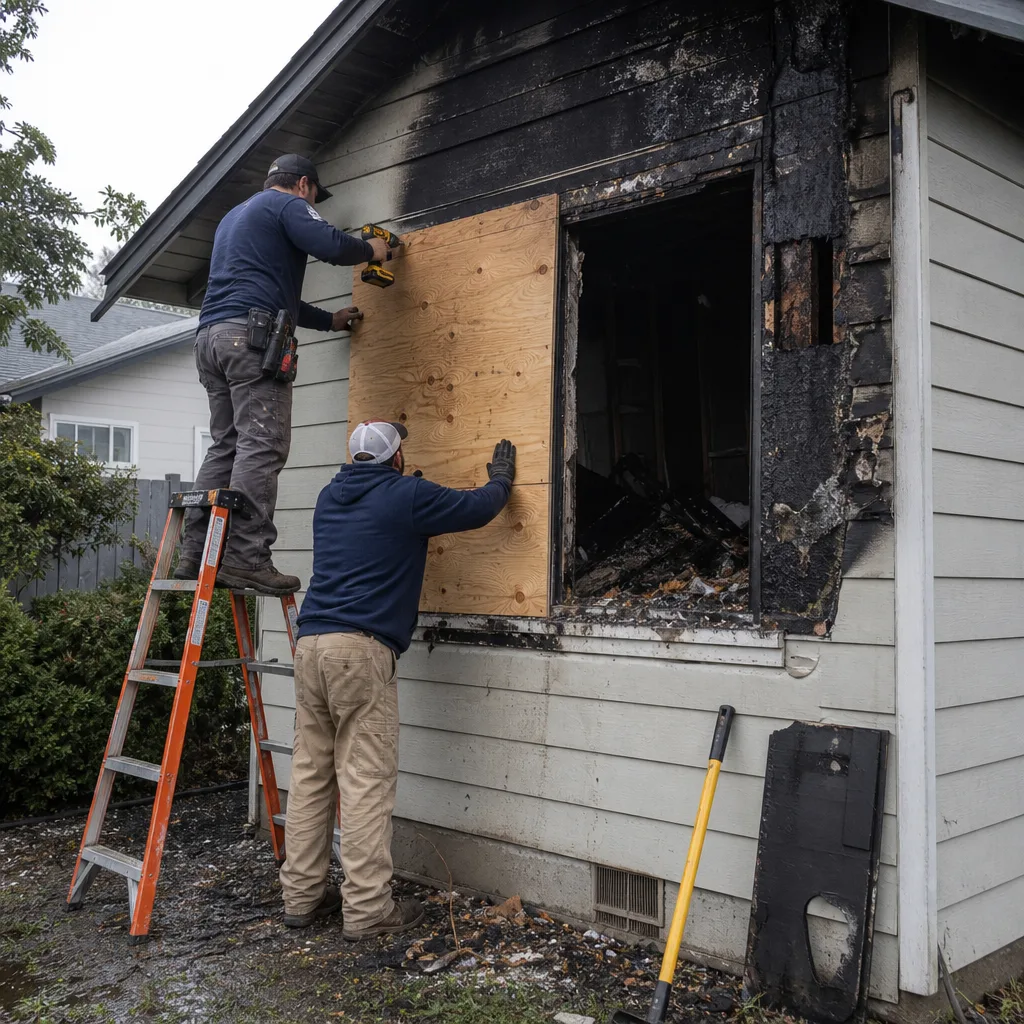
Structural Drying & Dehumidification
This is where Sammamish’s building stock demands specialized expertise. Engineered I-joists with OSB webs create trapped air cavities that standard drying configurations miss. We use Injectidry systems to force conditioned air through wall cavities and subfloor assemblies, coupled with Phoenix 200 HT dehumidifiers sized to the specific vapor pressure load. Daily moisture logs track every reading until we hit the dry standard - typically 3-5 days for contained Category 1 losses, 7-10 days when clay-soil moisture feeds the damage.
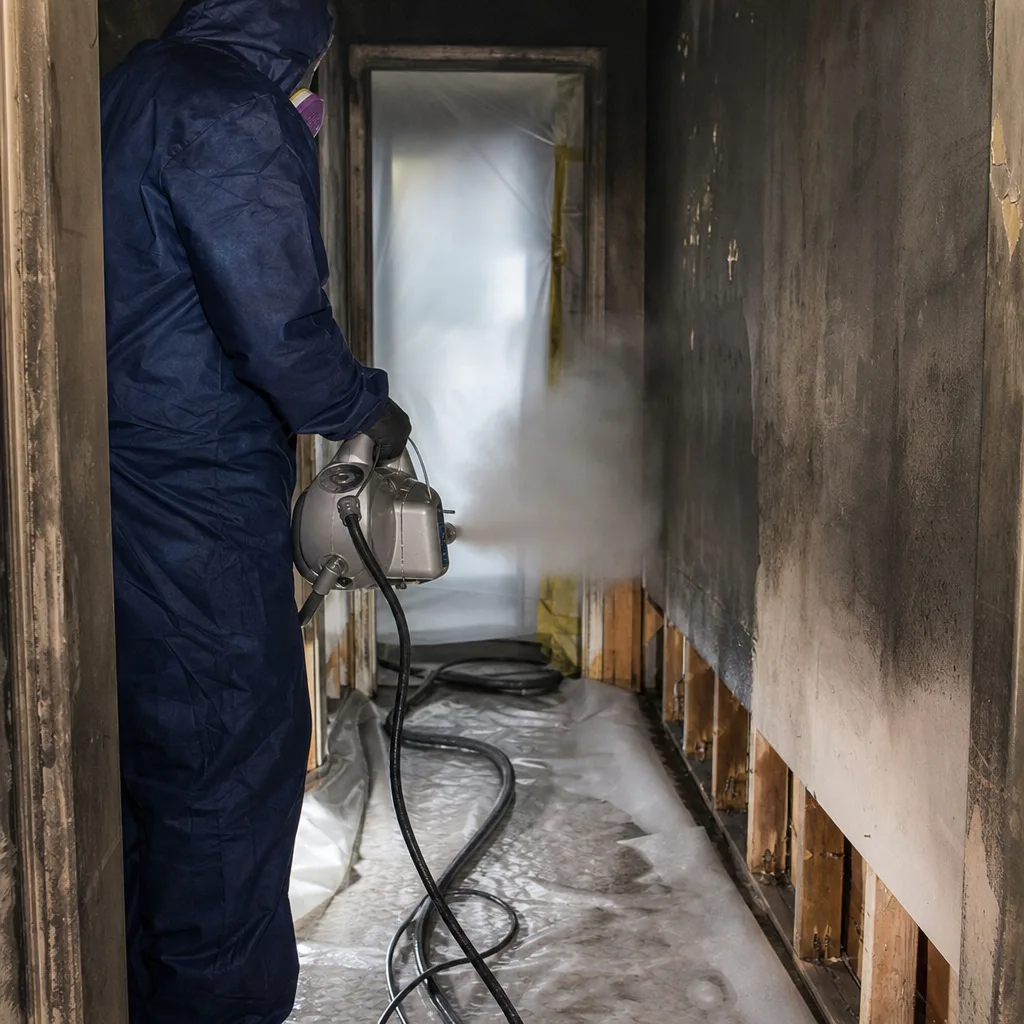
Flood Cleanup
Plateau topography concentrates storm runoff in Sammamish’s lower subdivisions. Category 3 floodwater requires full PPE, antimicrobial treatment, and controlled demolition of porous materials. We document contamination boundaries with photos and moisture readings before removing anything, so your adjuster sees exactly why each line item was necessary.
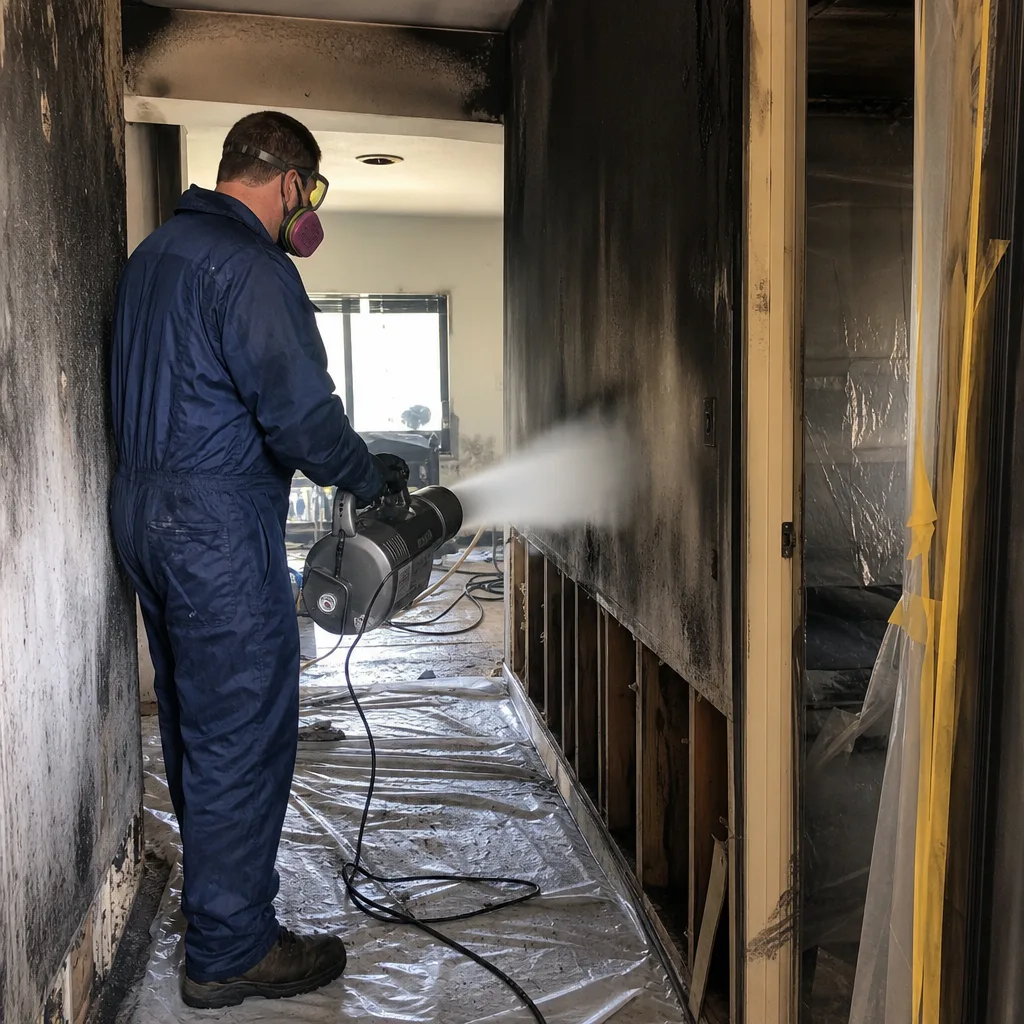
Burst Pipe Restoration
January freezes split copper and PEX lines in Sammamish homes with equal indifference, often in exterior walls where the complex rooflines create cold-air dams. We locate the break, extract standing water, and map migration through adjacent wall cavities before the standard freeze-thaw cycle repeats the following week.
Basement Water Removal
Sammamish basements finish beautifully but sit on clay that holds groundwater for weeks. Extraction without addressing the soil moisture reservoir means re-wetting at the next rain event. Our basement jobs include perimeter assessment, sump pump evaluation, and recommendations for drainage improvement that we can implement through our reconstruction division.
Ceiling & Roof Leak Water Damage
The complex rooflines that sold homes in 1990s Sammamish subdivisions become liability structures at 20-25 years. Valley flashings, cricket details, and chimney saddles fail in predictable patterns by builder and vintage. We don’t just dry the ceiling - we trace the leak path, document the roof defect for your insurance claim, and coordinate repair to prevent recurrence.
What happens when you call
- 1
A real person answersNo phone trees - you reach a local pro.
- 2
You get an upfront price rangeHonest numbers before anyone is dispatched.
- 3
A background-checked tech heads outLicensed & insured, dispatched right away.
- 4
You approve before work beginsNothing starts until you say go.
Water Damage Restoration Costs in Sammamish, WA
Water damage restoration in Sammamish typically runs higher than Eastside averages due to the engineered materials that require replacement rather than drying, and the extended drying timelines forced by clay-soil moisture loads. Here are the ranges we see on written scopes under Haven Standard, Clause 1:
| Service | Typical Range in Sammamish |
|---|---|
| Emergency water extraction (contained area) | $450 - $850 |
| Structural drying & dehumidification (per day) | $180 - $340 |
| Category 1 loss, full dry-out and minor repairs | $2,800 - $5,500 |
| Category 2 loss with controlled demolition | $5,500 - $12,000 |
| Category 3 flood cleanup with full gut | $12,000 - $28,000+ |
| Crawl space extraction and drying | $1,800 - $4,200 |
| Ceiling/roof leak with OSB sheathing replacement | $3,500 - $8,500 |
What moves the price: the water category, square footage affected, whether engineered lumber requires replacement, and how many days the drying equipment must run before readings stabilize. Insurance covers sudden and accidental water damage in most Sammamish homeowners policies, though gradual leaks and maintenance issues typically fall to the owner. We provide a free visual inspection that produces a firm, written scope - no estimate ranges that balloon once work starts. Bring a competitor’s written estimate and we’ll review it at no charge under our Free Second Opinion policy.
We Also Serve Cities Near Sammamish
Our crews respond throughout the Eastside from our Seattle office. We regularly handle Water Damage Restoration in Sammamish and neighboring communities including Redmond, Bellevue, Kirkland, and Issaquah. Each city’s building stock and soil conditions shape our approach - Redmond’s older downtown mixed-use, Bellevue’s high-rise and mid-rise inventory, Kirkland’s waterfront exposure, Issaquah’s hillside drainage - but our documentation-first process and Haven Standard guarantees apply uniformly.
Serving Sammamish, WA - Our Local Coverage Area
We’re based in the Sammamish area and know this community well. Use the map below to see our service coverage - if you’re nearby, we can almost certainly help.
Sammamish Water Damage Restoration Questions, Answered
Why does water damage seem to travel farther in Sammamish homes than in older Eastside houses?
Engineered I-joists and OSB sheathing wick moisture horizontally through their web structures and oriented fiber layers, while old-growth Douglas fir framing resists that capillary action. The same leak that would stay localized in a 1960s Kirkland ranch can travel 10-12 feet through a Sammamish wall cavity before showing surface symptoms. Combined with heavy clay soils that continue feeding moisture from below, damage here routinely extends beyond visible staining. Call (360) 997-2427 for moisture mapping that finds the true boundary.
My neighbor two doors down had a window leak last spring - should I worry about the same spot on my house?
Yes, if your home was built by the same developer in the same phase. In Sammamish subdivisions like Trossachs and the Inglewood Hill corridor, identical window-flashing and housewrap details were installed across dozens of homes. When those details age out, we find the same moisture intrusion pattern repeating house after house on the same street. We offer a free visual inspection to check your identical detail before it fails. Call (360) 997-2427 to schedule.
How fast do we need to act on a wet ceiling or crawl space in Sammamish?
Within hours, not days. OSB sheathing begins irreversible swelling and delamination within 6-12 hours of sustained wetting. Engineered I-joists lose structural integrity faster than solid lumber. And clay soils hold moisture against your foundation for weeks, so extraction without immediate drying equipment means the damage resumes after the next rain. We answer live 24/7 and typically arrive within 45 minutes.
Can you tell from the first visit whether the water is category 1, 2, or 3?
Usually, but not always. The source water’s category is clear - supply line break versus washing machine overflow versus groundwater intrusion. What changes during the first visit is whether Category 1 water has contacted contaminated surfaces or sat long enough to degrade. We test and document the category at arrival, then re-test 24 hours into drying. Your insurance scope and our demolition decisions depend on that documented classification, not a first-impression guess.
What gear do you use for structural drying in a Sammamish home with engineered framing?
Phoenix and Dri-Eaz LGR dehumidifiers sized to the specific vapor pressure load, Injectidry systems for forced air through wall cavities and I-joist webs, thermal imaging to trace migration paths that pinless meters might miss, and axial and centrifugal air movers positioned for laminar airflow across all wet surfaces. Daily moisture logs track specific humidity, temperature, and grain depression until we hit the IICRC dry standard. The equipment list is documented on every job for your insurance file.
Will my insurance cover water damage restoration in Sammamish?
Sudden and accidental water damage - burst pipes, appliance failures, storm intrusion through damaged roofs - is covered by most homeowners policies written in King County. Gradual leaks, maintenance neglect, and groundwater seepage typically are not. We document the cause and timing with photos and moisture readings from the first hour, then coordinate directly with your adjuster to establish coverage. Our estimates follow Xactimate standards that carriers recognize. Call (360) 997-2427 and we’ll review your situation at no charge.
How long does structural drying take in a typical Sammamish home?
Contained Category 1 losses in Sammamish average 3-5 days of active drying, assuming no clay-soil moisture feeding the damage from below. Category 2 losses with some controlled demolition run 5-7 days. Jobs where groundwater intrusion through heavy Plateau clay extends the vapor pressure load can take 7-10 days or more. We don’t remove equipment until daily moisture logs show readings stabilized at or below the dry standard - not before. Your written scope includes our equipment-day estimate, with no surprise additions.
Can we stay in the home during water damage restoration?
Often yes for Category 1 losses confined to non-sleeping areas, provided we can establish containment and the noise of drying equipment is tolerable. Category 2 and 3 losses, or any job affecting HVAC systems, typically require temporary relocation for health and safety reasons. We tell you definitively during the free visual inspection, not after equipment is already running. Our documentation includes a written assessment of habitability for your insurance company’s additional living expense coverage. Call (360) 997-2427 to discuss your specific situation.
Water damage in Sammamish doesn’t behave like water damage in older cities. The engineered framing, the clay soils, and the replicated construction details across entire subdivisions create patterns we’ve learned to read - and to document for the insurance coverage you’ve already paid for. Every job starts with a written price, proceeds with daily photo and moisture documentation, and ends with our 365-Day Done Right Promise under The Haven Standard. That’s how Alicia Brennan built this company in 2011, and it’s how we still operate on every call.
Call (360) 997-2427 now for 24/7 live answer and free visual inspection. Crews are minutes from Sammamish.
Written by Alicia Brennan, Owner at DryMark Restoration Kent, serving Sammamish since 2011 under The Haven Standard.
Water Damage Restoration in Nearby Areas