Free visual inspection and a written scope of work before any mitigation begins - photos, moisture readings, and drying logs go in your claim file
The scope we write is the scope we bill. Anything new gets shown to you, in writing, before we touch it.
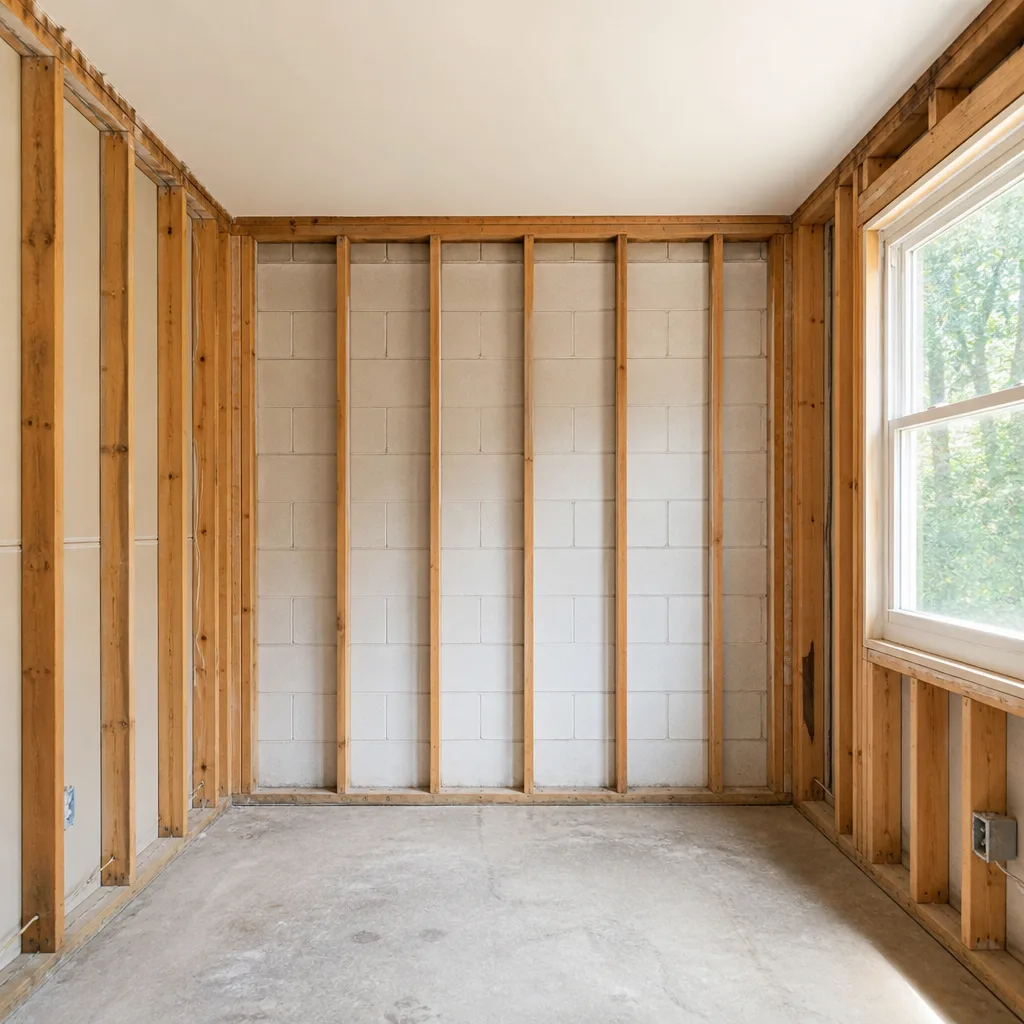
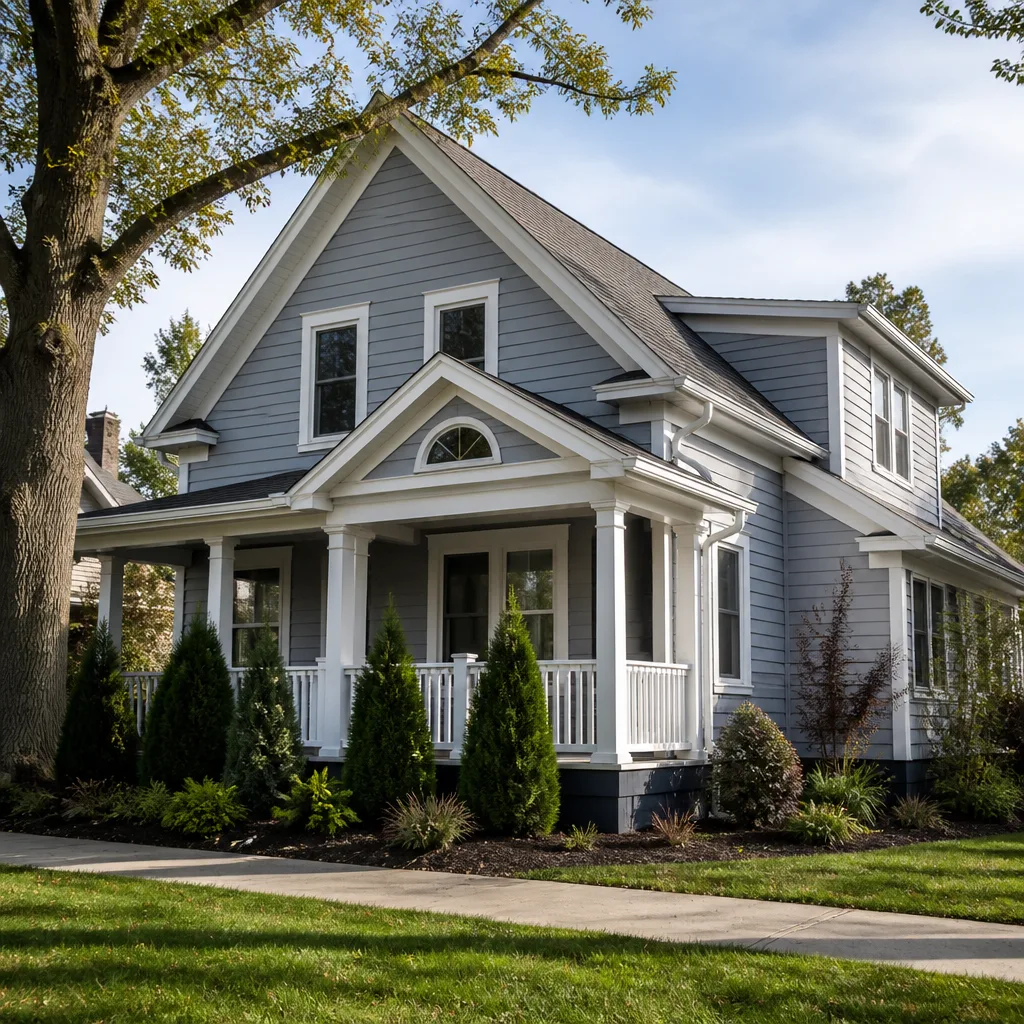
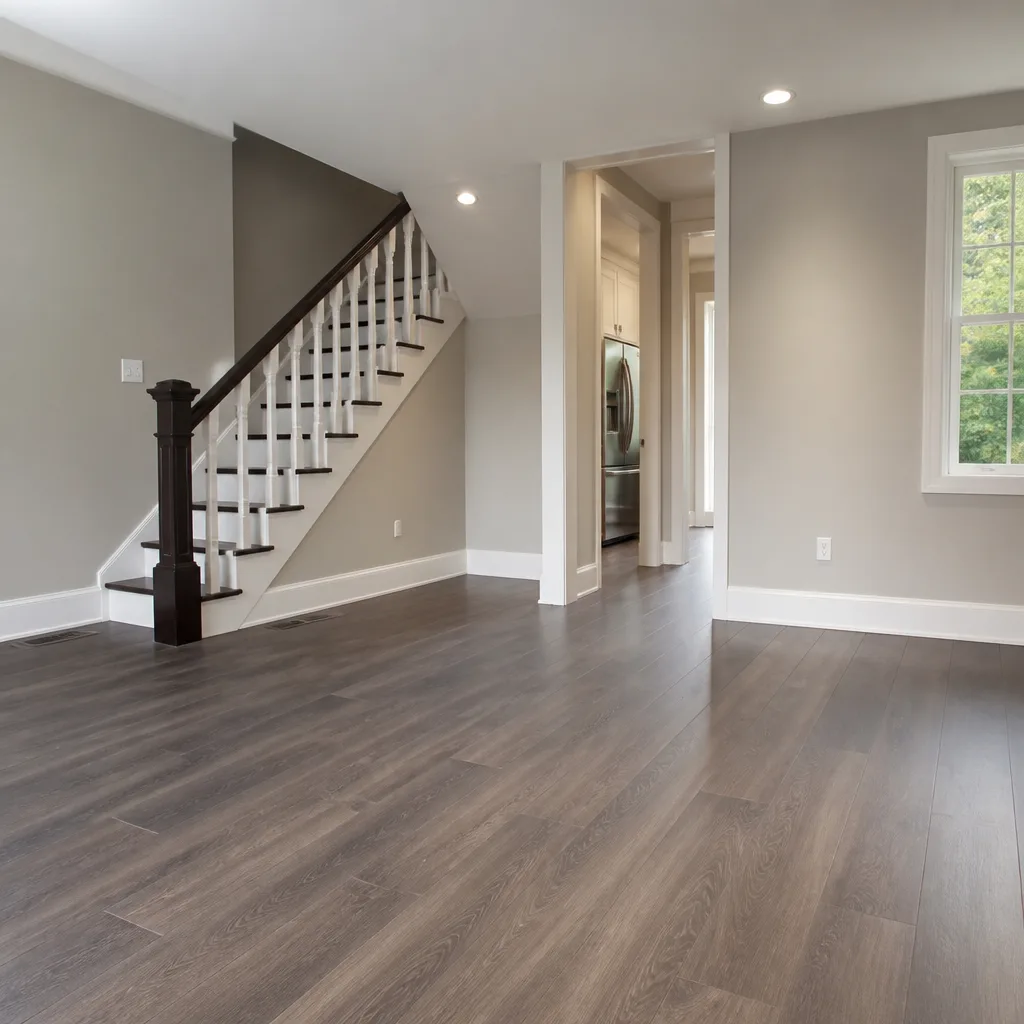
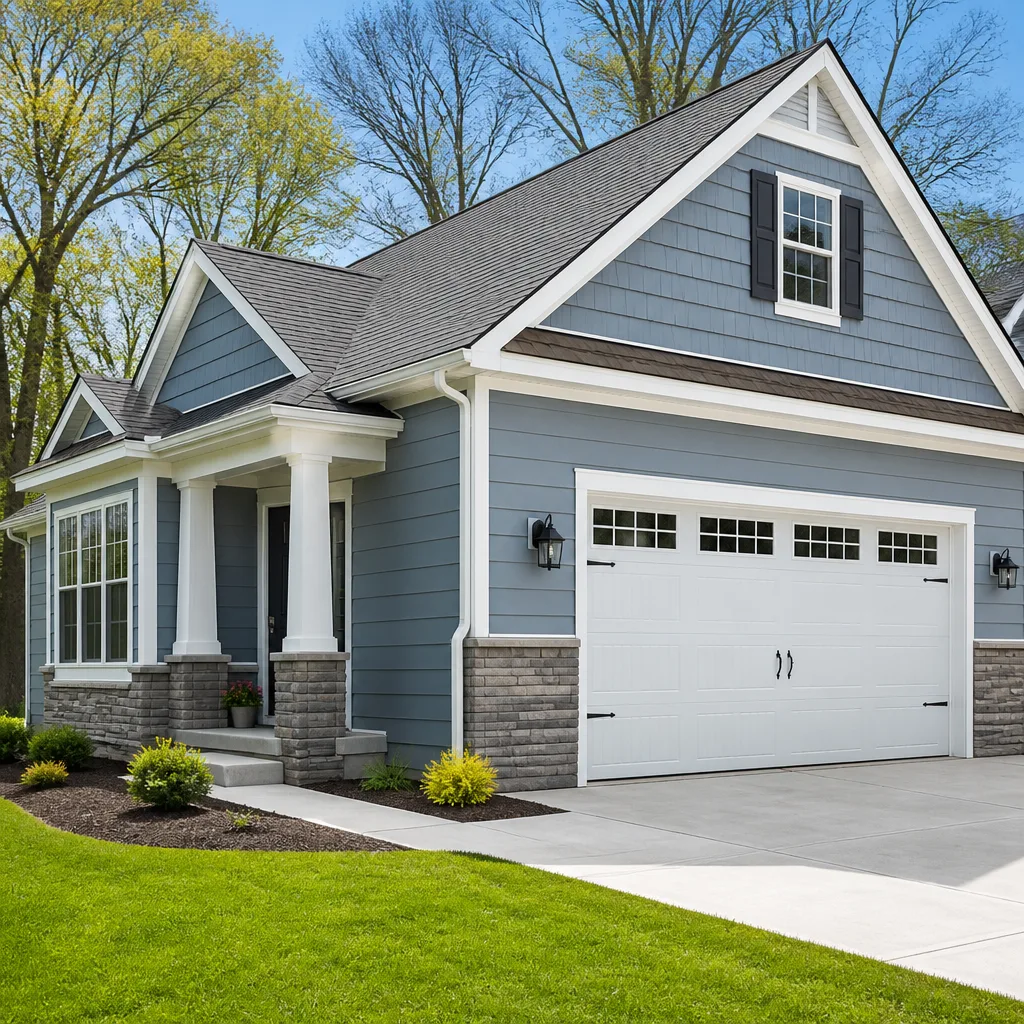
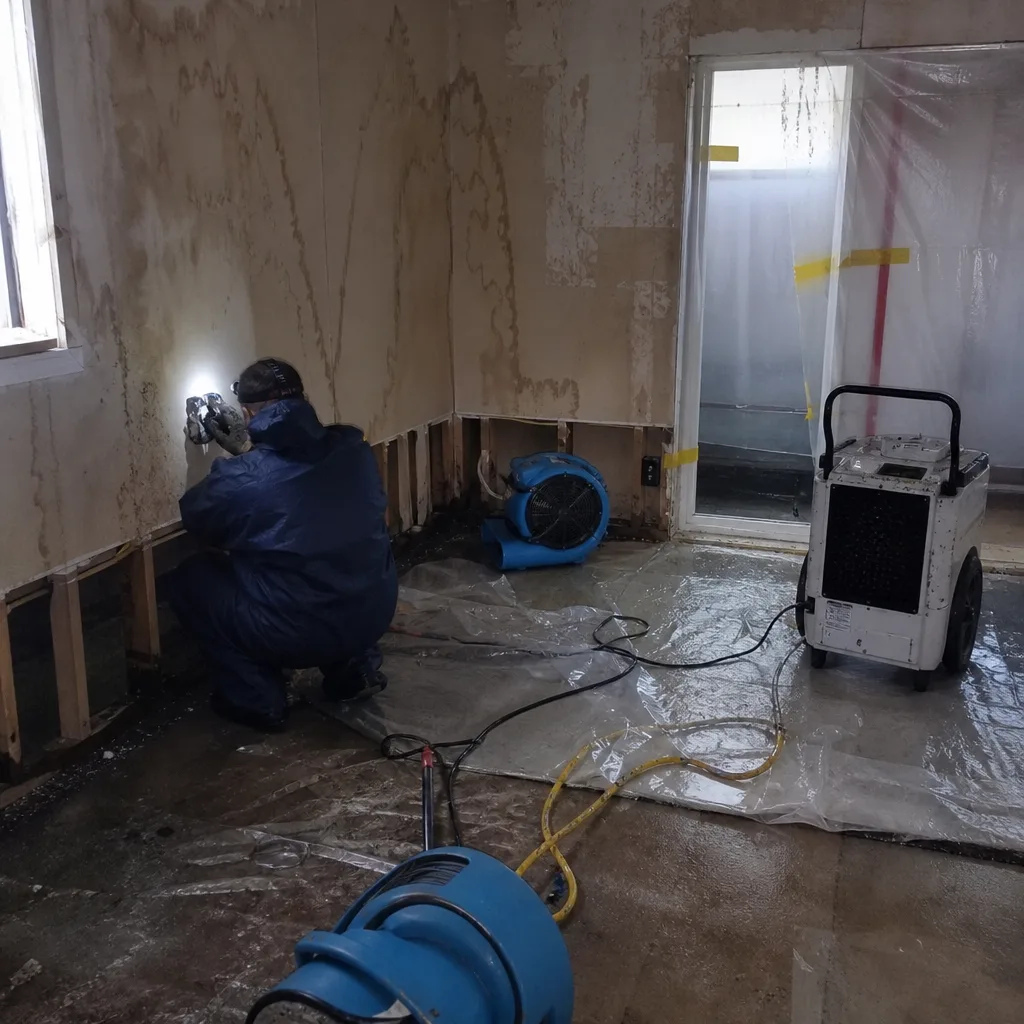 Before
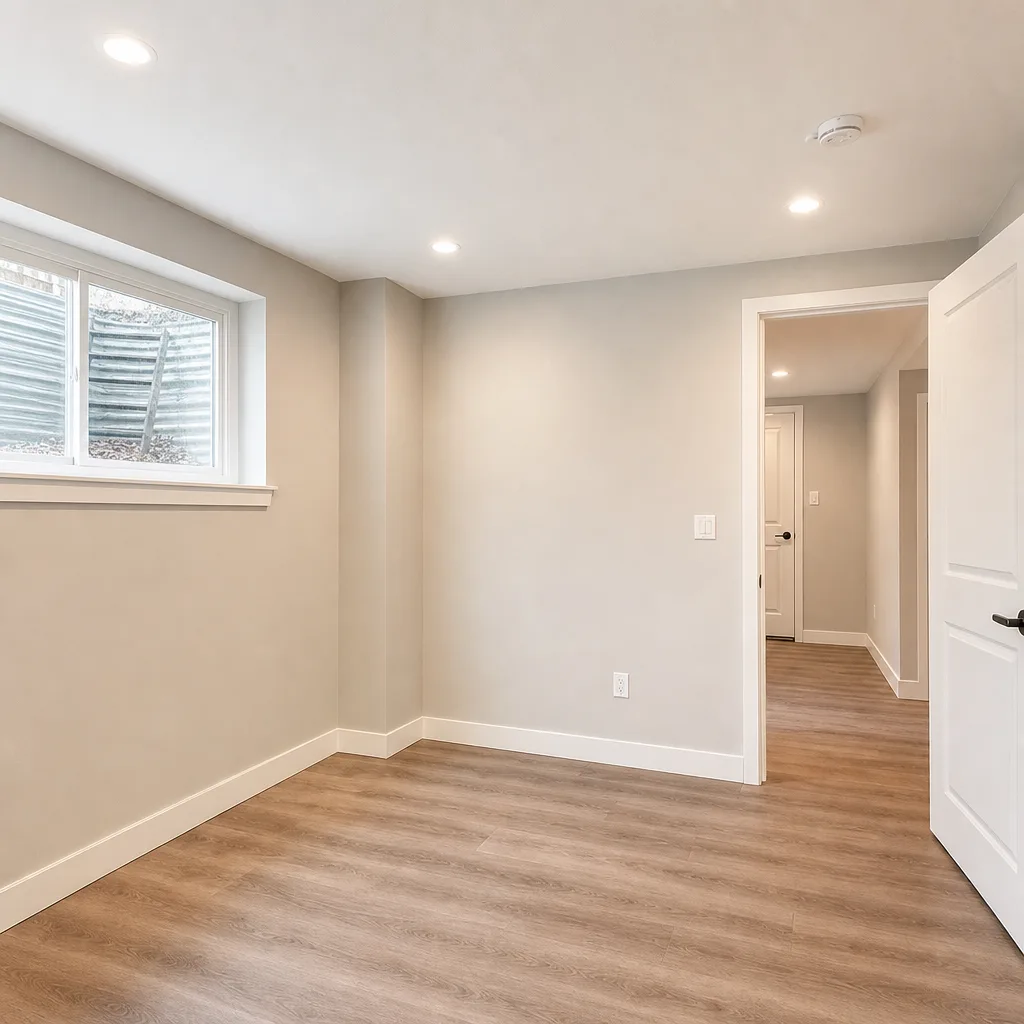 After
After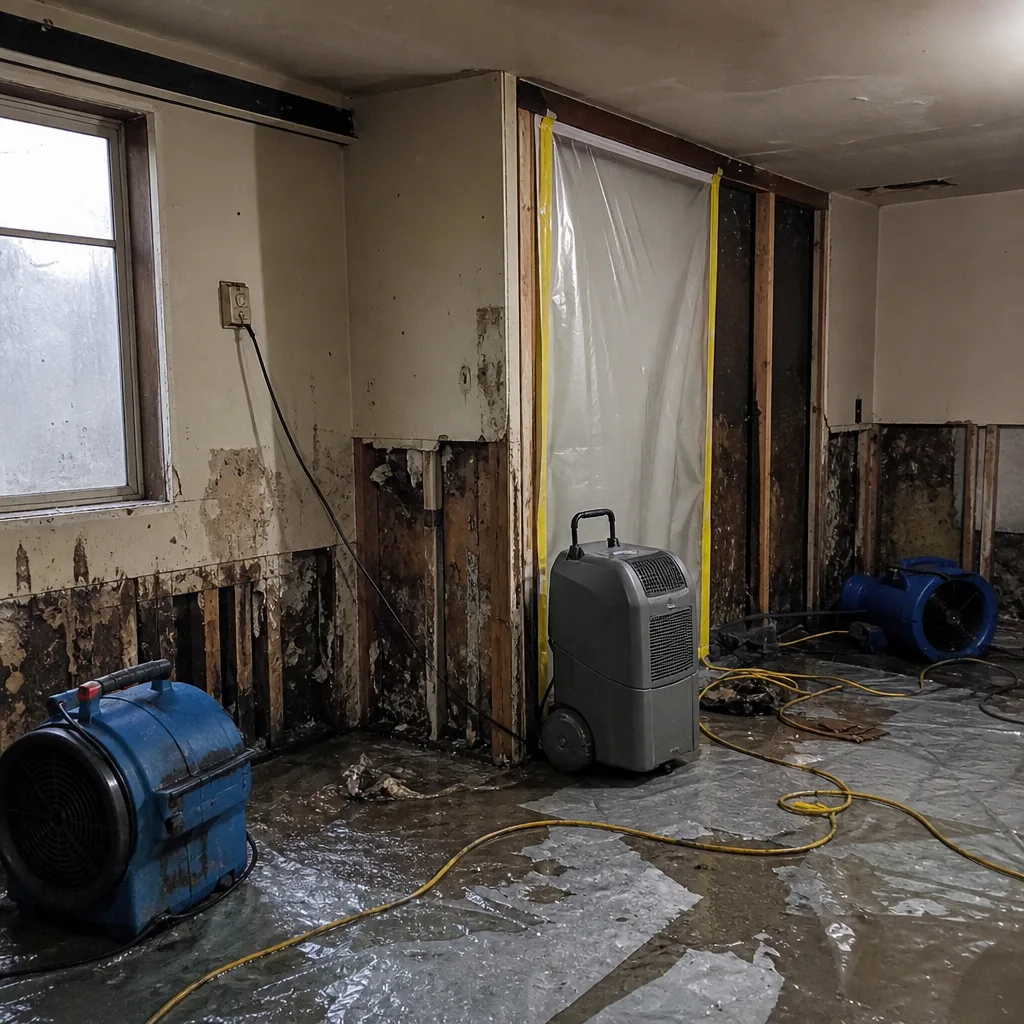 Before
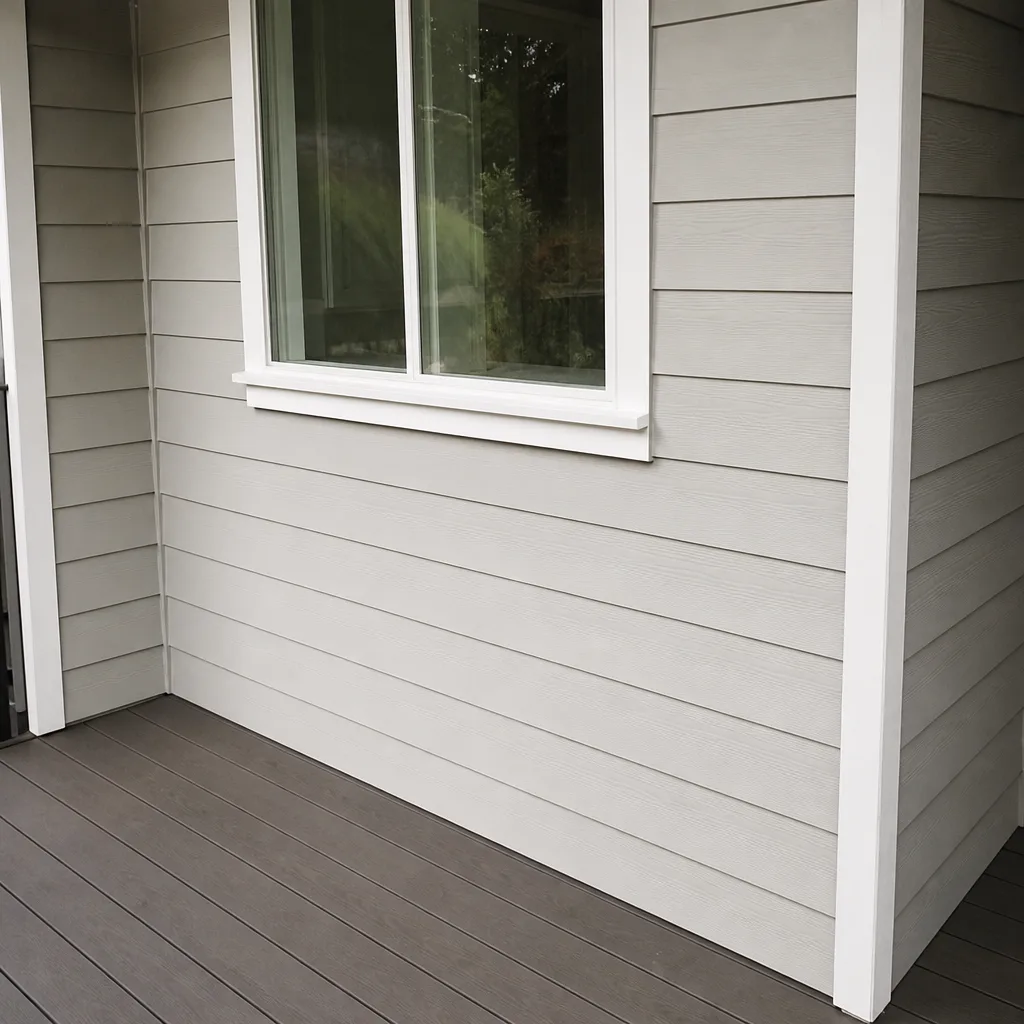 After
After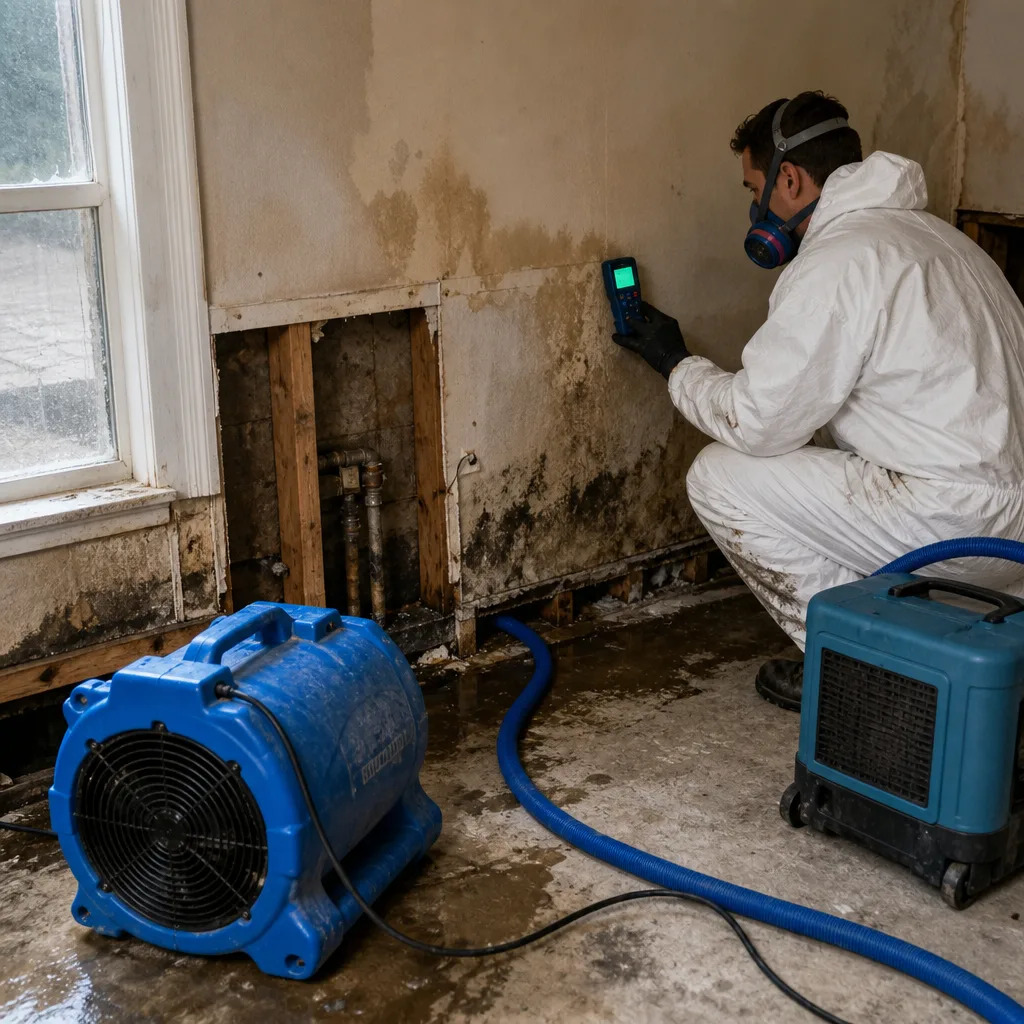 Before
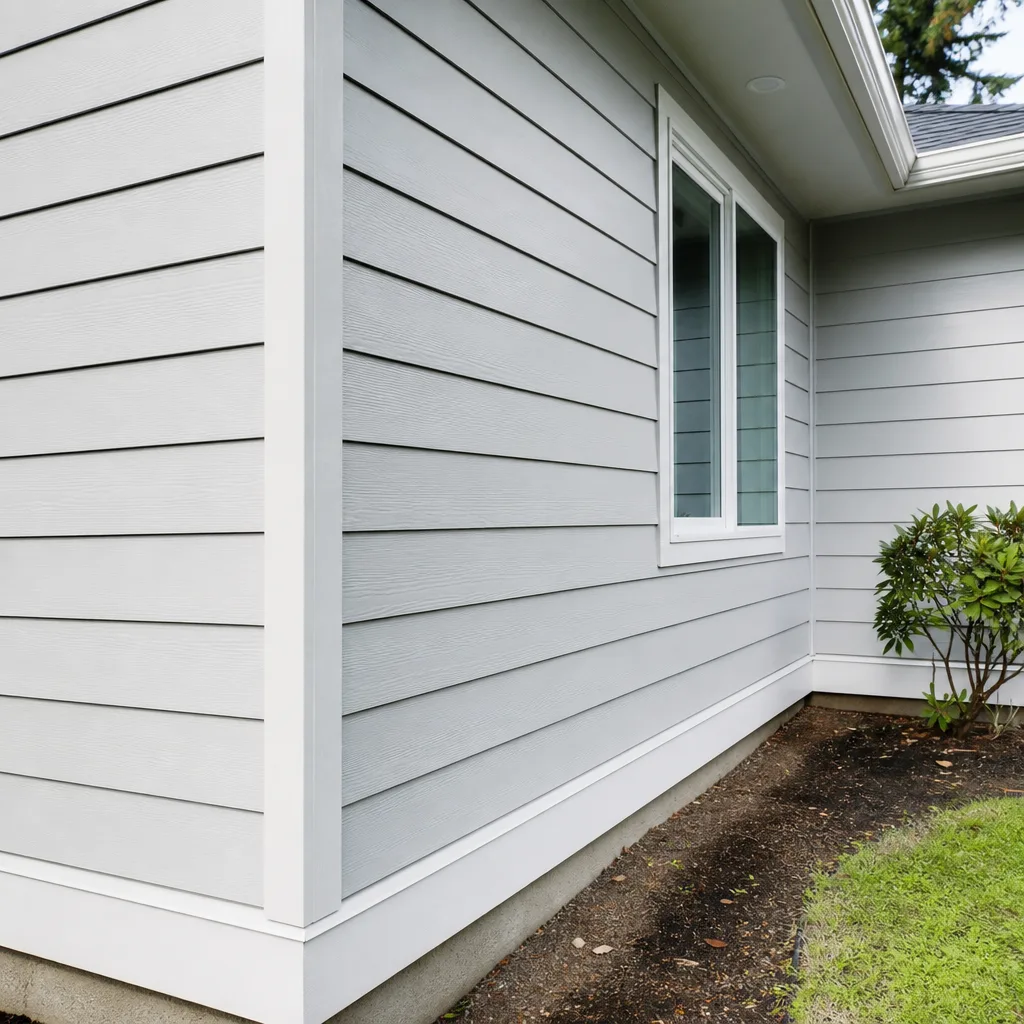 After
After24/7 Emergency Mold Remediation in Issaquah
Mold remediation in Issaquah typically runs $1,800-$6,500 depending on affected square footage, with most crawl space and basement jobs falling in the $2,400-$4,200 range. Crews dispatched from our Seattle office serve Issaquah properties with a 45-minute response commitment, and a live person answers every call at (360) 997-2427 - no voicemail, no next-day callbacks. The first hour matters because mold colonizes porous materials within 24-48 hours of moisture intrusion; in Issaquah’s October-April wet season, structures rarely dry between storm events, so delay turns a contained patch into a whole-crawl-space remediation. We start with a free visual inspection, deliver a written price before any work begins under Haven Standard, Clause 1, and document every visit with photos your adjuster can read.
Understanding Mold Remediation Severity in Issaquah Properties
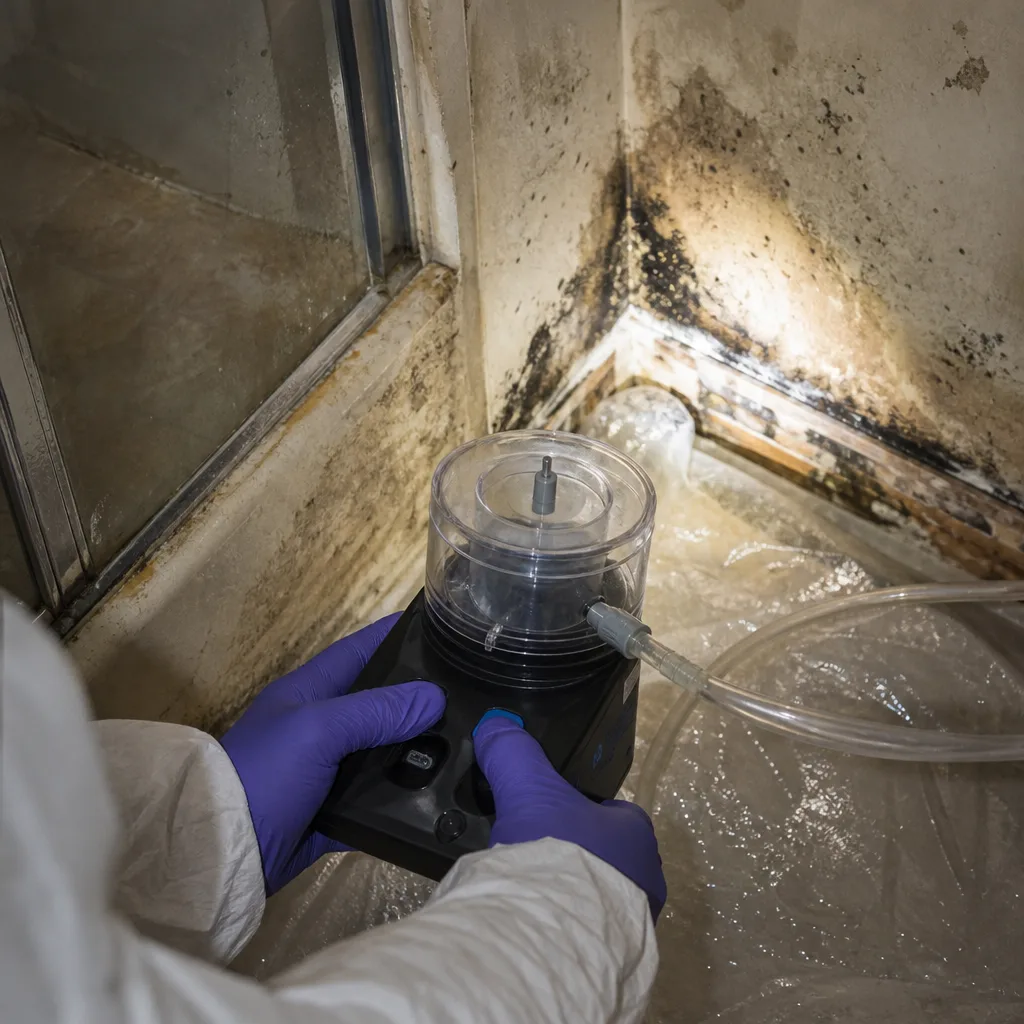
Mold severity in Issaquah falls into three practical categories that map directly to our containment and air-scrubbing protocols. Limited growth, under 10 square feet in a single area, typically responds to localized containment with polyethylene sheeting, negative air pressure from HEPA-filtered scrubbers, and surface remediation with antimicrobial agents. Moderate growth, 10-100 square feet across multiple surfaces, requires full room containment, continuous air scrubbing to achieve zero spore count in adjacent spaces, and often removal of compromised drywall or insulation. Extensive growth exceeding 100 square feet or involving HVAC systems demands engineering controls, third-party clearance testing, and sometimes temporary relocation during remediation.
Issaquah’s housing stock drives these patterns. The 1990s-2000s buildout of Issaquah Highlands and Talus produced thousands of OSB-sheathed homes where moisture barrier failures under sustained Cascade-foothill rainfall wick groundwater directly into rim joists and subflooring. Older Old Town homes from the 1950s-70s often lack adequate crawl space vapor barriers entirely, with aging perimeter drainage that simply cannot handle the volume modern rainfall delivers. In both cases, the mold you see indicates moisture conditions that have persisted long enough to colonize - and in Issaquah’s extended wet season, that threshold arrives faster than homeowners expect.
Why Issaquah Property Owners Choose DryMark Restoration Kent
- 45-minute response commitment to Issaquah addresses from our Seattle office - crews are already staged for the Sammamish-Issaquah corridor.
- 24/7 live answer: a real person, never an automated system, picks up every call to (360) 997-2427.
- IICRC-certified crews hold AMRT (Applied Microbial Remediation Technician) and WRT (Water Damage Restoration Technician) certifications, with license numbers documented on every job file.
- Free visual inspection with moisture mapping and thermal imaging - no charge, no obligation, and a written scope delivered before you decide.
- Direct insurance billing with photo-documented loss files that adjusters pay without dispute - our daily drying logs and room-by-room moisture readings turn restoration invoices into payable claims.
- One team from mold containment through reconstruction: no handoffs between remediation contractors and rebuild crews that lose track of what was wet where.
BeforeAfterOur Mold Remediation Process
1. Inspection & Assessment
We map moisture with thermal imaging and calibrated hygrometers, classify the water source by IICRC category, and identify the actual moisture driver - not just where mold is visible, but why it grew there. In Issaquah’s hillside neighborhoods, this means checking hillside drainage, foundation grading, and vapor barrier integrity before any remediation plan is written.
2. Containment & Air Filtration
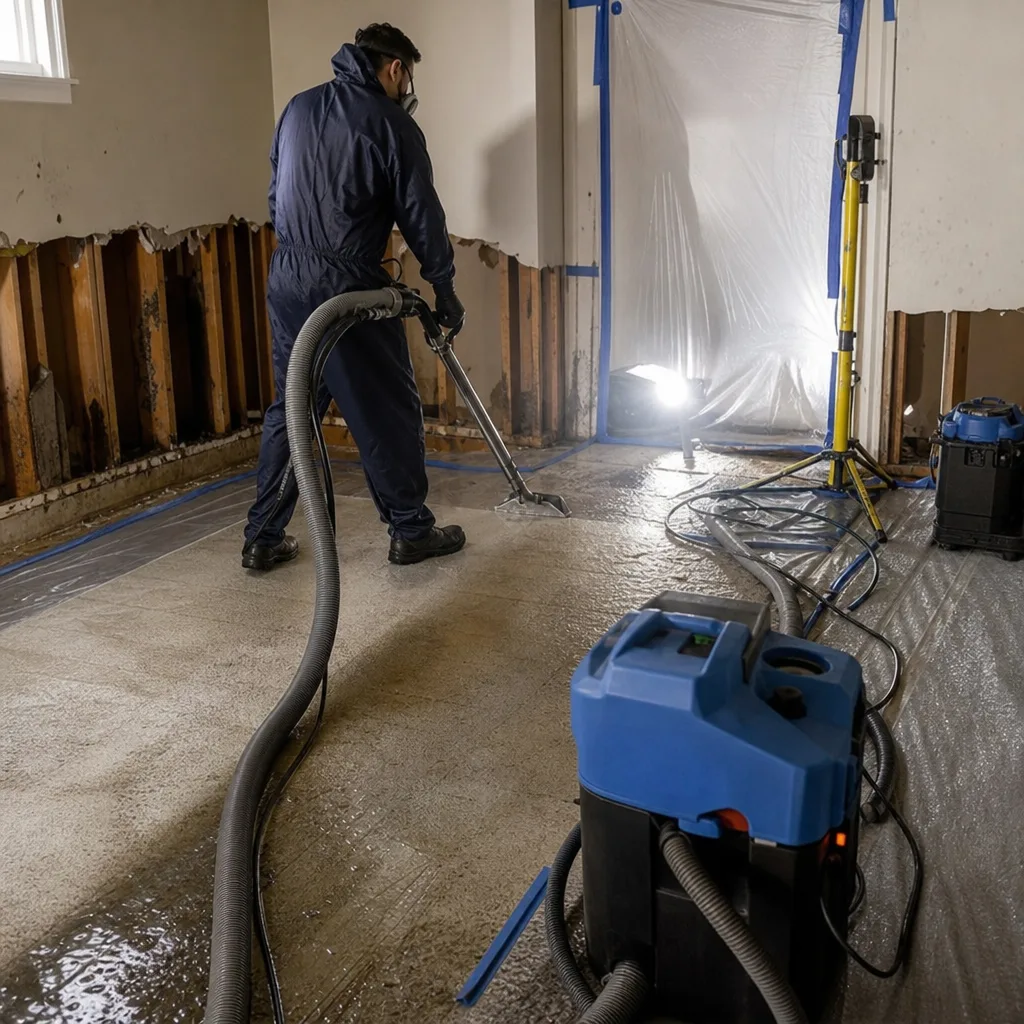
We establish polyethylene containment barriers and run HEPA air scrubbers at negative pressure to prevent cross-contamination. Air quality readings are logged before, during, and after. For crawl space jobs in Talus or Issaquah Highlands, this step runs continuously because the space connects to living areas through floor penetrations.
3. Moisture Control & Drying
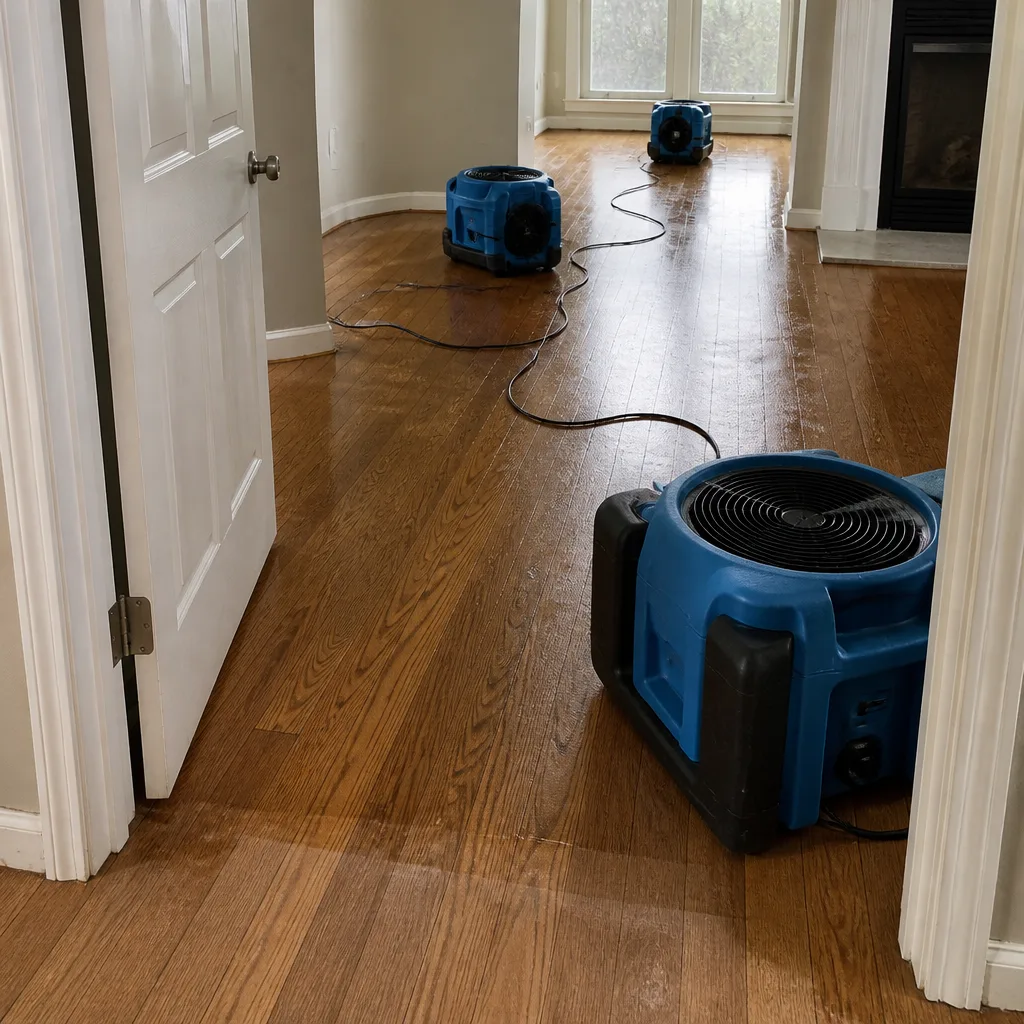
Phoenix and Dri-Eaz dehumidifiers pull vapor pressure differential - the measurable force that drives moisture from wet materials into dry air - while air movers accelerate evaporation at the material surface. In Issaquah’s never-fully-dry winter season, we run equipment overnight between visits; pausing drying lets moisture readings rebound and can escalate category 2 water toward category 3.
4. Cleaning & Antimicrobial Treatment
HEPA vacuuming removes spore-bearing debris, followed by antimicrobial application to structural members. We document every treated surface with photos. OSB sheathing in newer Issaquah homes often requires more aggressive treatment than solid lumber in Old Town construction because oriented strand board wicks moisture along its edges and delaminates when colonized.
5. Crawl Space Treatment & Moisture Control
This is where Issaquah jobs diverge from flatland remediation. We install or repair vapor barriers, seal foundation vents per current building science, and address the drainage failures that fed the mold. On hillside properties, we coordinate with geotechnical review when King County Landslide Hazard Area designations apply - mitigation plans that disturb soil within mapped zones require county critical-areas review.
6. Repairs, Restoration & Documentation
Removed materials are replaced, finishes restored, and a final moisture reading log delivered with the photo record. Every job closes with our 365-Day Done Right Promise under The Haven Standard - if mold returns to the treated area, we make it right. The documentation package goes to you and your adjuster as a complete claim file.
Need Emergency Mold Remediation in Issaquah Now?
Crews minutes away, answering live 24 hours a day. The sooner we start, the less it costs.
Working With Your Insurance Company
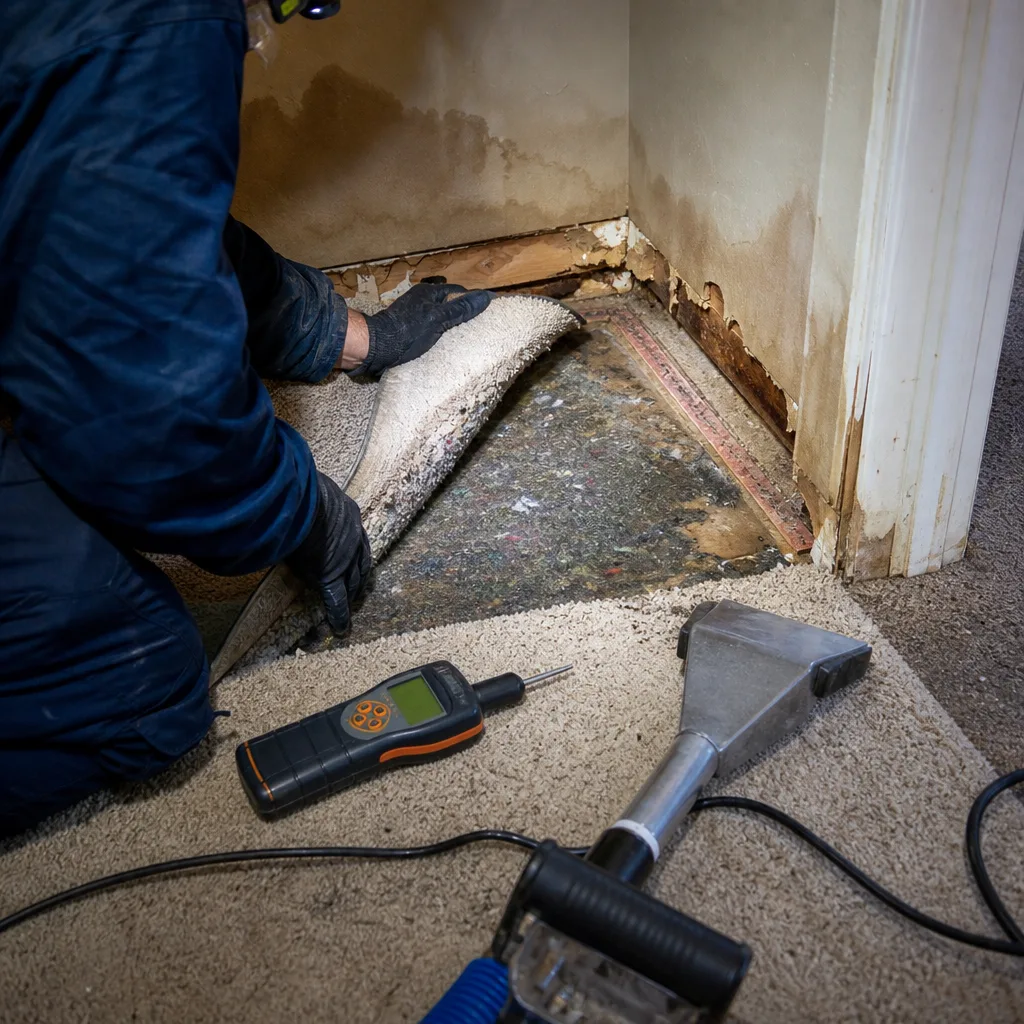
Insurance coverage for mold remediation in Issaquah hinges on documentation that proves the mold resulted from a covered water loss, not long-term maintenance neglect. From the first hour on site, we build that file: dated photos of the moisture source, thermal images showing water migration paths, moisture readings with equipment serial numbers, and a line-item scope written to Xactimate standards. Our Seattle office staff coordinate directly with your adjuster - we send the drying log daily, flag any coverage questions before they become disputes, and have handled claims with every major carrier writing policies in King County.
Most Issaquah homeowners we work with had never filed a property claim before mold appeared in their crawl space. We explain the process in plain terms, provide the documentation your policy requires, and never start work before you have a written price you can show your carrier.
What We Provide Your Insurer
- Thorough documentation of the loss
- Photos of all damage, room by room
- Moisture readings and drying logs
- A detailed, line-item scope of work
- Direct coordination with your carrier
Built for Issaquah’s Loss Calendar
Issaquah’s mold season runs October through April, driven by orographic rainfall from marine air forced upward against the Cascade foothills. October brings the first sustained wet period; soils saturate, failed perimeter drains begin flowing into crawl spaces, and homeowners notice the musty smell that means mold is already established. November through January delivers the heaviest precipitation, with storm events that overwhelm hillside drainage in Talus and Issaquah Highlands - this is when we see the most extensive colonization, often discovered when residents check holiday storage in basement corners.
February and March bring freeze-thaw cycles that crack foundation coatings and dislodge drainage lines. By April, many Issaquah homes have been continuously damp for six months. The structures never reached equilibrium dryness. Summer remediation jobs are almost always discovery of winter damage that went unaddressed - the homeowner assumed the smell would clear with warm weather, but mold doesn’t retreat; it just stops releasing spores as aggressively. We schedule the most complex crawl space treatments in late summer specifically to prepare structures for the next wet season.
Mold Remediation Across Issaquah’s Neighborhoods
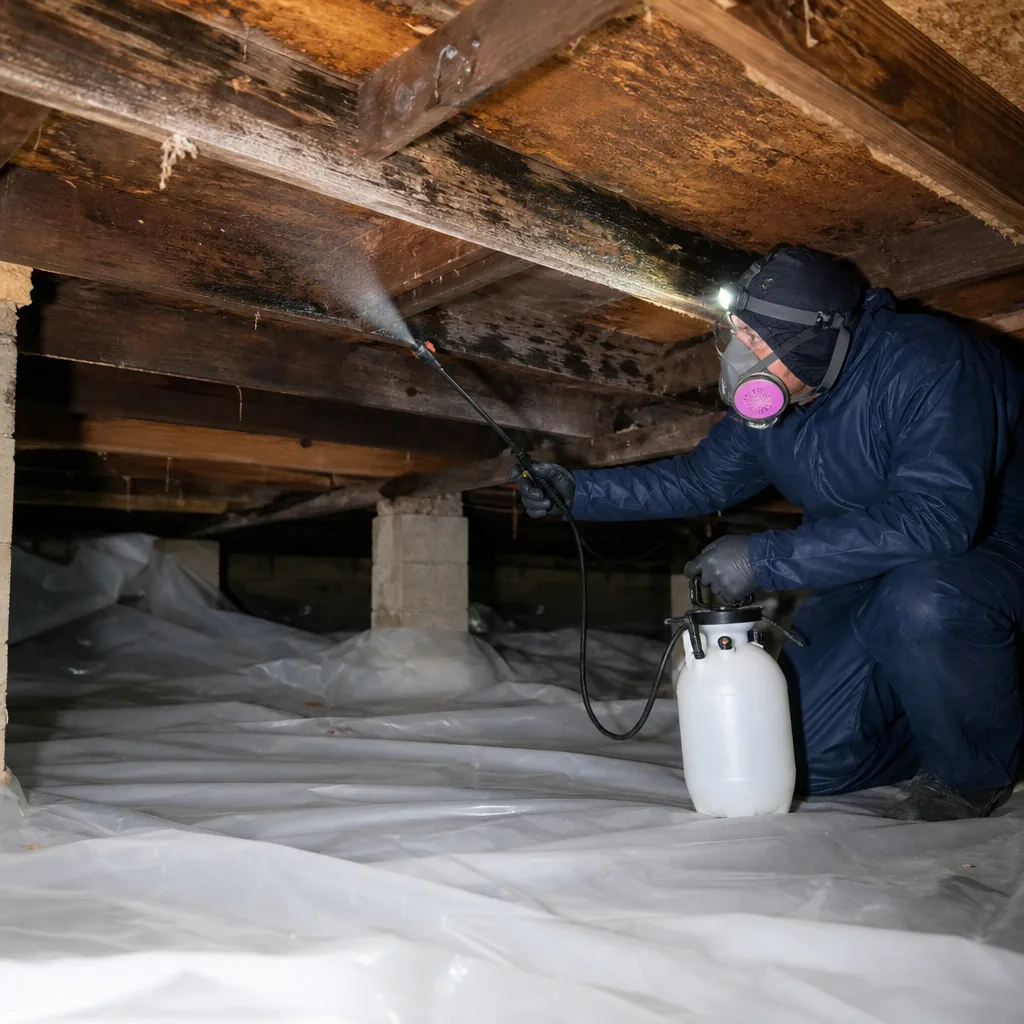
Talus, pressed against Cougar Mountain’s slopes, produces our most hydrologically complex jobs. Storm runoff concentrates in natural swales that builders routed through culverts, and when those culverts fail or clog with debris, water enters foundations under hydrostatic pressure. We ran a crawl space job on a 2003-built home in the Talus neighborhood, where OSB sheathing had been wicking groundwater for weeks. Our tech took moisture readings across the rim joists, set up containment with HEPA air scrubbers and Dri-Eaz dehumidifiers, and applied antimicrobial treatment to the joists after water extraction. The fix only held once we cleared the failed hillside drain that was funneling Cougar Mountain runoff under the foundation in the first place.
Issaquah Highlands, built on the plateau above the valley, faces a different pattern: large homes with complex rooflines create dozens of gutter failure points, and the OSB sheathing common to this era’s construction fails catastrophically when bulk water enters wall cavities. We’ve replaced entire second-floor exterior walls in Highlands homes where ice dam backup in January saturated sheathing that was never allowed to dry.
Old Town Issaquah, along Front Street and the historic core, holds 1950s-70s ranch and split-level homes with crawl spaces that were never intended to be sealed environments. Vapor barriers are often absent or degraded to shredded plastic. Drainage infrastructure predates modern standards. Mold remediation here requires working within tight access constraints and coordinating with homeowners who value original character - we preserve what we can, document everything, and rebuild to current code only where structural integrity demands it.
The Squak Mountain and South Cove areas see their own pattern: homes on the lower slopes catch runoff from above, and we frequently find that the mold source is a neighbor’s uphill drainage failing across property lines. These jobs require diplomatic coordination and sometimes county involvement to address the actual water source.
Specialized Mold Remediation Services We Offer in Issaquah
Mold Inspection & Testing
Our Issaquah inspections start with moisture mapping, not air sampling. We find where water is entering, classify it by IICRC category, and determine whether visible colonization represents active growth or old damage. Air quality testing is available when health concerns or insurance requirements demand it, but our focus is identifying and stopping the moisture driver - without that, any test result is just a photograph of a continuing problem.
Mold Removal
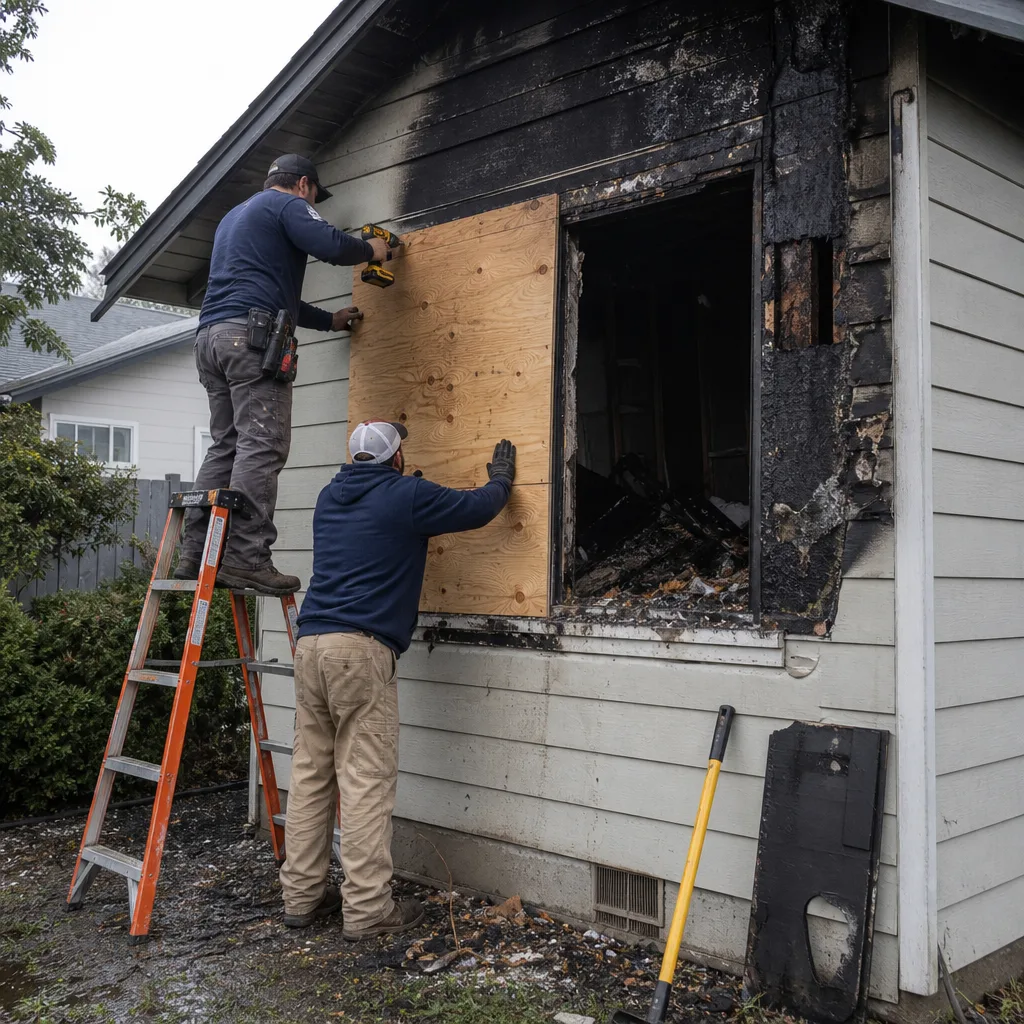
Removal protocols vary by material: non-porous surfaces like metal and glass clean with HEPA vacuuming and antimicrobial wipe; semi-porous materials like OSB and drywall often require removal when colonization exceeds surface level; porous insulation and carpet are almost always discarded. In Issaquah’s hillside homes, we frequently remove compromised OSB sheathing that competitors attempt to save, because wicking damage in oriented strand board rarely responds to surface treatment alone.
Black Mold Remediation
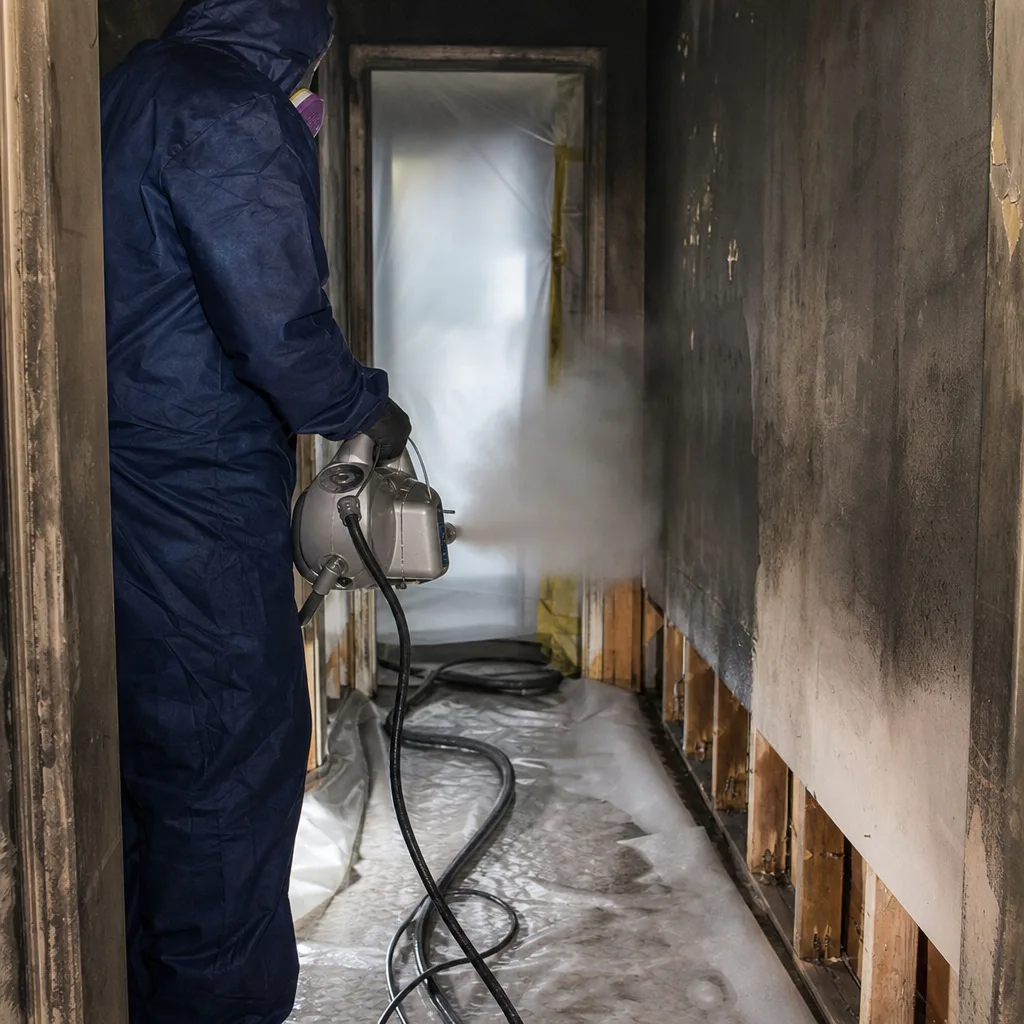
Stachybotrys chartarum and other toxigenic species require the same containment and air-scrubbing protocols regardless of color, but health-protective measures escalate. We use full-face respirators, establish clean-to-dirty personnel decontamination zones, and hold clearance testing to stricter standards. The presence of black mold in an Issaquah home almost always indicates chronic water intrusion - our job is finding why it stayed wet long enough for toxigenic species to outcompete faster-growing molds.
Air Quality Restoration
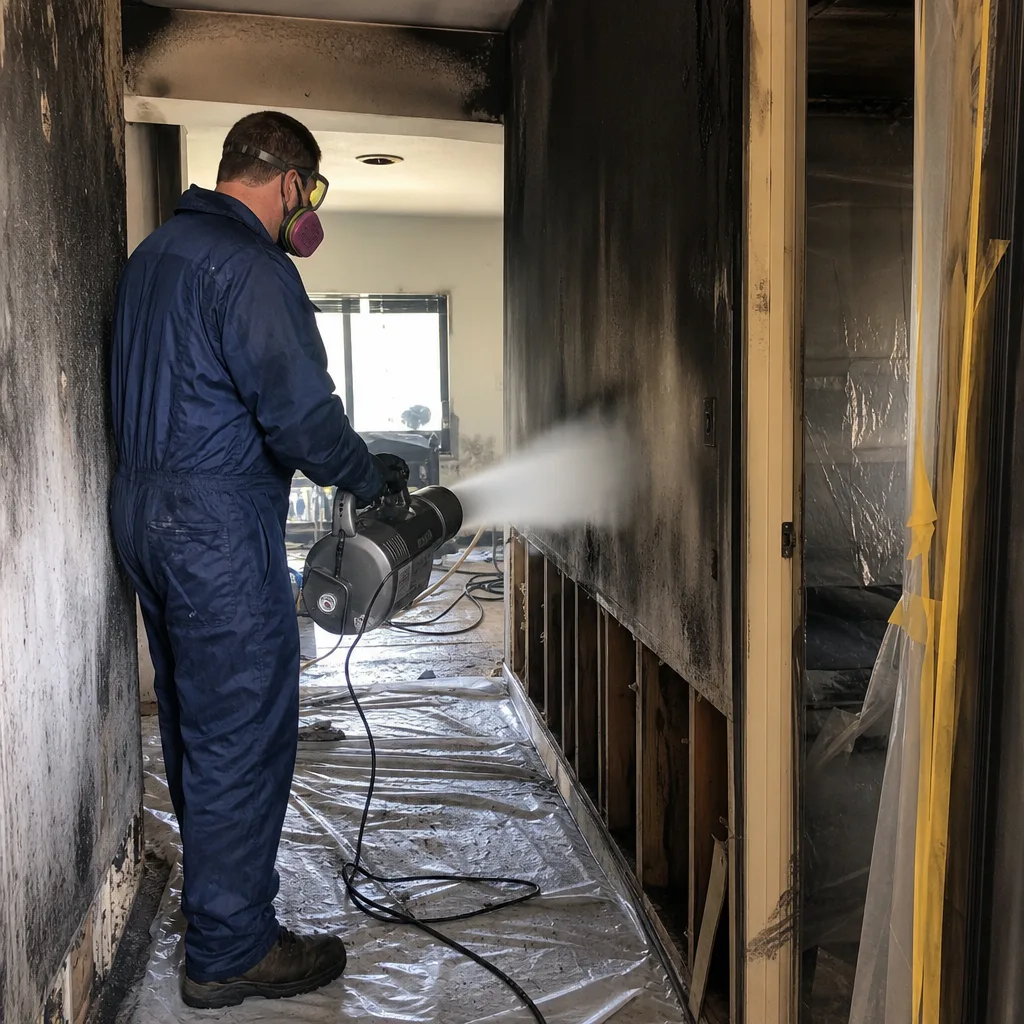
After remediation, we run continuous HEPA filtration until airborne spore counts match outdoor baseline levels in adjacent spaces. This matters particularly in Issaquah’s tighter-built homes from the 2000s, where energy-efficient construction reduces natural air exchange and can concentrate residual spores if not actively managed.
Crawl Space Treatment
This is our most requested service in Issaquah, and the one where hillside hydrology matters most. We install 6-mil or thicker vapor barriers, seal vents, and when necessary coordinate drainage correction with landscape contractors. On properties within King County Landslide Hazard Areas, we check critical-areas status before any soil-disturbing work and build permit timelines into our project schedule.
What happens when you call
- 1
A real person answersNo phone trees - you reach a local pro.
- 2
You get an upfront price rangeHonest numbers before anyone is dispatched.
- 3
A background-checked tech heads outLicensed & insured, dispatched right away.
- 4
You approve before work beginsNothing starts until you say go.
Mold Remediation Costs in Issaquah, WA
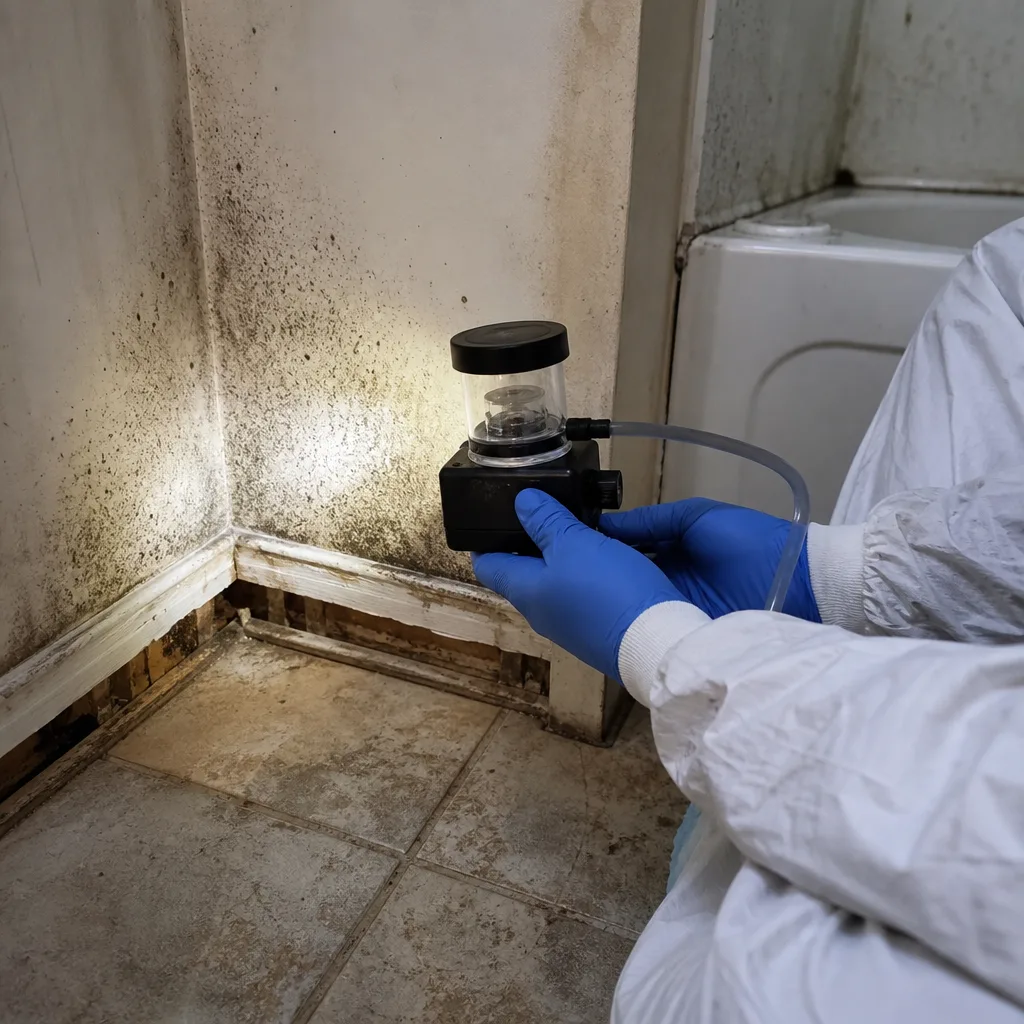
Mold remediation pricing in Issaquah reflects the complexity that hillside hydrology adds to every job. A limited containment and surface treatment in an accessible basement corner typically runs $1,800-$2,800. Moderate crawl space remediation with vapor barrier replacement and drainage assessment falls in the $3,200-$5,400 range. Extensive whole-crawl-space or multi-room jobs involving structural material removal, third-party clearance testing, and reconstruction can reach $6,500-$12,000.
What moves the price: affected square footage, material type (OSB removal costs more than surface cleaning), access difficulty (Talus hillside crawl spaces with limited clearance take longer), and whether King County critical-areas review is required for drainage correction. Insurance covers mold remediation when it results from a sudden, documented water loss; long-term maintenance-related mold is typically excluded. We provide a written price before any work begins - Haven Standard, Clause 1 - and offer a Free Second Opinion on any competitor’s written estimate. Call (360) 997-2427 for your exact scope.
We Also Serve Cities Near Issaquah
Our crews respond throughout the Sammamish-Issaquah corridor and south King County, including Mold Remediation in Issaquah and neighboring communities. We regularly handle jobs in Maple Valley, where rural lot drainage creates its own mold patterns; Sammamish, with its plateau lake-effect humidity; Renton, where older valley housing stock faces different challenges; and Kent, where our Seattle office coordinates dispatch for the broader south county area. Each city’s geography drives distinct mold behavior, and our Mold Remediation protocols adapt to the actual conditions on site.
Serving Issaquah, WA - Our Local Coverage Area
We’re based in the Issaquah area and know this community well. Use the map below to see our service coverage - if you’re nearby, we can almost certainly help.
Issaquah Mold Remediation Questions, Answered
Why does mold come back every winter in my Talus or Issaquah Highlands crawl space?
Because the water source was never fixed. Mold is a symptom; chronic moisture is the disease. In Talus and Issaquah Highlands, failed hillside drainage and inadequate vapor barriers keep crawl spaces above 60% relative humidity through the entire wet season - the threshold where mold colonizes building materials. We locate and address the actual moisture driver, whether that’s a failed perimeter drain, foundation seepage from concentrated slope runoff, or missing vapor barrier. Call (360) 997-2427 for a drainage-first assessment.
Does Issaquah’s rainfall really make mold remediation different from Bellevue or Sammamish?
Yes, measurably. Issaquah sits in a valley bowl ringed by Tiger Mountain, Squak Mountain, and Cougar Mountain, creating an orographic rainfall effect that pushes annual precipitation well above Seattle or Bellevue averages. Hillside neighborhoods like Talus funnel concentrated storm runoff into foundations and crawl spaces in ways flatland suburbs never see. Our remediation protocols account for this: we don’t declare a job dry until moisture readings hold through multiple storm events, and we always check slope drainage before signing off. Call (360) 997-2427 to discuss your property’s specific exposure.
What does King County’s Landslide Hazard Area designation mean for a mold job on my Issaquah property?
It means any excavation, grading, or drainage correction that disturbs soil within a mapped hazard zone requires county critical-areas review before work begins. We’ve seen mitigation scopes stall midway because a contractor started foundation work without checking the designation. Our team verifies Landslide Hazard Area status during initial assessment and builds permit timelines into the project schedule. This applies to many Talus and Cougar Mountain-adjacent properties; it simply doesn’t come up for flatland jobs in Sammamish or Redmond. Call (360) 997-2427 and we’ll check your property’s status as part of our free inspection.
How do you classify the water feeding mold in an Issaquah crawl space?
By IICRC category: Category 1 is clean water from supply lines or rainwater; Category 2 is gray water with elevated contamination, common in crawl spaces where soil contact and drainage failure introduce silt and organic matter; Category 3 is black water from sewage intrusion or ground flooding with confirmed contamination. In Issaquah’s extended wet season, Category 2 water left untreated often escalates toward Category 3 as microbial loading increases over months of continuous dampness. This classification determines our antimicrobial protocol and whether materials can be cleaned or must be removed. Call (360) 997-2427 for moisture-source classification on your property.
Can you remediate mold in an Old Town Issaquah home with no existing vapor barrier?
Yes, and this is common in 1950s-70s construction along Front Street and the historic core. We install new vapor barrier as part of remediation, typically 6-mil polyethylene with sealed seams and perimeter attachment to foundation walls. In tight crawl spaces with limited clearance, we use specialized equipment and smaller crew footprints. The bigger challenge is often the aging drainage infrastructure; we assess whether the home’s original perimeter drainage can handle modern rainfall volume or needs upgrade. Call (360) 997-2427 for a crawl space assessment that includes vapor barrier installation scope.
How fast can your crew actually get to my Issaquah property?
Our commitment is 45 minutes from dispatch to arrival for emergency calls in the Issaquah area. Dispatch and scheduling are coordinated from our Seattle office, with crews staged for the Sammamish-Issaquah corridor. Live answer 24/7 means your call starts the clock immediately - no voicemail delay, no next-business-day callback while moisture continues spreading. Call (360) 997-2427 now and we’ll confirm current crew availability.
Will my insurance cover mold remediation, or is this out of pocket?
Insurance covers mold remediation when it results from a sudden, documented water loss - burst pipe, storm intrusion, appliance failure - that is itself a covered peril. Long-term maintenance-related mold from chronic leaks or inadequate ventilation is typically excluded. Our documentation package, with dated photos, moisture readings, and water-source classification, is built specifically to demonstrate covered-cause origin to your adjuster. We also offer direct billing and adjuster coordination. Call (360) 997-2427 and we’ll review your situation with no obligation.
How long does mold remediation take, and can we stay in the home during the work?
Most Issaquah crawl space and basement jobs run 3-7 days for remediation proper, with reconstruction adding 1-3 weeks depending on material lead times. Occupancy during work depends on containment effectiveness and the species involved: limited growth in isolated basement areas often allows residents to stay with sealed HVAC isolation, while extensive colonization or toxigenic species may require temporary relocation for health protection. We make this determination during initial assessment and never compromise containment to maintain occupancy. Call (360) 997-2427 for a timeline specific to your job scope.
Ready to stop the cycle of winter mold in your Issaquah home? Call (360) 997-2427 now for a free visual inspection with moisture mapping. We’ll deliver a written price before any work begins - Haven Standard, Clause 1 - and show you exactly what documentation your insurance file will need.
Written by Alicia Brennan, Owner at Back to Dry Restoration, serving Issaquah since 2011.
Mold Remediation in Nearby Areas